It’s all about the bread this week and that’s as it should be as #RealBreadWeek is all over my Twitter timeline. It’s as if the algorithms have been in my kitchen and smelled the baking. There’s already been a couple of loaves this week and there will probably be another before next weekend. I wouldn’t claim to bake all of the bread that we eat in this house but it’s definitely an ever increasing percentage of it.
Even when I’m not in the kitchen baking seems to be cropping up everywhere in my life at the moment. I’m currently taking a creative writing course here in Norwich and this weeks session is going to be about writing for children. The main prep that we have been asked to do is around the books that we enjoyed in our childhood, this has seen me digging out a very dogeared copy of one of Enid Blyton’s Famous Five books, in addition to that we were asked to look at how factual books for children are written. I went into our local library to see if they had any cookbooks in the children’s section and was fascinated by what I found. There were far more than I expected and nearly all of them were based around baking. The sense of adventure and excitement written into the step by step recipes leaps off the page as you read them and the explanation of the basic science going on as the ingredients react with each other just adds to it. I’ve never baked in the company of children but this has left me feeling that it must be a really rewarding experience.
In other baking news, I’ve discovered a new flour. I’m not sure if I’ve mentioned it before but one of the things that has intrigued me as I’ve delved deeper into baking is just how many different flour types there are. I started off with two on the shelf, a pack of plain and a pack of wholemeal, but when I counted them before sitting down to write this it’s now a dozen types. The latest addition is Emmer flour, this is an ancient wheat that can be traced back to neolithic times. I’d never heard of it prior to finding a pack in a local health food store last weekend and just couldn’t resist adding it to the collection. I’ve already tracked down some recipes for emmer bread so expect another update on this soon.
Before I get to the bread that I’ve been baking there is one more thing to share. Last week we were at a baking event in Norwich where we found ourselves sharing a table with the owners of a new bakery that has just opened in the city. As the evening wore on they realised that I was there as a keen amateur and the upshot is that they’ve invited me to go and spend some time with them in their bakery. I’m very excited by this opportunity and as long as it all comes to fruition you will definitely be hearing more about it.
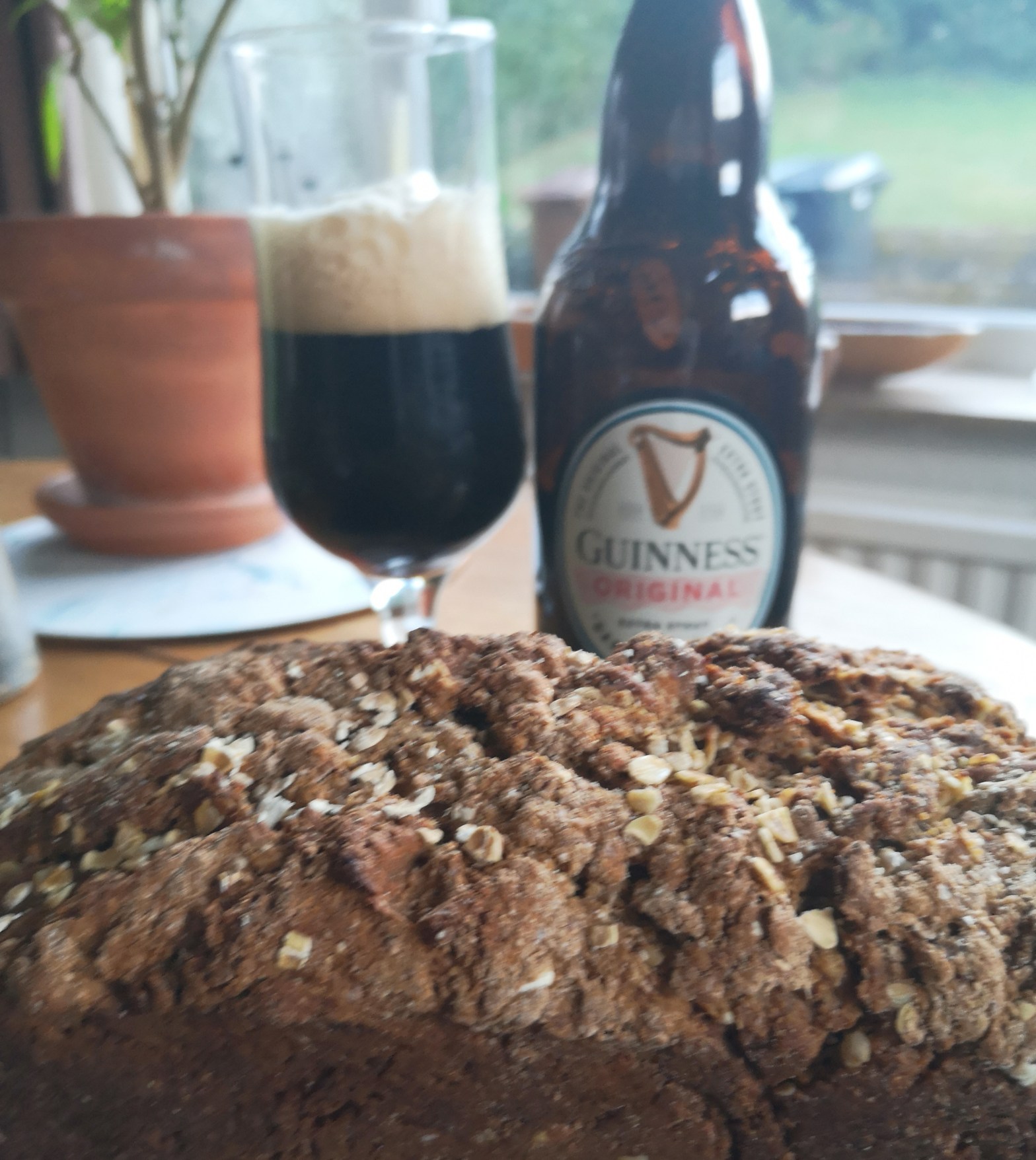
To finish off let’s bake some bread. The one potential downside of bread baking can be that you need to have quite a large time window available to you, particularly once you’ve factored in the proving of the dough. The beauty of this recipe is that there’s no proving, so as long as you have the ingredients available you can make it whenever you want. It’s a Guinness soda bread and if my experience is anything to go by it’s one that people remember and ask you to bake again. I find it goes particularly well with cheese.
Ingredients
- 25g unsalted butter cut into cubes
- 250g wholemeal flour
- 85g plain flour
- 35g oatmeal or porridge oats
- 1.25 tsp bicarbonate of soda
- sea salt flakes
- 2tbsp soft dark brown sugar
- 85ml Guinness *
- 40g black treacle
- 200ml buttermilk
Method
- Preheat the oven to gas mark 4 and butter a small loaf tin.
- Mix the flours, oatmeal, bicarb and half a teaspoon of salt in a bowl. Add the cubed butter and rub in with your fingertips. Then stir in the sugar.
- Combine the Guinness, treacle and buttermilk in a jug. Make a well in the dry mixture and gradually pour in the liquid. Mix with a butter knife as you pour. Don’t over mix as this is supposed to be a wet dough.
- Tip the dough into the prepared tin and sprinkle a few more oats on top.
- Bake for 40 to 50 minutes. When you take the bread out of the oven tap the loaf on the bottom to check that it’s done. When you tap the loaf it should sound hollow.
* Make sure that you buy a good size bottle of Guinness. That way you will have a glass left over to go with the first slice of bread.
 David in the kitchen.