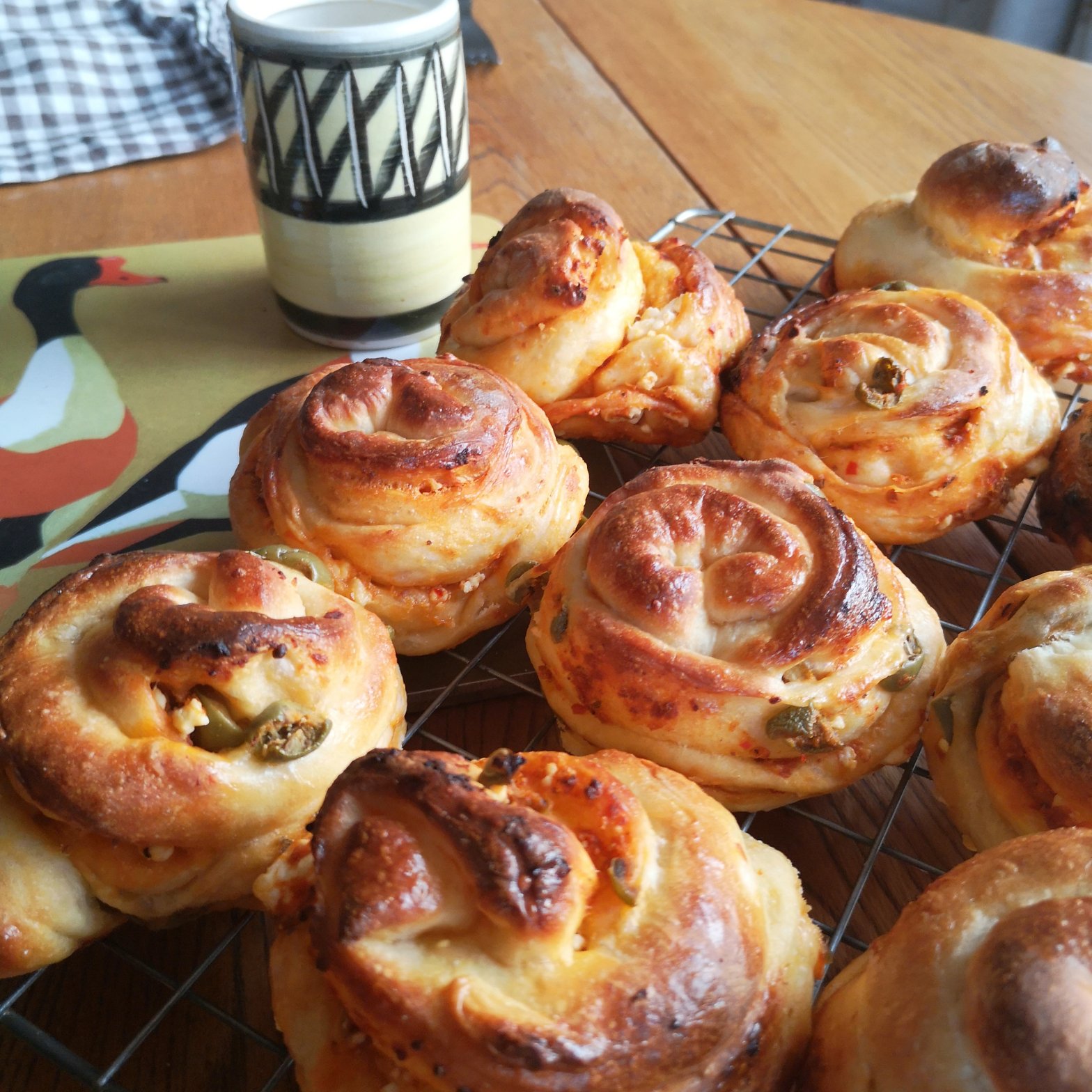


Adaptability has been the keyword for me in the kitchen these last 12 months. As much as I love pouring over cookery books before embarking on a new project, this has been a time for recipes that act as a loose starter but then leave you to go your own way. Recipes that make use of what you happen to have available in the pantry or fridge at the time and don’t require a shopping expedition.
It will be interesting to see how much of this sticks as we slowly start to come out of the coronavirus restrictions. I’d like to think it’s taught me some good habits but have to admit that one of the things I’m looking forwards to is being able to browse again. To spend time looking for strange and unusual ingredients which I’ve got no idea how to use, but know it will be fun finding out.
Before I get too lost in daydreaming about deli trips, I want to share the recipe for the filled bread rolls that were mentioned in yesterdays post. These have become one of my go-to bakes during lockdown. Perfect if you want a plate to impress, as we did over Easter. Equally good if you want to freeze a batch and eke them out over a longer period.
This recipe fits perfectly with the theme of adaptability. I’ve written it as I first saw it in a Benjamina Ebuehi column in the Guardian, but any of the filling ingredients can be switched about. I’ve made versions with various cheeses, sometimes I’ve switched the olives for sun-dried tomatoes and if I’ve been making them for people who don’t like heat, it’s been pesto rather than harissa. Whichever route you go, the result is ten delicious bread rolls.
Ingredients for the bread
- 400g strong white bread flour
- 7g fast-action dried yeast
- 0.5tsp salt
- 30g caster sugar
- 240 whole milk – at room temperature
- 60g unsalted butter – softened
- 2 eggs
Ingredients for the filling
- 2.5tbsp rose harissa
- 100g fetta – crumbled
- 75g green olives – sliced
Method
- Mix the flour, yeast, salt and sugar in a bowl. Pour in the milk, melted butter and one of the eggs. Mix to a rough dough and then knead for approximately 10 minutes. The dough should then be smooth and elastic.
- Place the dough in an oiled bowl, cover it and leave it in a warm place to rise until nearly doubled in size. I find this takes about an hour.
- Once risen turn out the dough onto a floured surface and roll into a 40cm by 60 cm rectangle. This is easier than it sounds as the dough is very stretchy. If using a rolling pin, cover it in flour first.
- Starting at one of the shorter edges of the rectangle cover half of the dough with the harissa, then scatter the olives and feta on top. Fold the uncovered half of the dough over the covered half and gently use the rolling pin to remove any air bubbles.
- Now cut the dough into 10, approximately 3cm wide strips. Benjamina suggests a sharp knife for this but I find a pizza cutter works best.
- Take each strip and coil it around itself to form a bun, tuck the ends underneath when you finish. Don’t worry if some of the fillings ooze out as you do this. I find it happens every time.
- Put the coiled buns on a lined baking tray, cover and leave to rise for a further 45 minutes
- During this time preheat the oven to gas mark 5
- After the second rise, beat the remaining egg and generously brush each of the buns with it.
- Bake for 15 to 20 minutes.
- Leave to cool on a rack and then serve.
 David in the kitchen.
These look absolutely gorgeous, and I can easily imagine the whole kitchen filled with the smell of fresh baked buns. And I know what you mean, I miss the long grocery shopping tours too. Or at least the adventurous part of it when you end up in the wrong isle with many funny stuff.
LikeLiked by 1 person
I’ve just dicovered https://www.souschef.co.uk and i think it might be the answer. It’s full of those sort of things you pick up without really knowing what you’re going to do with them..and at quite good prices.
Glad you liked the buns
LikeLike