Featured

Welcome to My New Food Blog

Food Adventures,Food Memories & Food Thoughts

The beginning

This is the first post on my new blog. A blog where I want to cover all things food related. I’m going to look to update on a regular basis and things I want to cover include..

Why I cook

What I cook

When I cook

Food thoughts

Food memories

Food adventures

Coffeeshops

Restaurants

Cookery books & magazines

Food photography

Successes & failures, likes & dislikes

The kitchen, the garden…and probably a whole bunch of other things as well.

So stay tuned for more. Subscribe below to get notified when I post new updates.

Topping up my coffee

Everyone else gets asked what they want. I always take what I’m given.

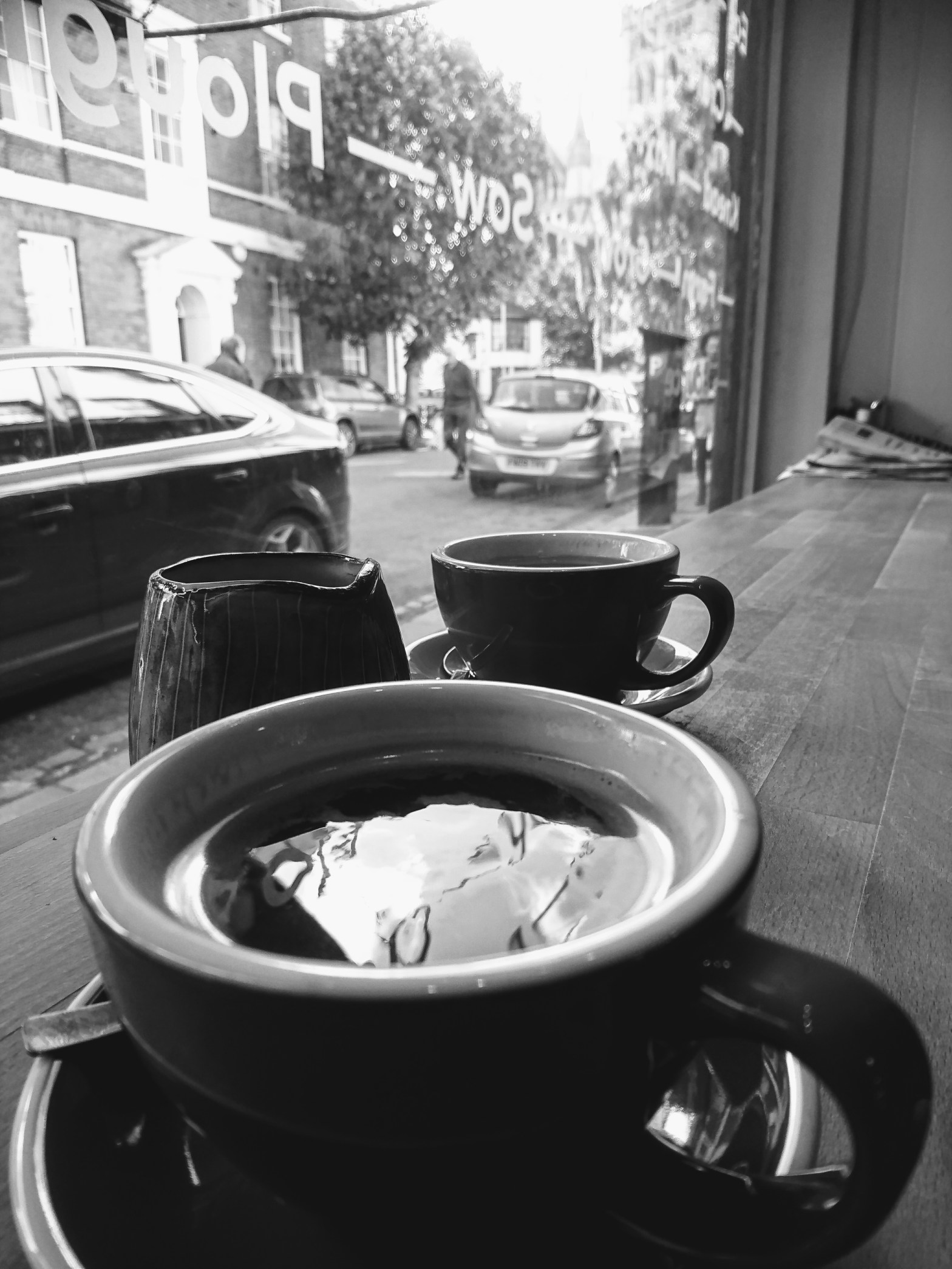
It’s a ritual we’ve followed since day one. I came in full of that coffeeshop rush, enticed by the familiar but exotic aroma, joined the queue and waited my turn. I’d decided on a black Americano, my go-to in a new place.

But when I got to the counter there was no asking what I wanted. You handed me a cup, said 

‘I think you’re going to like this’ and moved on to the guy behind me.

There was barely a chance for me to mumble 

‘Thank you’

Maybe I should have challenged what you’d done. Instead, I just found a seat and took a sip. It was sharp and a little bitter, quite unlike my normal choice. But knowing you were watching, not drinking it wasn’t an option. I didn’t leave until I was sure you’d seen me finish.

Now for thirty minutes every morning, I’m in your control. Too sweet, too cold, too hot. The decision is always yours, sometimes grande, other times espresso.

If I’m hungry I’ll know there’ll be no croissants. On the days I don’t want one they’re piled high.

One day I tried to talk with you and was rewarded with decaf. I quickly learned my lesson.

Now I wait to be told I’m going to like it and always remember to say

‘Thank you’

Tabbouleh

Every Saturday my friend WaxeWod puts a happy list post on her blog and asks her followers, should they feel inclined, to follow suit.

I find it quite therapeutic, a way to look back over the previous few days, often realising it’s the smallest things that make you happiest.

If I was to expand the concept, making it a list of things which always make me happy, whether they’ve happened in the last week or not, pomegranates would be high up there.

It probably goes back to spending part of my childhood in Malta, where pomegranates grow all over the island. Unlike any fruit I’d tried before, they had an exotic edge to them. Picking out the crunchy seeds to eat, then scooping up any juice left behind. I remember this always worried my mother as she was convinced we were going to spill the juice and stain our clothes.

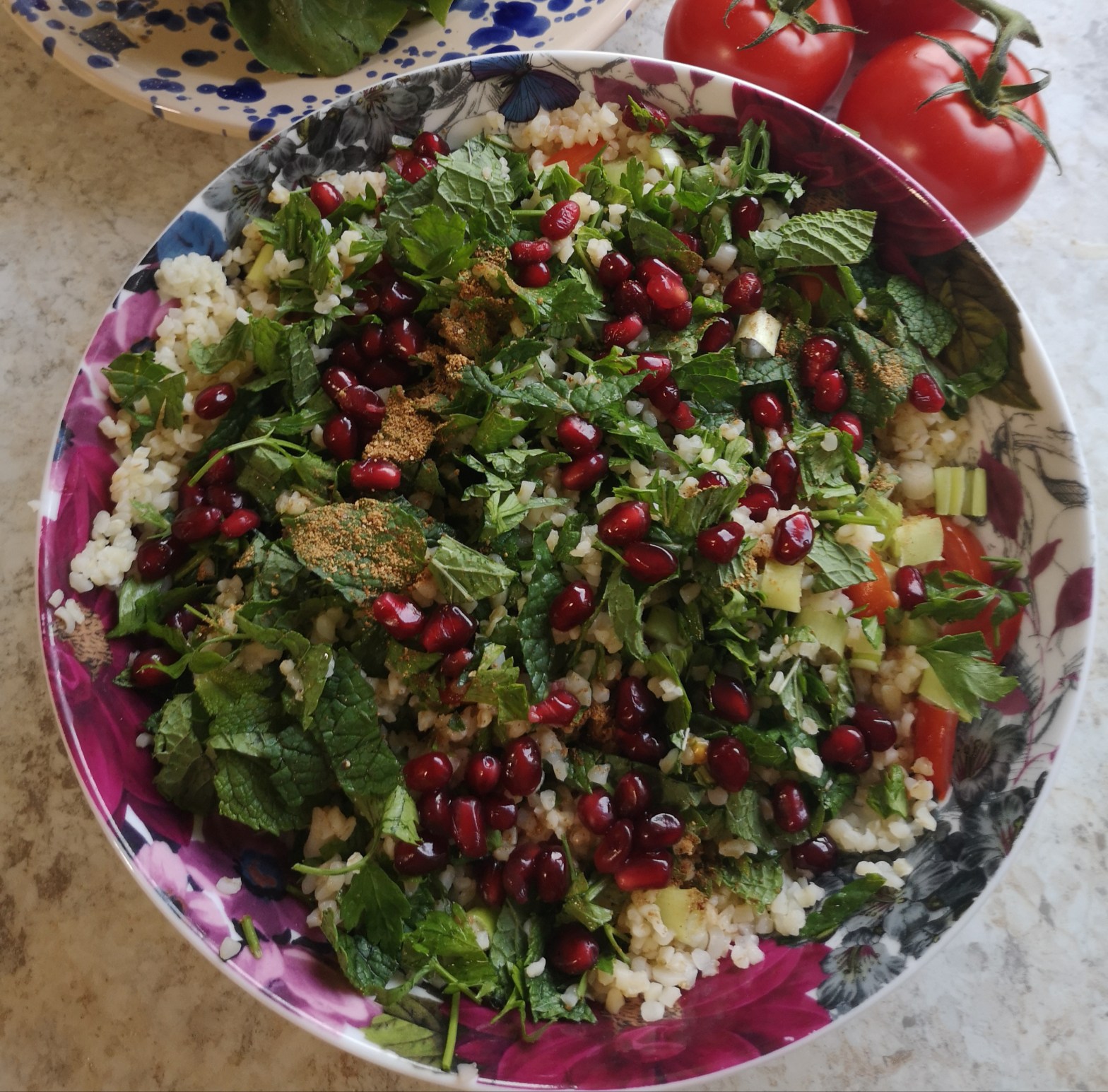
These days there’s always a bottle of pomegranate molasses in my fridge and any recipe which uses them will catch my eye. Hence my first attempt at making a tabbouleh. A dish that not only tastes good, but looks rather wonderful on the plate as well.

The recipe that prompted me to was from Felicity Cloake’s column in the Guardian and the link will take you there. I’m also going to share what I did, as I didn’t have all of Felicity’s ingredients to hand.

Felicity’s original recipe was for four, I was cooking for two

Ingredients

  • 20g fine bulgar wheat
  • 150g ripe tomatoes
  • 3 spring onions
  • 1 lemon
  • 0.25tsp ground black pepper
  • 0.25tsp ground cinnamon
  • 0.25tsp ground coriander
  • 0.25tsp ground nutmeg
  • 0.25 tsp ground ginger
  • 25g fresh parsley…Felicity uses way more fresh herbs than this. I went with 25g of each as that’s what I had to hand. If you have more then by all means use more
  • 25g fresh mint
  • 60ml olive oil
  • 2 tbsp pomegranate seeds
  • Lettuce and/or flatbread to serve with it….I used pitta bread

Method

  • Prepare the bulgar according to the instructions on the packet. Place in a bowl, fluff it up with a fork and leave to one side.
  • Dice the tomatoes, retaining any juice, and trim and finely slice the spring onions. Add both, and the tomato juices, to the bulgar and mix.
  • Squeeze the juice of half the lemon into the bulgar and mix again.
  • Mix all of the spices in a small bowl, then add them to the bulgar bowl.
  • Wash and dry the fresh herbs. Remove the parsley leaves from the stalks.
  • Slice the parsley leaves as finely as you can. Don’t be tempted to use a food processor as this will make them soft and mushy. Use the same slicing method for the mint leaves. Then add both, along with the olive oil, the juice of the second half of the lemon and some salt to the bulgar bowl. Mix everything thoroughly, incorporating the herbs into the other ingredients.
  • Scatter the pomegranate seed on top.
  • Prepare some lettuce leaves and toast some flatbread.

I was checking online about Maltese pomegranates before I started writing and discovered this liqueur. Hopefully, it will be added it to the happy list soon.

Gooseberry Yoghurt Cake

When I first decided I wanted to have a go at writing, and that food would be the central theme running through it, there was one person who inspired me above all others. To read anything by Nigel Slater is to be led into a world where every flavour sparks a memory. Every new taste opens up a world of possibilities and where enthusiasm for food is unbounded.

One of the writing courses I took was based on memoirs and it was Nigel’s book Toast I wanted to emulate. The story of a young boy growing up and how every key moment in life can be linked back to food. Reading it took me back to watching my mother bake cakes, the smells in my grandmother’s kitchen and some of the unusual things I got to try when living in Malta during my childhood. If I’m feeling down, or in need of some inspiration, Toast is the book I turn to.

Nigel’s recipes never seem to include too many ingredients. He’s all about the flavour. Having one, maybe two key items, and then ensuring they are enhanced and highlighted to the best degree.

The one I’m sharing here was featured recently in the weekly column he writes for the Observer newspaper. It’s a cake where the consistency sits somewhere between a sponge and a cheesecake. It’s light and delicate and the slightly sharp fruit compote rounds it off perfectly.

The first time I made it, my partner’s 92-year-old mother described it as possibly the best cake she’s ever tasted. Praise doesn’t get better than that.

Ingredients

  • Eggs – 4
  • Caster sugar – 100g
  • Lemon – 1, you just need the grated zest
  • Natural yoghurt – 500g
  • Plain flour – 40g
  • Cornflour – 3tbsp
  • Gooseberries – 450g
  • Honey – 3tbsp

Method

  • Line a 20cm cake tin and pre-heat the oven to 140c, 120fan or Gas mark 3
  • Separate the eggs, putting the whites in one bowl and the yolks in another. Add the sugar to the bowl containing the yolks and whisk until creamy. Then add the lemon zest and whisk again.
  • Next, stir the yoghurt into the yolk and sugar mixture. Then sieve together the plain flour and cornflour, before stirring it into the mixture.
  • Now whisk the egg whites until thick and fluffy, then fold them into the mixture. Try to do this fairly gently so that you don’t knock the air out of the whisked whites.
  • Transfer the mixture to the lined tin and bake for 50 minutes. When you take it out of the oven it should have risen, a bit like a souffle. It will be quite fragile, so it’s important to let it cool completely before getting it out of the tin. Don’t worry if the cake sinks a bit in the middle while cooling.
  • To make the fruit compote, top and tail the gooseberries, then put them in a saucepan with the honey. Bring them to the boil, then lower the heat and cook for a further 10 minutes. 

If you can’t get or don’t like gooseberries. Nigel does say that apricots or blackcurrants would work well as an alternative.

In the picture with Nigel’s recipe, he’d spread the compote over the cake before cutting and serving. It’s your choice, but I prefer to leave the cake naked with the compote on the side.

As the cake is so soft, it’s best kept in the fridge. That of course is if you have any left over to store.

That’s Me in the Corner

A coffeeshop moment.

”How did you come across him?”

Cafe conversations, going on around me.

“How old was he?”

Like a badly tuned radio.

“I hope you like cinnamon.”

Fragments fluttering by.

“I stood on a box.”

Cup half empty.

“Does it really matter?”

Used to be half full.

“I prefer cardamon.”

Pastry turned to crumbs.

“I’ve heard that joke before.”

I missed the punchline. 

“It always matters.”

I suppose it does

“Have you tried them together?”

At every opportunity.

“Can you hear that radio?”

Someone’s playing with the dial.

“Are you talking to me?”

They’re playing Station to Station.

Love Hearts

A moment in the mouth, a sugar rush, a fizzing sensation, listening to the Buzzcocks on 45.

Not sure I’ve Ever Fallen in Love, but I’ve eaten Love Hearts.

‘Date Me’ I so hoped you would.

‘Dream On’ I did and still do.

Life is never quite as sweet as you want it to be.

‘Call Me’ Now I’m Debbie Harry, sat waiting by the phone.

‘Stay Cool’ That’s easy for you to say.

Trying not to eat the packet too quickly.

‘Date Me’ And I don’t mean like a historian

‘Let’s Party’ Do you even remember 1999?

The cellophane wrapper is split, too late to stop now.

‘Kiss Me’ Can’t promise I’ll always taste this good.

‘Good Vibes’ Turn it up to seven.

Old enough to know better, young enough not to care.

‘First Love’ Second, third and fourth love.

‘Wild Love’ You be Lula, I’ll be Sailor.

Maybe we’re the people we shouldn’t have fallen in love with.

‘I’m Yours’

‘You’re Mine’

Lets suck slowly to make this last.

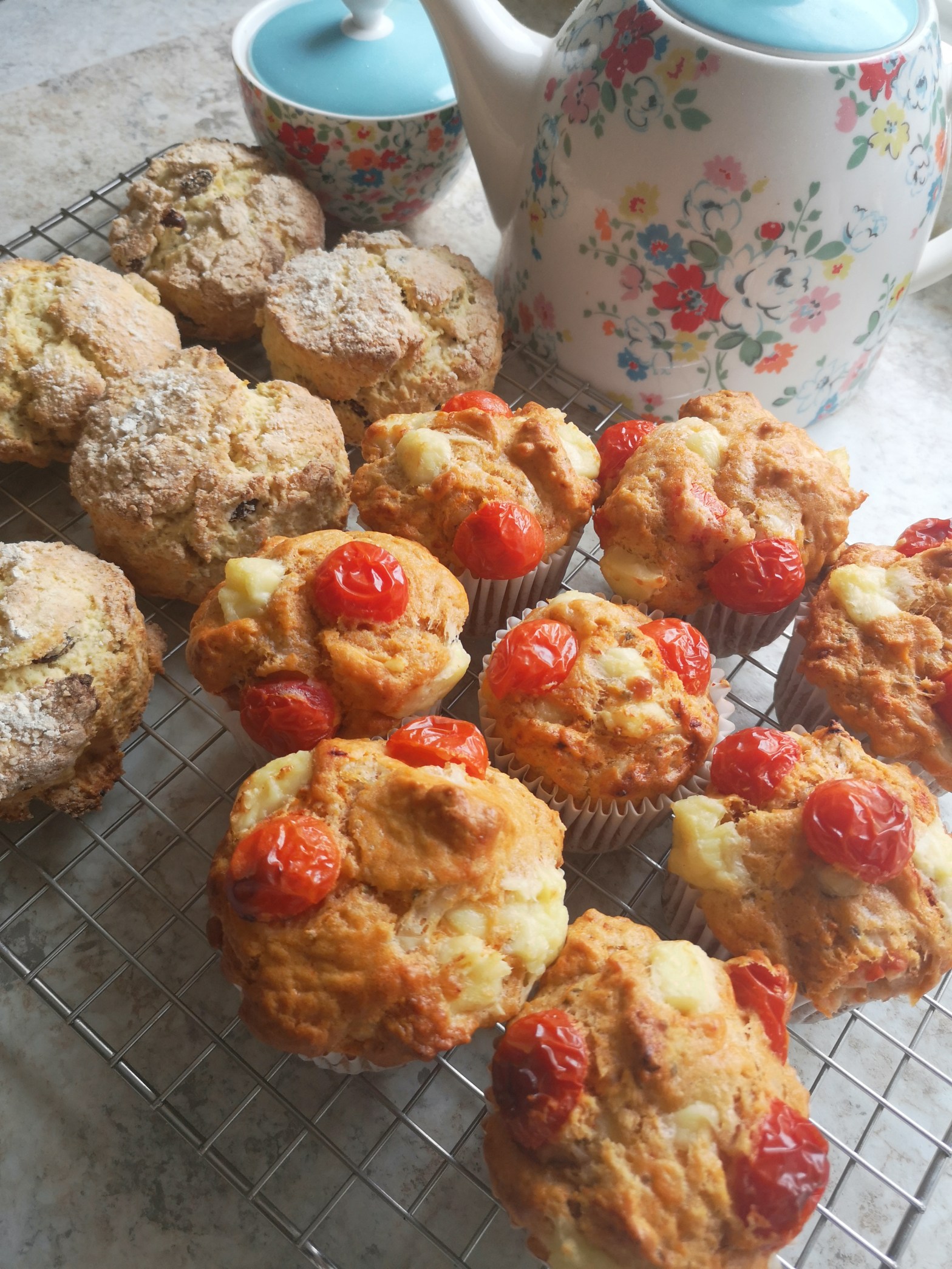
Tomato & cheese muffins

There’s something strange about my relationship with tomatoes. They’re one of the items I cook with most often. Chopped, diced or pureed, they find their way into so much of what I make. I’ll happily hunt out cans of San Marzano, tinned tomatoes so good you can use them as a sauce  without really needing to add anything else. But offer me a raw tomato to eat, something ever more likely to happen as we move into the summer months, and I really won’t thank you for it.

It’s probably more the texture than the taste, but on the relatively short list of food items I don’t like, raw tomato comes top. If I don’t want to offend someone who’s included them in something they’ve made for me, I’ll slice and swallow without chewing. If I’m feeling more relaxed you’ll find a little pile at the side of my plate when I’m finished.

All of this leads me to a muffin recipe where tomatoes play a central role. I made these last week and after posting some photos I’ve been asked to share the recipe.

It’s one of those recipes where you can easily use what you have to hand. The cheese, flour and dried herbs are all variable options.

Ingredients

  • 80ml Olive oil
  • 20g Parmesan or Parmigiano Reggiano cheese..finely grated
  • 1 tbsp tomato puree
  • 2 tsp dried oregano
  • 2 eggs
  • 0.5 tsp salt
  • 100g plain yoghurt
  • 125g cheese..75g crumbled & 50g cubed..The suggested cheese is Feta, but any hard cheese you have to hand will work
  • 80g cherry tomatoes, quartered..plus another 6 halved
  • 180g flour..I used Spelt flour but plain white would work perfectly well
  • 0.5 tsp baking powder
  • 0.5tsp bicarbonate of soda

Method

  • Preheat the oven to 200c gas, 180c fan or gas mark 6.
  • Grease and line a six-hole muffin tin.
  • Mix the oil, parmesan, tomato puree, oregano, eggs, salt, yoghurt, crumbled cheese, quartered tomatoes and a little ground pepper. Then add the flour, baking powder and bicarb. Use a wooden spoon to mix until everything is combined.
  • Divide the mixture between the six muffin holes. Top each with two tomato halves and two chunks of cheese.
  • Bake for 15 minutes, then leave to cool in the tin for 15 minutes. After that transfer the muffins to a cooling rack.
  • The muffins keep well for a couple of days in an airtight container. They can also be frozen if you want to keep them for longer.

Exploring closer to home

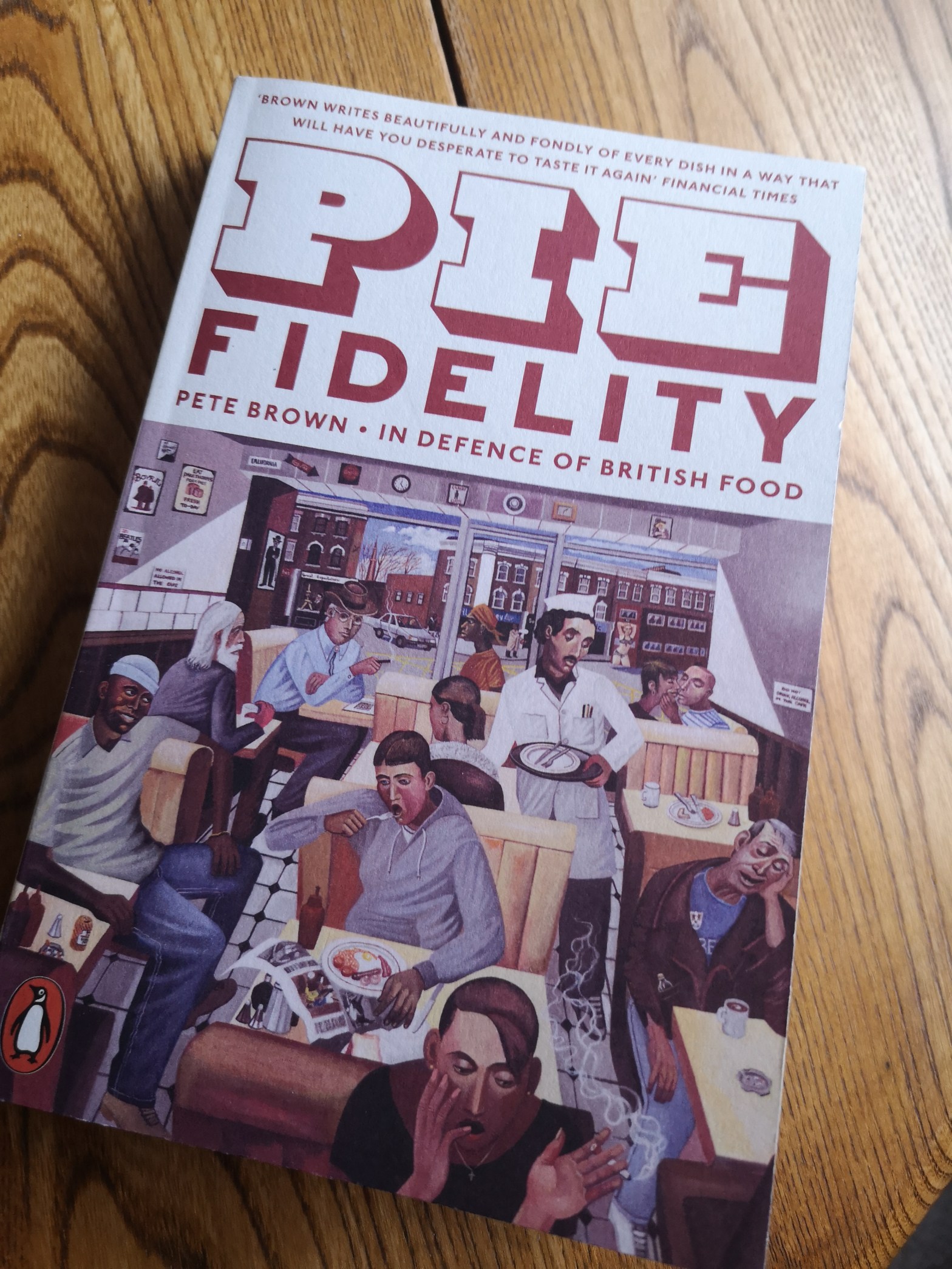
I’m currently reading Pie Fidelity by Pete Brown. A fascinating book that looks into the strange relationship we British have with our food. It’s not that we don’t like food, don’t obsess about food in many cases. It’s that we seem to find it so important where it originates from. He argues that most of us want our food to be from anywhere but here. We all like British-grown or produced food. What we don’t seem so keen on is British cuisine.

Walk down any UK high street and you’ll inevitably find restaurants offering Italian, French or Chinese food. Explore a little deeper and there’s probably Thai, Japanese and Spanish as well. In the bigger cities, the options will go on and on. But what you will struggle to find is a restaurant claiming to be traditional British. He isn’t being jingoistic in his arguments and isn’t saying that we should be eating British food as part of some daft Brexit exercise. Just that amongst our foodie obsessions with kimchi, sourdough, miso and whatever that latest trend is (black bean rayu in my case) there’s a whole world of British food out there.

The further I get into the book, the more it’s making me think about how I cook and eat. My cookbook shelves are like a world tour. The fridge contains hot sauces from far and wide, the spice rack leans well towards North Africa. SousChef is my go-to website, and it can be a dangerous place to go, if like me you’re inclined to buy first and then think ‘now what do I do with this?’

When we had lunch out last Saturday, my eyes got stuck halfway down the menu. Unable to move beyond the hot and sticky Korean chicken dish. The sort that leaves your lips slightly numb and your fingers with a dark sriracha stain. The other dishes sounded good, and yes there were pies and fish which could be classified as British. But they didn’t grab me in the same way. Didn’t excite the tastebuds.

I’m not for a moment saying that reading this book is going to stop my culinary instinct from roaming all over the world. I’m too far gone for that. More, that it’s made me stop and realise, I should be exploring closer to home as well.

I wrote you a note

At the start of the year, I intended to be here more often, to try and post at least a couple of times a week. All went well for most of January, but then health got in the way of things. A sore throat became an all-over ache, soon progressing to breathlessness and feeling pretty low. My doctor prescribed a course of antibiotics and they do seem to be moving things in the right direction.

I even managed a bake at the weekend. A rather wonderful orange, ginger & parsnip cake, that helped with the rehabilitation process no end. I’ll write more about it when I’m feeling a bit better.

In the meantime, and to keep the blogging momentum going, I’m sharing a very short piece of fiction I wrote in response to a 100-word writing challenge my friend Alison posted on her blog. Other than the length the challenge was that the story had to reference winter and include the word moist.

I wrote you a note. Yesterday sat in the cafe, sheltering from the December rain and sleet, trying to sort my thoughts. 

Then my coffee came. The girl behind the counter, the one with the French look who always makes me lose my train of thought, brought it to my window seat. The moist, steamed-up window I’d been using as a pad. My finger tracing out the words.

We didn’t speak for long, never do, but when I turned back the windows were clearing, and the note was gone.

Maybe it slipped out the door while I wasn’t looking.

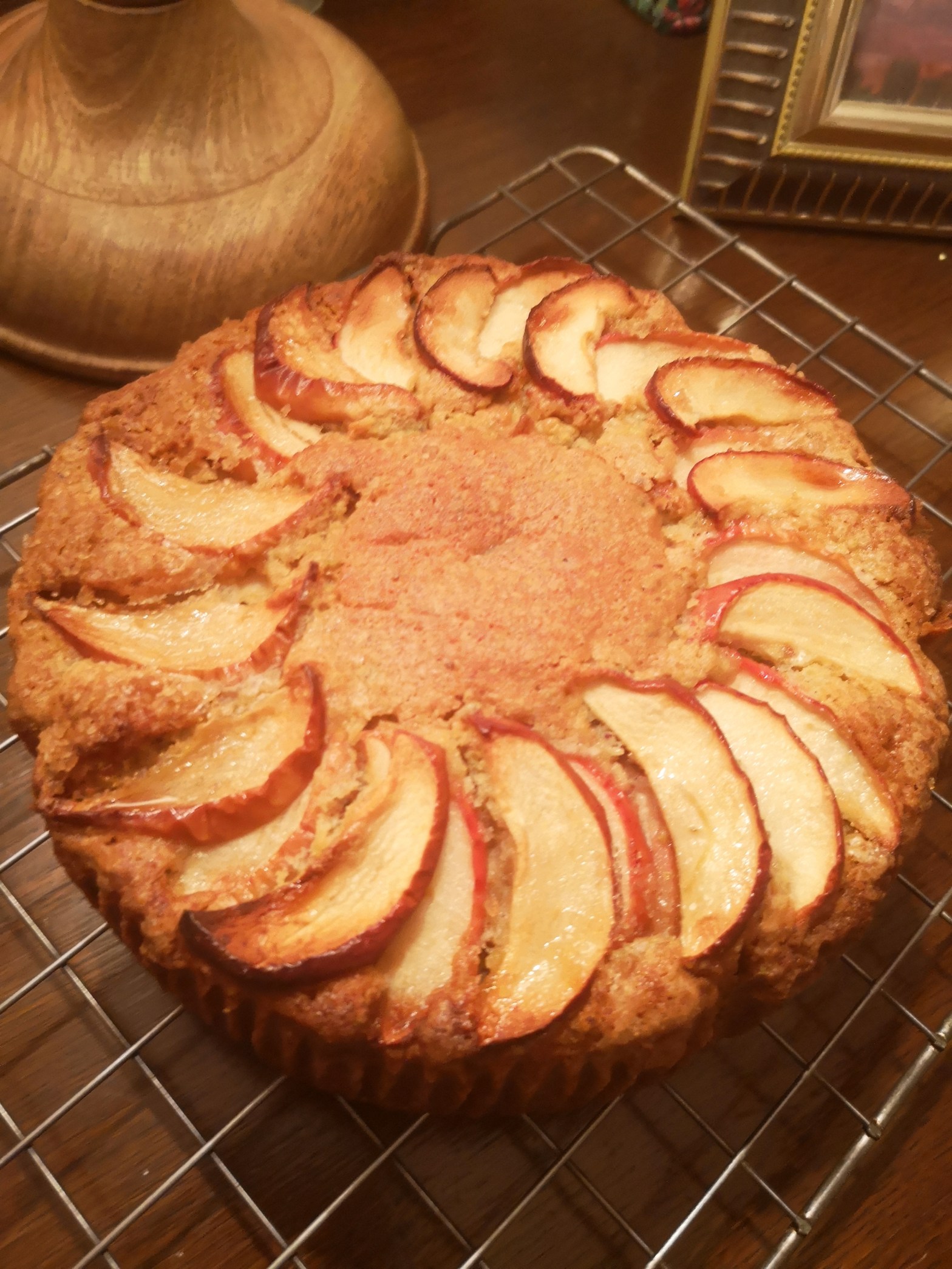
Cardamom, apple & nut cake

When I first started to bake, the recipe was everything. I had to have each stipulated ingredient, I had to adhere to every step of the process and the oven time couldn’t be a minute more or less than what was stated on the page. But things are different now

Partially it’s down to experience, you get to know tips and tricks which can be used as shortcuts, whatever the dish you’re making. Primarily though, I think it’s down to practicality, the realisation that every cooking or baking session doesn’t have to be preceded by a shopping expedition. Doesn’t have to incur extra expense. Just accept the fact that as long as you have a hallway decent stock of kitchen staples, a selection of spices, and a bit of imagination, most recipes can be adapted to what you have available on the day. The finished item may not match what first caught your attention in the cookbook, but the upside is you’ve created something personal.

All of which leads me to cardamom, apple and nut cake.

I based this on a recipe I found in A Good Day To Bake by Benjamina Ebuehi. If you like baking I cannot recommend Benjamina’s recipes highly enough. As well as publishing two books, she writes regularly in the Guardian. I’ve lost track of the number of her recipes I’ve made, and without exception, they’ve tasted wonderful. I particularly like the way she includes fresh herbs, both in sweet and savoury bakes. The standout example of this is tarragon & white chocolate blondies. 

In the book, this recipe is for a cardamom, pear and pistachio cake. But I had no pears and only half of the pistachios required.

So after a hunt around the kitchen, these are the ingredients I came up with and this is how I made it.

Ingredients

  • 180gm unsalted butter – melted in a saucepan
  • 120gm nuts – Benjamina uses all pistachios. I used 60gm each of pistachios & hazelnuts
  • Seeds from 8 green cardamom pods. I added a couple of extra pods as I love the flavour of cardamom.
  • 3 eggs
  • 180g caster sugar
  • 2tsp vanilla paste
  • 180g plain flour
  • 1.5 tsp baking powder
  • 0.25 tsp salt
  • 2 dessert apples – I used Jazz Apples but any sweet dessert variety would work.
  • 2 tsp demerara sugar

Method

  • Preheat the oven to 160c fan, 180c gas or 350f electric. 
  • Grease and line a cake tin – the one I used was 18cm
  • Blitz the nuts as finely as you can in a chopper or food processor. Grind the cardamom seeds and then mix them into the blitzed nuts.
  • In a large bowl whisk together the caster sugar, eggs and vanilla paste. Then add the flour, baking powder, salt and mixed nuts and seeds. Gently stir until you have a smooth cake batter. Then pour in the melted butter and stir again until combined. Finally, pour the finished batter into your lined cake tin.
  • Cut the apples in half, leaving the skin on. Remove the core and then thinly slice the apple. 
  • Arrange the slices on top of the cake, don’t worry if they overlap or if you start a second layer. Once complete sprinkle the demerara sugar over the top
  • Bake the cake for about 50 to 55 minutes. A sharp knife inserted into the middle of the cake should come out clean. If it doesn’t bake for a bit longer.

In her recipe Benjamina says to bake the cake for 40 to 45 minutes, but I found this wasn’t long enough. A bonus from the extra time in the oven is that the apple slices on top get some additional caramelisation.

As an extra treat, this cake works wonderfully with the addition of some custard.

Not So Blue Monday

It’s #BlueMonday. I didn’t know there was such a thing, and as with all these sorts of days, I’m not sure who designated it so. Probably someone trying to sell you something to cheer you up.

Rest assured, I’m not going to do that. All I will say is if the weather is as rotten where you are as it is here, wet and windy with the risk of snow before the day is out, I have some suggestions on how to improve however much of the day you have left.

First, put some music on. If you’re listening already that’s great, if not go and pick something off the shelf. Go for music which makes you feel good. I’ve got the place to myself this afternoon so I don’t have to worry about the volume. A perfect excuse to play the new vinyl that turned up in the post today from Resident Music in Brighton. It is my all-time favourite record shop and I couldn’t resist dipping into their recent online sale. Nightmares On Wax are playing as I type, Horace Silver and Caribou will get their turn later.

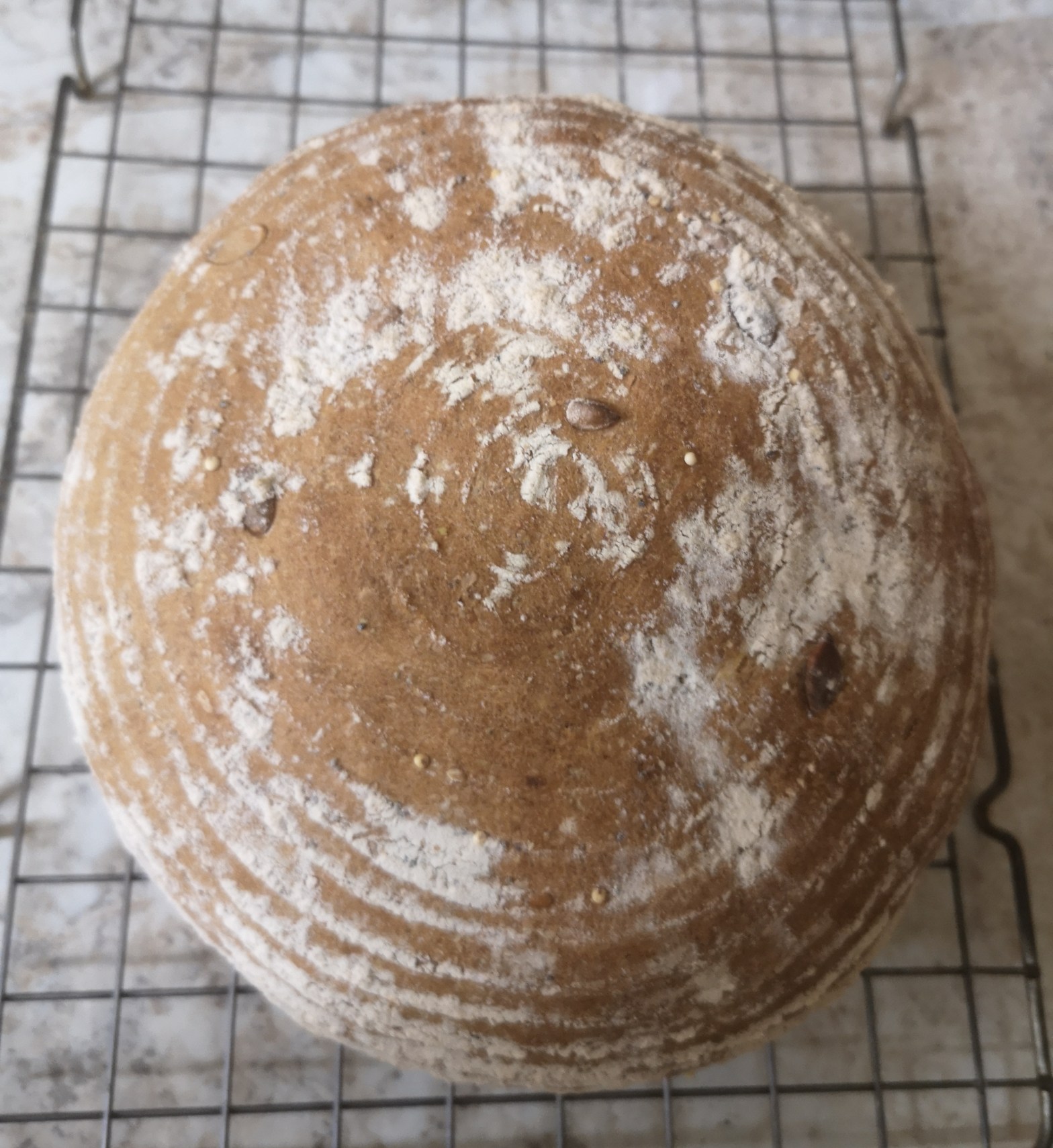
Now the music is sorted, lit’s time to make some bread. The most therapeutic type of baking. Minimum ingredients

  • 500g flour – I use a mix of half strong-white to half wholemeal
  • 10g salt
  • 7g dried yeast
  • 350ml lukewarm water

turned into maximum satisfaction.

As I’m typing this in real-time, there will now be a short break as I set things in motion…..and I’m back. The dried ingredients have been mixed in a bowl, the water added and everything brought together by hand to make a shaggy dough. At that point, I could have turned it onto a floured board and kneaded it for about 10 minutes. Instead, I opted to use a mixer with a dough hook for about 7 minutes. In the end, the dough was smooth and pliable. I then put it back into a clean bowl, covered it with a cloth and it’s now sitting in the warm cupboard under the stairs to prove. It will be in there for about an hour and by the end should have doubled in size.

In the meantime, I’m going to give my dad a call and make sure his Monday is going ok.

Well dad’s good and hopefully, we’re going to get together soon, rail strikes permitting I’ll go over to Cambridge and have lunch with him.

The dough has now finished its first prove and is well-risen. I turned it out of the bowl, back onto the floured board and give it a quick second knead. It’s now back in the cupboard for a second prove which will last for about 30 minutes. This time I’ve put the dough in a proving basket or Banneton. This wicker container will create a round loaf and also give it a wonderful ringed pattern on the crust. Midway through the second prove I’ll preheat the oven to 210c fan. At the end of the second prove the bread will go into the oven and bake for 25 minutes.

So we’re now into the evening, the curtains are pulled and a few snowflakes falling outside. All the new music has been played, plans are in place to see dad, and the kitchen smells of freshly baked bread.

Design a site like this with WordPress.com
Get started