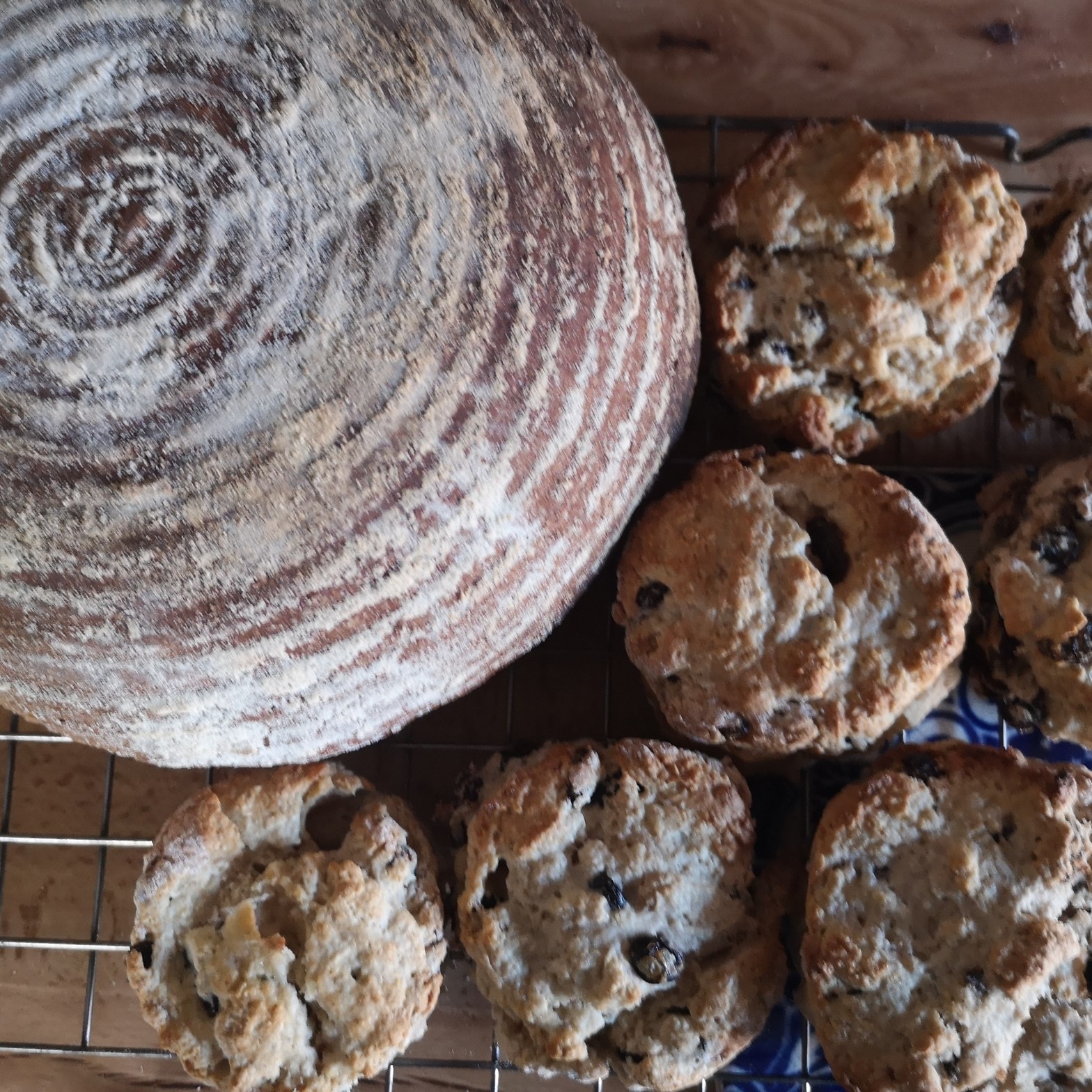
Escaping to the kitchen to make bread and scones

Coronavirus isolating might be resulting in a lack of ingredients in my store cupboard but it certainly isn’t limiting the frequency at which I bake. If anything I’m finding myself in the kitchen more often than normal. This is partly down to the fact home baking helps to eke out our supples and partly to the fact that there are three of us living in this fairly small house at the moment. As much as I enjoy the others company I’ve quickly realised that by claiming the kitchen for an hour or two of baking I get my own space. Not only to bake but also to have my choice of music and my timetable for how often the coffeecup gets filled up. I’m happy to let you in what I’m doing as I know for a fact that neither of them read this blog.

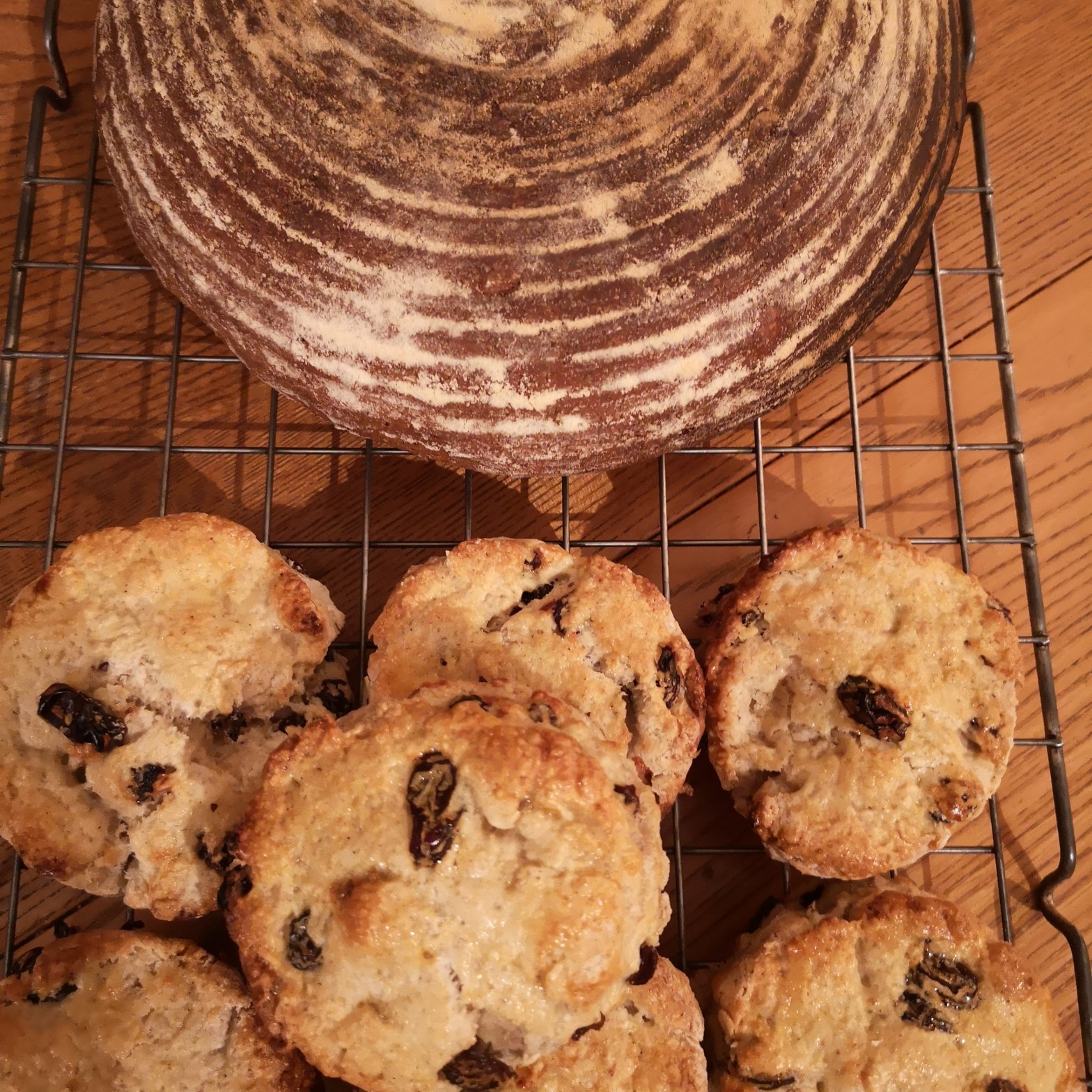
In an effort to preserve store cupboard supplies I’ve been keeping my baking a bit simpler for the last couple of weeks and I’m finding bread and scones to be a great way of doing this. The bread is an obvious staple item to be making at the moment and scones, particularly if you add a bit of fruit, are a good afternoon or evening treat. 

There’s a couple of basic recipes I use for these bakes and the beauty is that ingredients can be switched around in both dependent on what’s available in your pantry. If you’ve got unexpected time on your hands, and who of us hasn’t at the moment, now is your chance to bake.

Bread

This is a seeded loaf which ideally uses rye & spelt flour. However the recipe works if other bread flours are substituted. The recipe makes one loaf of approximately 800g

Ingredients

  • 2tsp (10g) dried yeast
  • 350g warm water
  • 3 tbsp runny honey
  • 250g dark rye flour
  • 250g white spelt flour
  • 1tsp sea salt
  • 50g seeds. I currently have a stock of poppy & sunflower seeds. Any seeds you have in the cupboard will work.

Method

  • Dissolve the yeast in the warm water, add the honey and set aside
  • Combine the flours, salt and seeds in a bowl. Mix well
  • Pour the liquid over the dry ingredients. Mix with a fork, than your hands, until you have sticky dough. Tip onto a floured surface and knead for 5 minutes. If you have a food mixer you can use the dough hook for this.
  • After kneading the dough place it a bowl and cover it with a tea towel. Put the bowl in a  warm place and leave it to prove for approximately an hour. The dough should rise by about 50%.
  • After an hour briefly knead the dough again. Then form the dough into an oval shape and put on a floured baking tray. Cover it again and leave to prove for approximately 30 minutes. The dough should rise again by about 50%. During this proving session pre heat the oven to gas mark 9.
  • Half fill a baking tray with boiling water and put it in the bottom of your oven. This will create steam in the oven and help to form a good crust on the bread during the baking process.
  • After the second prove bake the bread for 30 minutes. When you take the bread out of the oven tap it on the bottom. If it sounds hollow it’s done.

Scones

This recipe produces 10 very generous size scones. I often half it and still manage to make half a dozen.

Ingredients

  • 600g self raising flour
  • 60g caster sugar
  • 180g dried fruit. I’m currently mixing raisins & sultanas in mine
  • 60g soft butter
  • 2tsp ground cinnamon
  • 2tsp baking powder
  • 150ml milk
  • 2 eggs

Method

  • Preheat the oven to gas mark 6 and line a baking tray
  • Place all the ingredients in a bowl and bring them together using a knife
  • Tip the dough onto a floured surface and roll it to a thickness of approximately 4cm. 
  • Use a cutter or a mug to create the size scones you want
  • Brush the scones with a little egg wash or melted butter and bake them for 12 minutes.
A life changing custard tart.

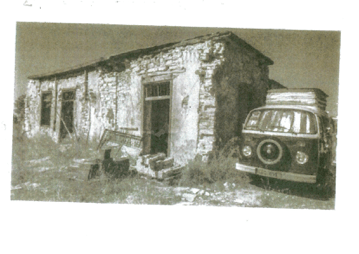
Yesterday morning I attended the final session of my creative writing course. Last week didn’t happen due to the coronavirus shutdown but for this one our tutor suggested we have a go at doing things online. I was a little wary going in but have to say that through a mix of email and a WhatsApp group we had a thoroughly enjoyable couple of hours. It was proof that as the requirements for social distancing drag on there are ways to mix with people and to feel your everyday life isn’t being totally disrupted. Ahead of the session we were sent the image at the top of this post and asked to produce something inspired by it. The sole criteria was that it be no more than 500 words long. I took the chance to share this baking dream.

He’d known for a long time that things had to change, known that there’s only so long you can kid yourself into thinking everything’s ok.

‘Let’s take some time off’ was Giorgina’s suggestion. ‘Drop everything and run away. Have a mid life crisis before it’s too late’

‘You do realise that unless we live until 110 mid life has gone’ had been his less then enthusiastic response.

‘Come on, let’s hit the road and hope the road doesn’t hit back’

Now she was starting to sound like a Johnny Cash song, although in his book that wasn’t such a bad thing.

So they did drop things, they left the jobs that paid well but bored dreadfully and they took their chances with the road.

That’s how they came to be in Portugal, the land of mournful Fado music and quite possibly the finest custard tarts known to man. Custard tarts that in their own way had quite a lot to answer for.

The crunchy, flaky pastry and the rich custard filling of a well made Pasteis de Nata had always been his weakness. If offered along with a strong black coffee he was your friend for life.

It was a week into their stay when the idea started to really take form. They’d ventured out of Porto for the first time a few days earlier and meandered up the coast, hopping on and off the local busses. When the sun was at its less aggressive they’d walked as well and that’s when they came across the rickety old building and the nearly as ancient VW camper.

‘Why don’t we stay’

‘For another coffee?’ they were back in Porto now. Sat at a shaded table with coffee and the inevitable sweet treat.

‘No, stay in Portugal. Although you can have another coffee if you want’

‘Are you serious’

‘Yes I am. Your’e the one who always saying it’s now or never, so let’s make it now’

‘Ok, tell me your plan’

‘We buy somewhere like the beat up old place we saw the other day. Maybe even that one if it’s for sale. We stay here and for the first time in our lives we actually spend our time doing what we want to do’

And to probably nobody’s greater surprise that their own that’s what they did. The tumble down house was for sale and quickly became their’s for a ridiculously cheap price. The owner happily throwing the VW into the package as well and that was the point that David shared the rest of his plan. The plan that was going to see him spend the next three months sampling Pasteis de Nata across Portugal and learning to make them wherever bakers would let him into their kitchens. The plan that was going to let him have the bakery he’d always dreamed of.

The comfort of baking

I picked the title of this short post because I don’t think there’s ever been a more important time to get in the kitchen and revel in the comfort of baking. To shut the world out for an hour or two, to have the enjoyment of being creative and at the end of it the knowledge that you’re helping to feed your loved ones. Making a loaf of bread feels as if it’s gone from being a luxury to a necessity.

I’ve always been a baker used to scouring recipes at the weekend ahead of deciding what to bake and it’s going to take some getting used to the fact that it doesn’t work like that anymore. Now I need to check store cupboards and pantry first to see what’s available and then find recipes to suit. The upsides are going to be increased creativity, less reliance on recipes and the fact that those packets that have worked their way to the back of the shelf are finally going to see daylight and get used. 

So in these very strange times I just wanted to say that I’ll be needing the comfort of baking even more than normal and I hope the you’ll be here to share it with me.

The girl with the broken mirror.

For the purposes of this post I should probably change the name of this blog to David in the kitchen but doing a bit more than just cooking.

I’ve been taking a creative writing course recently through our local adult education scheme and for one of the recent sessions we were asked to write a short piece, 500 words maximum, to share with the group and then for us all to feedback on each others work. The session was open to any type of writing that we wanted and I took the opportunity to have a go at something that wasn’t food related. 

As with everything else at the moment  the coronavirus outbreak has brought the writing course to a sudden end and if any of my fellow students or our tutor are reading this I’d like to take the opportunity to wish them well and to hope they stay safe over the coming weeks.

The piece I shared with the group is below 

Most days he’d spend the journey with his head in a book, other times he’d stare out of the window and just let his mind wander. What he’d never done before was take any notice of his traveling companions. Yes there were faces that registered. A mumbled “morning” as they waited in the queue. An obligatory grumble and eye roll when the bus was late or on some days didn’t even turn up at all. Other than that he found the way to get through the daily commute was to make it his time and his space. Social interaction could wait until later in the day.

It was the girl with the broken mirror who’d changed things. Suddenly the book didn’t feel quite so important anymore and what little view there was through the grimy windows was even less appealing than it had been. He’d first noticed her a few weeks ago, sat on her own, three rows in front of him. Sat staring intently into a cracked and broken mirror that she held in one hand whilst with the other she delicately applied makeup. The mirror was so damaged it looked as if the shards might fall out if tipped the wrong way. The makeup application so precise it was clear the fragmented image didn’t seem to bother her at all. How was she managing to do that.

The bus seldom stopped before where he got off but that day it did. Somehow he knew it was going to be for her. She never looked back as she walked down the bus and never looked round as she got off. He probably could have looked over his shoulder and tried to catch a glimpse of her as the bus pulled away, but something stopped him.

He didn’t think anything more about it that day but the next morning she was there again in the same seat. Had she been in the queue with him, had she jumped on at another stop. He didn’t know and wasn’t sure that he wanted to.

After that her morning ritual became part of his. He got to know where they should be on the journey when the eye liner came out, how long there was to go when the blusher was applied. Every day the end of the ritual was the same. She got up and walked away and he never got to see her face. Never got to see the image she’d created using her broken mirror.

It’s a long time now since he sat on that bus but he still wonders what the girl with the cracked mirror looks like.

Blood orange syrup cake with candied peel.

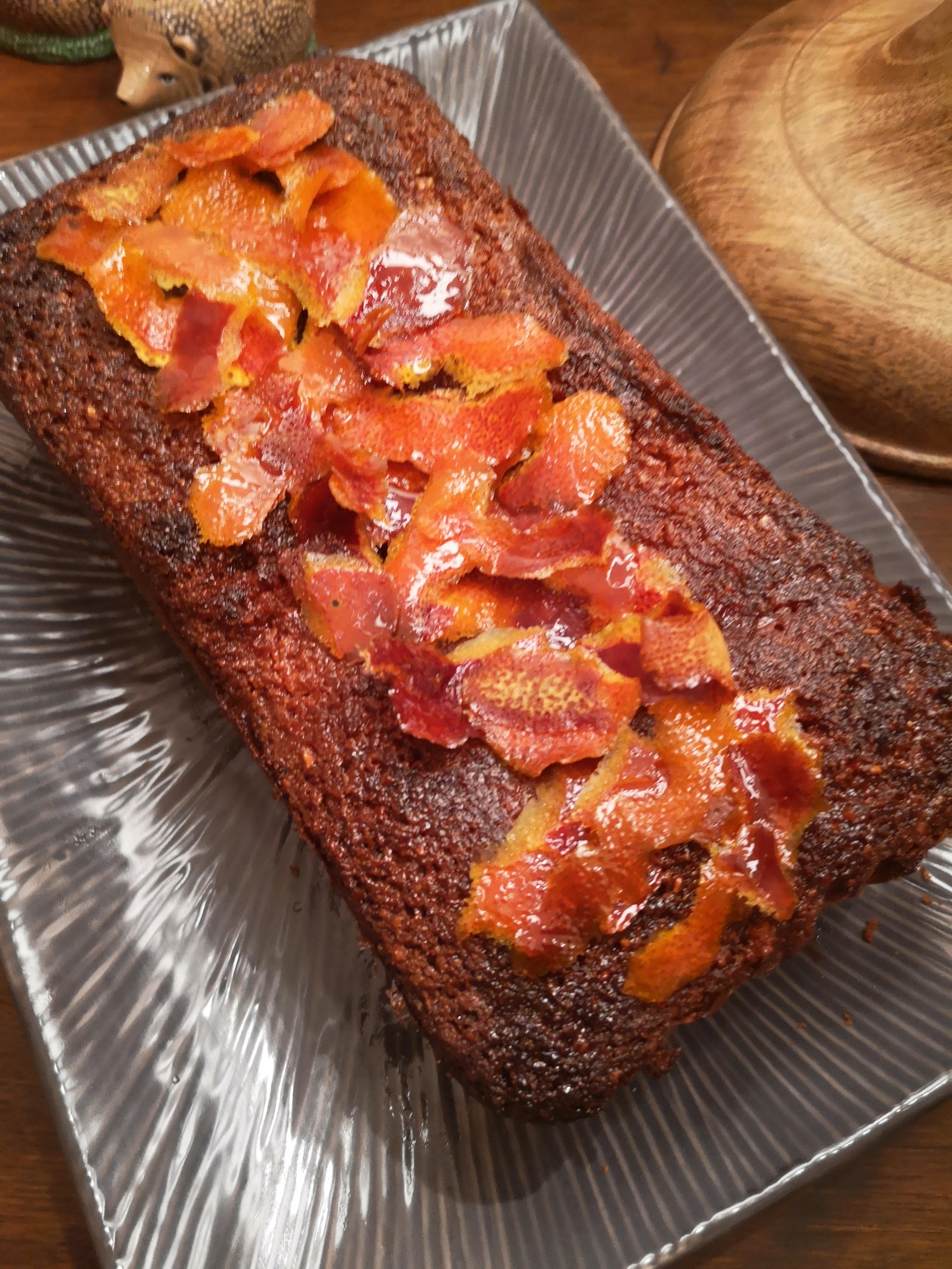
Up until two weeks ago my recipe of choice at this time of year had always been the blood orange and pistachio cakes that I shared in my Baking Advent Calendar day 10 post. Then I discovered Tamal Ray’s blood orange syrup cake with candied peel and suddenly there’s a new favourite in this house. So much so that I’ve baked two in the last fortnight and the request is already in for a third.

Blood oranges have a relatively short season, only being available during late winter and spring. You will occasionally see them referred to as blush oranges but to the best of my knowledge that’s only retailers getting slightly worried that customers might not want to buy something with blood in its name.

When you cut into a blood orange the flesh of the fruit is a deep ruby colour and in some varieties this coloration can be seen on the skin as well. The taste is clearly citrus but I always think that there are deeps hints of raspberry in there, as well as orange. Although grown in some other parts of the world now, they were originally native to southern Italy and in particular Sicily. 

In addition to the taste benefits that this rather wonderful fruit can bring to your cooking and baking there are health benefits as well. The oranges are packed full of of anthocyanin, the same compound that is found in blueberries and raspberries. This compound has been found to improve cardiovascular health, protect from UV damage and to act as a potent antioxidant. You can find more detailed information on the health benefits of blood oranges via this link.10-health-facts-about-blood-oranges

The cake that this recipe produces is very moist and sticky. As long as it’s keep in an air tight container it will stay fresh for days. That of course is assuming you can resist the strong temptation to eat the whole thing very quickly.

Ingredients

For the cake

  • 150g salted butter
  • 200g caster sugar
  • 250g ground almonds
  • 60g polenta
  • 3 large eggs
  • 0.5 tsp salt
  • 1.5 tsp baking powder

For the candied peel

  • 80g caster sugar
  • 2 blood oranges pared with a zester to give thin strips. Try to keep the zest as thin as possible when you are removing it from the orange.

For the syrup

  • 60g caster sugar
  • 140g blood orange juice (this should equate to the juice from two oranges)

Method

  • Preheat the oven to gas mark 4
  • To make the cake, cream the butter and sugar until fluffy. I use a food mixer for this. Then stir in by hand all other cake ingredients.
  • Pour the ingredients into a lined 900g loaf tin and bake for 50 minutes.
  • To make the candied peel, mix the sugar with 120ml of water in a saucepan over medium heat. When the sugar is melted add the zest and let it simmer for fives minutes. Remove the zest with a fork and leave it on a plate to cool.
  • To make the syrup, pour the sugar and orange juice into a pan and boil for five minutes. Try and time the making of the syrup so that it is still warm when you come to pour it over the cake.
  • As soon as the cake has come out of the oven poke holes all over the top and then pour over the syrup.
  • Leave the cake to cool completely in the tin before you turn it out. Once you have done this scatter the candied peel over the top. 

The biggest problem I have now is deciding whether to leave this cake just for blood orange time of year or whether to risk disappointment and make it with navel oranges at other times.

The Famous Five ate rather well

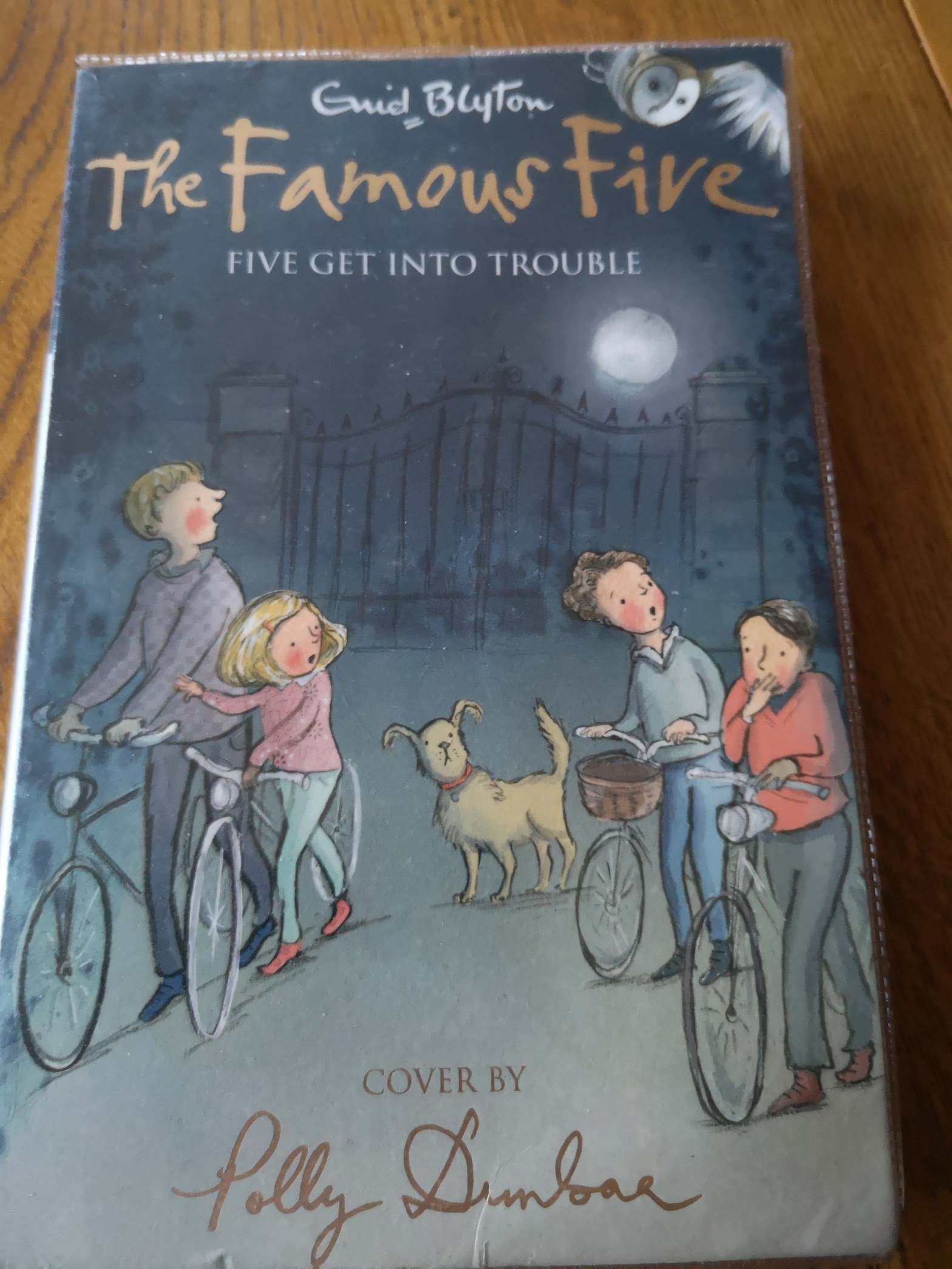
Last week I picked up an Enid Blyton book for the first time in more years than I care to admit to. I mentioned in my last post about the creative writing course that I’m taking and last weeks session was all about children’s literature. As part of this we were asked to revisit books from our childhood that had excited us and for me it had to be Enid’s Famous Five. There isn’t a particular one in the series that I have memories of, it’s just the excitement and adventure that ran through all of them. I think they were probably the first books that I read for myself and that sense of independence only added to the thrill at the time. It felt like my own little world

If you’ve never come across these books before they were a series based around four children – Julian, Dick, Anne & Georgina –  and their dog Timmy. First published in 1942 and then annually until the early sixties each book contained an adventure that took place during the school holidays. Parents were always in the mix somewhere but they seemed to give their children the leeway to get involved in things that always had me hooked and desperate to know what was on the next page. Sometimes the adventures almost go a bit too much, in particular there was one story that saw some of the children get stuck in a cave. At the time of reading this my bed was against the wall and I know that for nights after I had to go to sleep facing out into the room ,as facing the wall reminded me of that scary cave.

One thing that only came to me last week on revisiting the books was just what an important part food played in them. We all know that children have big appetites but these seem to have been a particularly well fed bunch. I only flicked a few pages into Five Get Into Trouble and our heroes were sitting down to a meal of fresh bread rolls with anchovy paste, jam tarts, oranges, lime juice and cheese and lettuce sandwiches. What makes it all the more impressive is that this is a picnic packed up for them to take on a cycling trip. It’s an enticing selection now but when the book was published in 1949 at the hight of post war rationing it must have been absolutely mouthwatering. Food references then continue throughout the book. I’ve got it next to me as a write and just to prove a point a random opening has taken me to a scene where they’re enjoying bread and butter, hard boiled eggs and a jug of steaming cocoa. My favourite scene of all is when Anne decides that it must be awful to be a cow and only eat grass. Her reasoning being that they will never taste the delights of egg and lettuce sandwiches, ginger beer or chocolate eclairs. What I like is that Blyton is never just listing the foods that her characters eat, she’s taking you into the experience in a way that all good food writing does.

Cleary I’m not the only one to be struck by Famous Five food as I came across Jolly-Good-Food. A children’s cookbook by Allegra McEvedy that’s based on the food the Enid Blyton’s characters eat.

Perhaps I should buy myself a copy and write a Famous Five kitchen adventure.

It’s all about the bread

It’s all about the bread this week and that’s as it should be as #RealBreadWeek is all over my Twitter timeline. It’s as if the algorithms have been in my kitchen and smelled the baking. There’s already been a couple of loaves this week and there will probably be another before next weekend. I wouldn’t claim to bake all of the bread that we eat in this house but it’s definitely an ever increasing percentage of it.

Even when I’m not in the kitchen baking seems to be cropping up everywhere in my life at the moment. I’m currently taking a creative writing course here in Norwich and this weeks session is going to be about writing for children. The main prep that we have been asked to do is around the books that we enjoyed in our childhood, this has seen me digging out a very dogeared copy of one of Enid Blyton’s Famous Five books, in addition to that we were asked to look at how factual books for children are written. I went into our local library to see if they had any cookbooks in the children’s section and was fascinated by what I found. There were far more than I expected and nearly all of them were based around baking. The sense of adventure and excitement written into the step by step recipes leaps off the page as you read them and the explanation of the basic science going on as the ingredients react with each other just adds to it. I’ve never baked in the company of children but this has left me feeling that it must be a really rewarding experience.

In other baking news, I’ve discovered a new flour. I’m not sure if I’ve mentioned it before but one of the things that has intrigued me as I’ve delved deeper into baking is just how many different flour types there are. I started off with two on the shelf, a pack of plain and a pack of wholemeal, but when I counted them before sitting down to write this it’s now a dozen types. The latest addition is Emmer flour, this is an ancient wheat that can be traced back to neolithic times. I’d never heard of it prior to finding a pack in a local health food store last weekend and just couldn’t resist adding it to the collection. I’ve already tracked down some recipes for emmer bread so expect another update on this soon.

Before I get to the bread that I’ve been baking there is one more thing to share. Last week we were at a baking event in Norwich where we found ourselves sharing a table with the owners of a new bakery that has just opened in the city. As the evening wore on they realised that I was there as a keen amateur and the upshot is that they’ve invited me to go and spend some time with them in their bakery. I’m very excited by this opportunity and as long as it all comes to fruition you will definitely be hearing more about it.

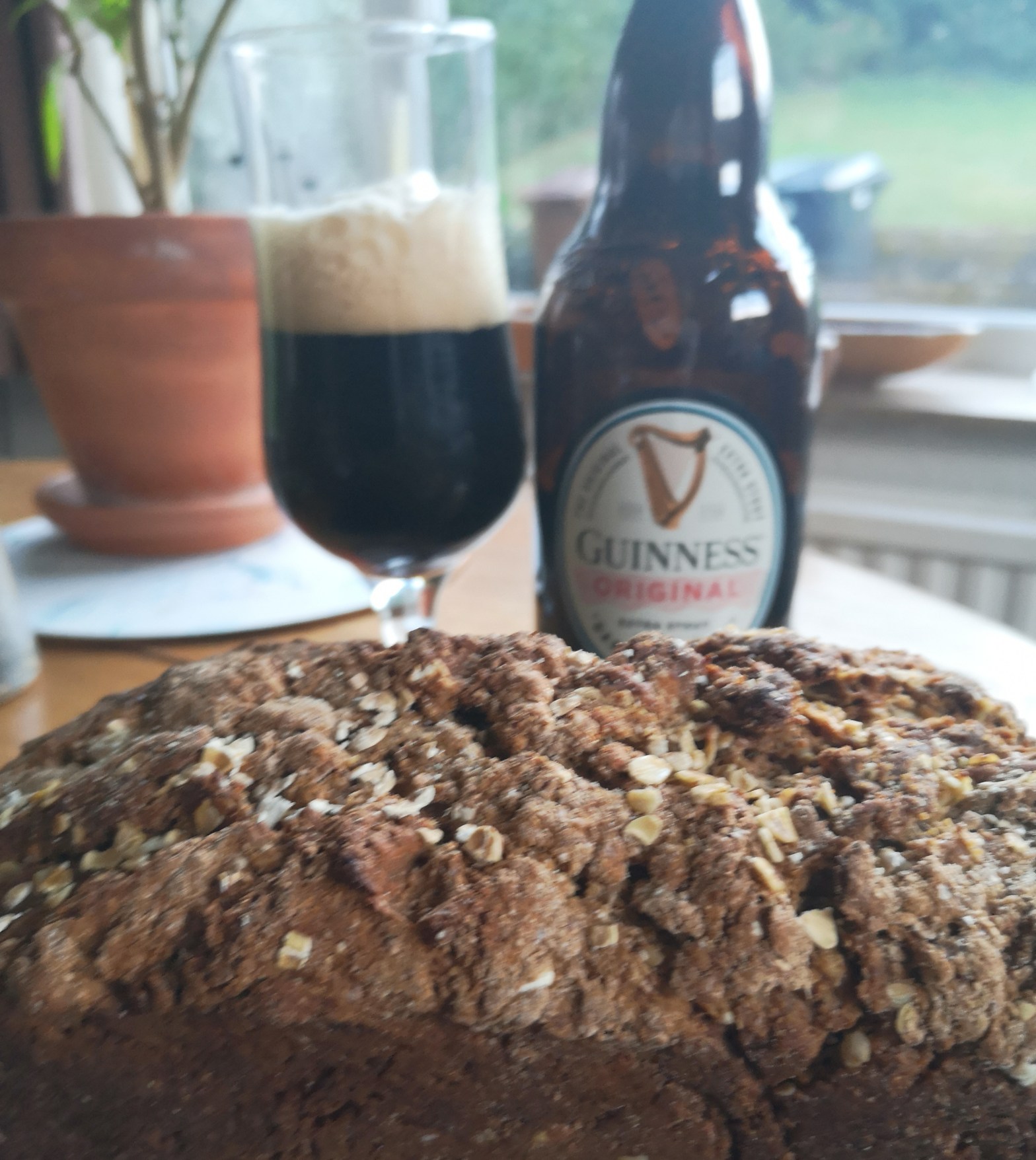
To finish off let’s bake some bread. The one potential downside of bread baking can be that you need to have quite a large time window available to you, particularly once you’ve factored in the proving of the dough. The beauty of this recipe is that there’s no proving, so as long as you have the ingredients available you can make it whenever you want. It’s a Guinness soda bread and if my experience is anything to go by it’s one that people remember and ask you to bake again. I find it goes particularly well with cheese.

Ingredients

  • 25g unsalted butter cut into cubes
  • 250g wholemeal flour
  • 85g plain flour
  • 35g oatmeal or porridge oats
  • 1.25 tsp bicarbonate of soda
  • sea salt flakes
  • 2tbsp soft dark brown sugar
  • 85ml Guinness *
  • 40g black treacle
  • 200ml buttermilk

Method

  • Preheat the oven to gas mark 4 and butter a small loaf tin.
  • Mix the flours, oatmeal, bicarb and half a teaspoon of salt in a bowl. Add the cubed butter and rub in with your fingertips. Then stir in the sugar.
  • Combine the Guinness, treacle and buttermilk in a jug. Make a well in the dry mixture and gradually pour in the liquid. Mix with a butter knife as you pour. Don’t over mix as this is supposed to be a wet dough.
  • Tip the dough into the prepared tin and sprinkle a few more oats on top.
  • Bake for 40 to 50 minutes. When you take the bread out of the oven tap the loaf on the bottom to check that it’s done. When you tap the loaf it should sound hollow. 

* Make sure that you buy a good size bottle of Guinness. That way you will have a glass left over to go with the first slice of bread.

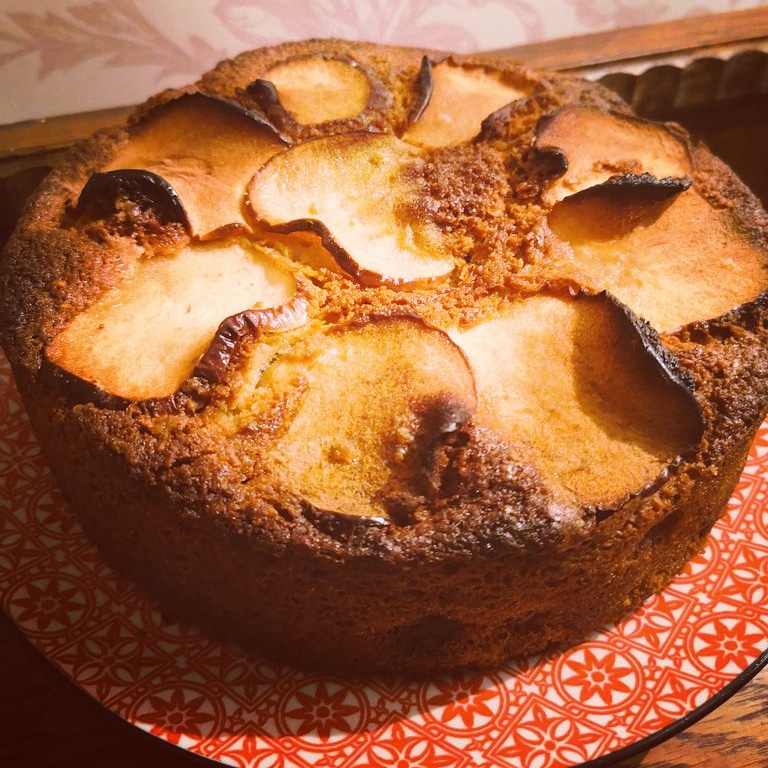
Apple and tarragon cake

Last week I discovered and bought a cookbook that I just know is going to be slightly dogeared and stained before too long. Those badges of honour that all good cookbooks should wear.

The book in question is Little Library Year by Kate Young. It’s a combination of glorious seasonal recipes that are interspersed with extracts from some of Kate’s favourite books, along with her own thoughts and food memories. The food photography in the book is wonderful and as you can probably tell I’m smitten with the whole thing.

I cooked from the book for the first time at the weekend and made an apple and tarragon cake. Apple and tarragon may not sound like a natural flavour combination but I can tell you that the speed with which the cake disappeared in this house is clear confirmation that they are.

Ingredients cake

  • 2 large cooking apples
  • 150g butter
  • 3 eggs
  • 150g ground almonds
  • 2tsp baking powder
  • 100g plain flour
  • 1tbsp chopped tarragon*
  • Pinch of salt

Ingredients topping

  • 1 crisp eating apple very finely sliced
  • A pinch of light brown sugar. I put a bit more sugar than Kate recommends and this helped to caramelise the apple slices as the cake cooked.

Method

  • Preheat the oven to gas mark 3. Grease and line a 20cm round cake tin.
  • Peel and core the cooking apples, chop into chunks and place in a small saucepan with a splash of water. Bring to a simmer over a low heat and cook until the apples break down.
  • Beat the butter and sugar until light and creamy. Whisk the eggs into the mix, one at as time, then fold in the almonds , baking powder, flour and tarragon.
  • Spoon the batter into the tin, arrange the slices of eating apple on top and sprinkle with brown sugar.
  • Bake for 90 minutes until the cake is risen and golden brown. 

*When I posted a picture of the cake on Twitter at the weekend I had a food blogger in Helsinki contact me to ask if I’d used Russian or French Tarragon. I want back to say that it was French, but that if I can find Russian I’ll try it next time to see if it changes the taste in anyway.

Baking some thank you cakes

Apologies that I’ve not been on here for a little while but sometimes life gets in the way of the things that you enjoy doing most. Just because I haven’t been able to make the time to post doesn’t mean that I haven’t been in the kitchen though. 

We’re still nursing my partners elderly mother back to health and last week we had a real sign that things are moving in the right direction when she felt well enough to venture out to her hairdressers for the first time since she’s been with us. She’s been going to this hairdresser for years now and they sent flowers and a card when they heard that she wasn’t well. In return she asked me if I’d bake some cakes that she could take with her to say thank you. It was one of the first times that i’ve baked for an audience that I know nothing about and it made me far more nervous that I’d anticipated. I don’t think I’ve ever nursed cakes though the baking process quite so much and equally never worried quite so much about the final taste. Thankfully all came out well and I’m told that they were enjoyed.

The request was for two types of cakes so I opted for a batch of dark chocolate & vanilla cream cupcakes and a white chocolate and raspberry cake that could be cut into squares to make it like a blondie. The cupcakes were a repeat bake, the recipe is in my Baking Advent Calendar day 14 post, but the white chocolate and raspberry cake was a new one and the recipe is below if you’d like to try it.

Ingredients

  • 200g butter.
  • 225g plain flour
  • 100g caster sugar
  • 75g light brown sugar
  • Zest of two lemons
  • 1tsp vanilla extract
  • 3 eggs
  • Pinch of salt
  • 1tsp baking powder
  • 125g raspberries
  • 100g white chocolate

Method

  • Preheat the oven to gas mark 4
  • Butter a square baking tin. The one I used was 20cm by 20cm.
  • Cream the butter, sugars, lemon zest and vanilla until pale and fluffy. I used a stand mixer but you can do it with a hand held. It does help if you get the butter out of the fridge to soften for a while before you want to do this. I’ve lost count of the times that I’ve forgotten to do that.
  • Beat in the eggs one at a time.
  • Sift the flour into a bowl along with the baking powder and salt. With the mixer on a slow speed gradually add the flour mix to the butter & sugar mix until it is all incorporated.
  • Chop the chocolate into small pieces and fold it through the batter. I don’t chop it too small as I like finding bits of chocolate as  I bite into the cake.
  • Spread the batter into the prepared tin using a spatula.
  • Press the raspberries into the mixture. If the batter is quite deep in your tin press some to the bottom and leave some partially exposed at the top,
  • Bake for 30 minutes until golden and cooked through. If you have used a smaller tin the bake time may need to be longer as the cake will be deeper.
  • Leave to cool before turning out of the tin and cutting to whatever size squares you want.
  • If you want a final flourish the squares can be dusted with icing sugar.

One of my favourite bakes since I last posted was an apple and tarragon cake and I’ll tell you more about that tomorrow. It might sound like an unusual flavour pairing but it really works.

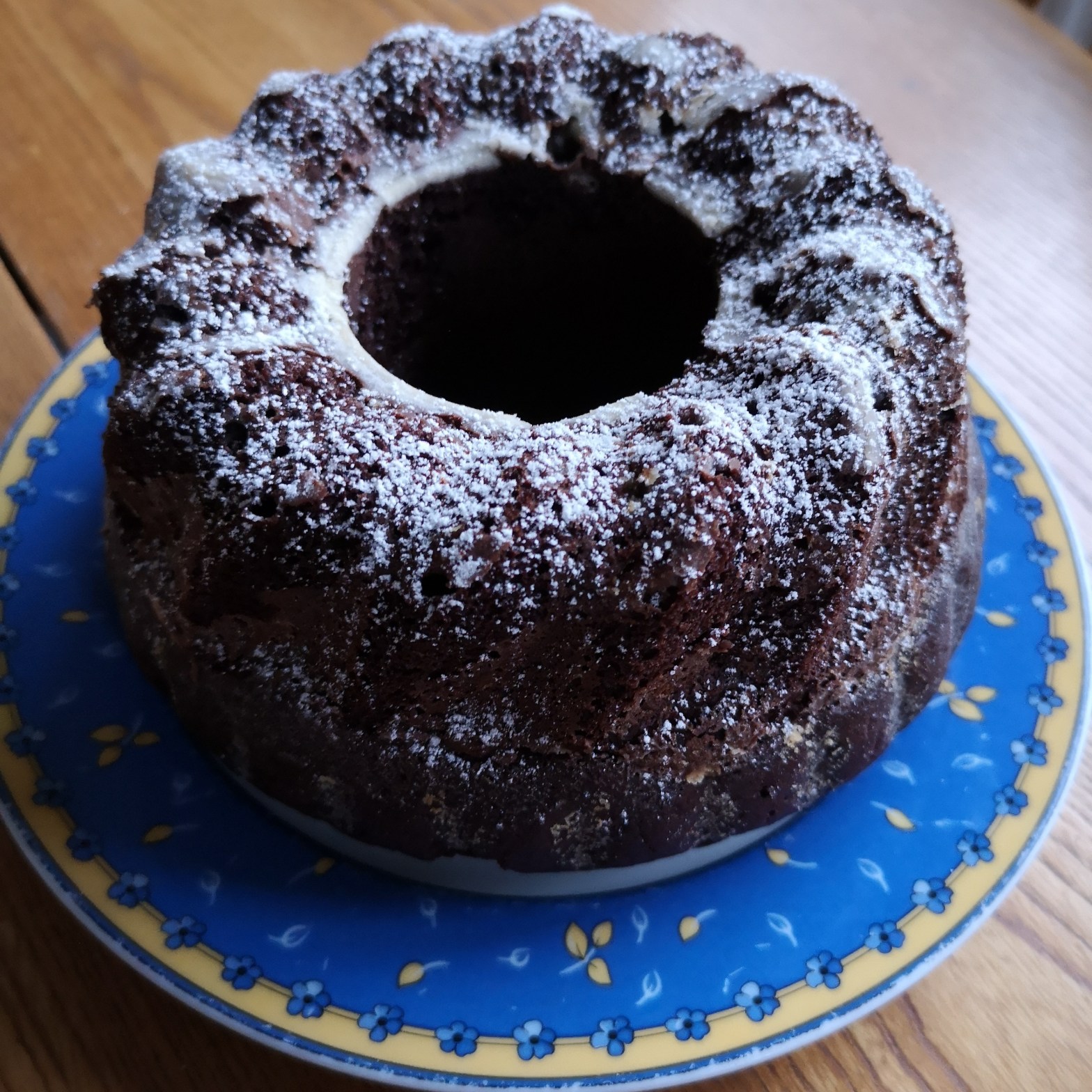
Discovering mayonnaise cake.

Until last week I was sure that the memories I have of once being offered a slice of tomato soup cake were a dream. One of those moments that you’ve tried to convince yourself really happened, even if deep down inside you’re sure it can’t have done. But now I’m not so sure. Someone sent me the recipe for a cocoa mayonnaise cake last week and assured me it was one of their favourites. I made it, enjoyed it and just possibly I didn’t imagine the soup cake after all.

To give you a little background, January 27th was decreed as #NationalChocolateCakeDay and I saw an exchange between two of my Twitter friends where mayonnaise cake was being mentioned. I couldn’t resist asking if this was for real and very kindly Karen Cerio sent me a picture of the recipe in an old Hershey’s Cocoa Cookbook that she has. 

As always when I look at American recipes my first problem was trying to workout the required weights for the ingredients. I’ve had some American readers say that they’re confused by the gram measurements that I quote but I’m just as baffled by cups. Particularly as the conversion to grams seems to vary dependent on the ingredient being used. If you’re sitting either side of the baking conversion issue and find it a problem I strongly recommend cuisinivity.com/guide/measurement. It’s the best site that I’ve found and it came to my rescue again last week with Karen’s recipe. There was one last question as the recipe referred to baking the cake in a  tube tin. I thought this might mean I was making a Swiss Roll but a quick google showed that I needed a bundt tin.

With that all sorted I had to make a quick shopping trip as we had no cocoa or mayonnaise in the house. I’ve never been more keen for the person on the checkout to casually enquire what I was going to make with my purchases but sadly it didn’t happen.

The recipe is quite straight forward and as I have both UK & US measurements to hand I’ll break with tradition and list both.

Ingredients

  • Plain Flour 205 grams or 1.75 cups*
  • Sugar 227 grams or 1 cup
  • Cocoa powder 33 grams or third of a cup
  • Baking powder 1.5 tsp
  • Baking soda 1.5 tsp
  • Salt eighth of a tsp
  • Mayonnaise 230 grams or 1 cup
  • Water 235ml or 1 cup
  • 1 egg **
  • Vanilla extract 2 tsp

* The recipe refers to all purpose flour and I’ve assumed that to be what we know as plain flour in the UK

**Karen advised me that the egg was her addition to the recipe. I included it in mine and I think it wouldn’t be such a good cake without it

Method

  • Preheat the oven to gas mark 4 or 350
  • Grease and flour a bundt or tube tin.
  • Combine the dry ingredients in a large mixing bowl.
  • Add the wet ingredients and beat for three minutes at a medium speed.
  • Pour the batter into the prepared tin and bake for 45 to 50 minutes
  • Cool for 10 minutes then remove from the tin.
  • The recipe in the Hershey’s books refers to pitting frosting on the cake when cool. I skipped that bit and just went for a dusting of icing sugar. Feel free to indulge with some frosting if you do have a go at making this

This recipe produces a wonderfully light and moist cake that took me and everyone who I offered a slice to by surprise. 

I’m still not sure if I’ve ever had tomato soup cake but there are definitely recipes out there so watch this space. Another unusual cake might be on the way.

Design a site like this with WordPress.com
Get started