Baking Advent Calendar day 8

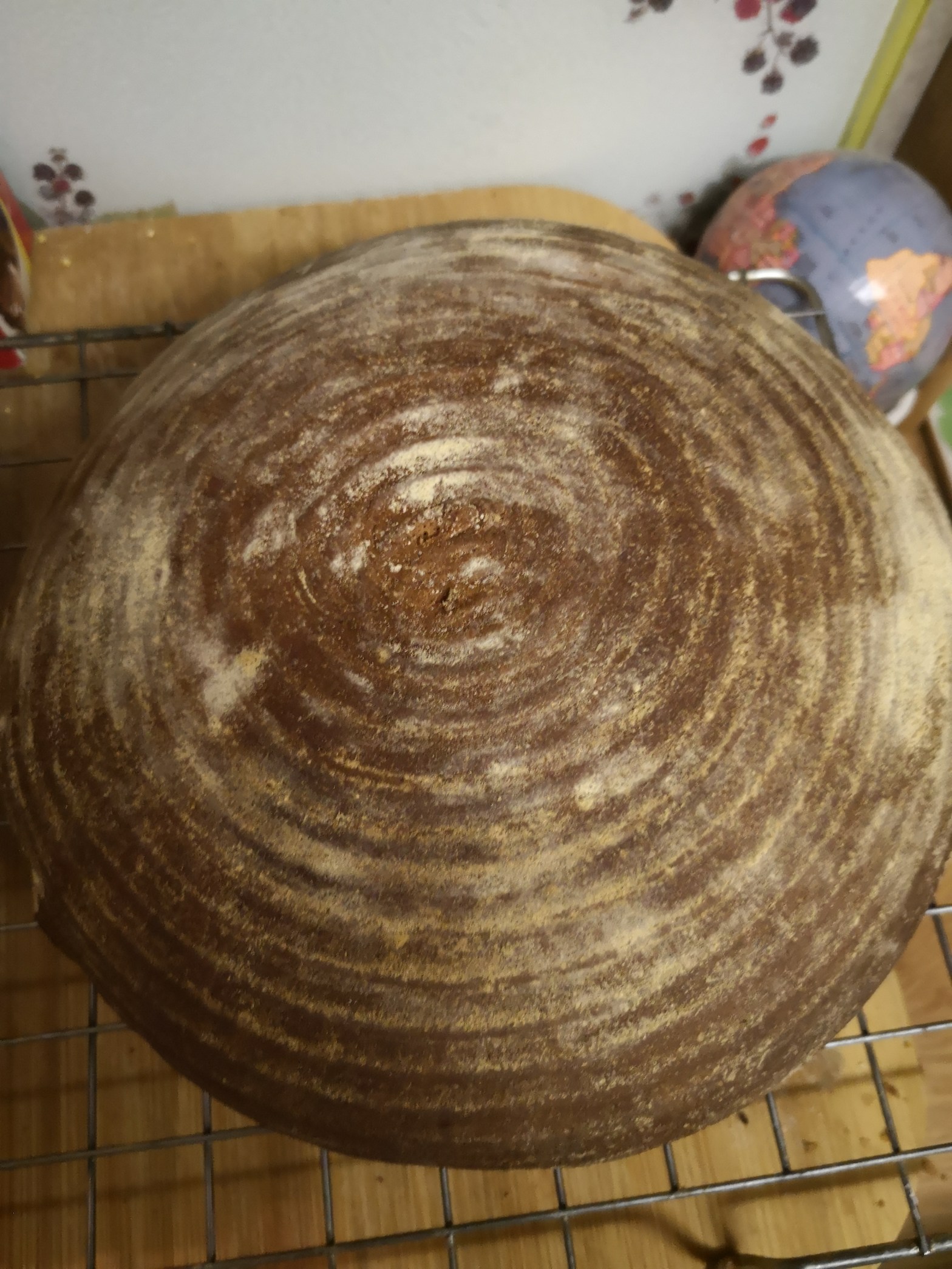
I had two bakes yesterday. The first was the mince pies that I shared for day 7, the second was some bread and that’s what we’re having for Baking Advent Calendar day 8. I know I’ve written before about how much I enjoy baking bread, but at fear of repeating myself I do think that there is something uniquely rewarding about it. Taking that very short list of key ingredients and producing something so fragrant and tasty is always a thrill. Another of the great thing about bread baking is that I can do it so often. If like me you have a relatively limited outlet for your baking there’s always the risk of being told that you are baking cakes and other sweet things too often. With bread it’s different though, people always want bread and if this house is anything to go I could very nearly bake a loaf a day.

The bread that I baked yesterday was made using Spelt flour. This ancient grain has had a revival in recent years with it’s dark nutty flavour making it ideal for bread. Most bread recipes for Spelt mix it with other flours but I’ve managed to find one where it is the single flour type. kate roman spelt bread This recipe is by a former Great British Bake Off contestant and has been my ‘go to’ for bread in recent months. If you’re tempted to have a go I have a couple of tips that I find work well.

  • In step 3 Kate advises that you should knead the dough by hand for 10 minutes. If you have a food mixer with a dough hook I’d suggest that you use this at it’s lowest setting for 7 minutes. It seems to give the finished loaf a lighter texture.
  • In step 4 Kate has a very wide 1 to 3 hours for the first rise of the dough. I find 1.5 hours is best.

If you want to get a really good finish on your homemade bread try using a whicker proving basket. It help to give the bread a regular shape and gives a wonderful ringed affect to the crust.
Baking Advent Calendar day 7

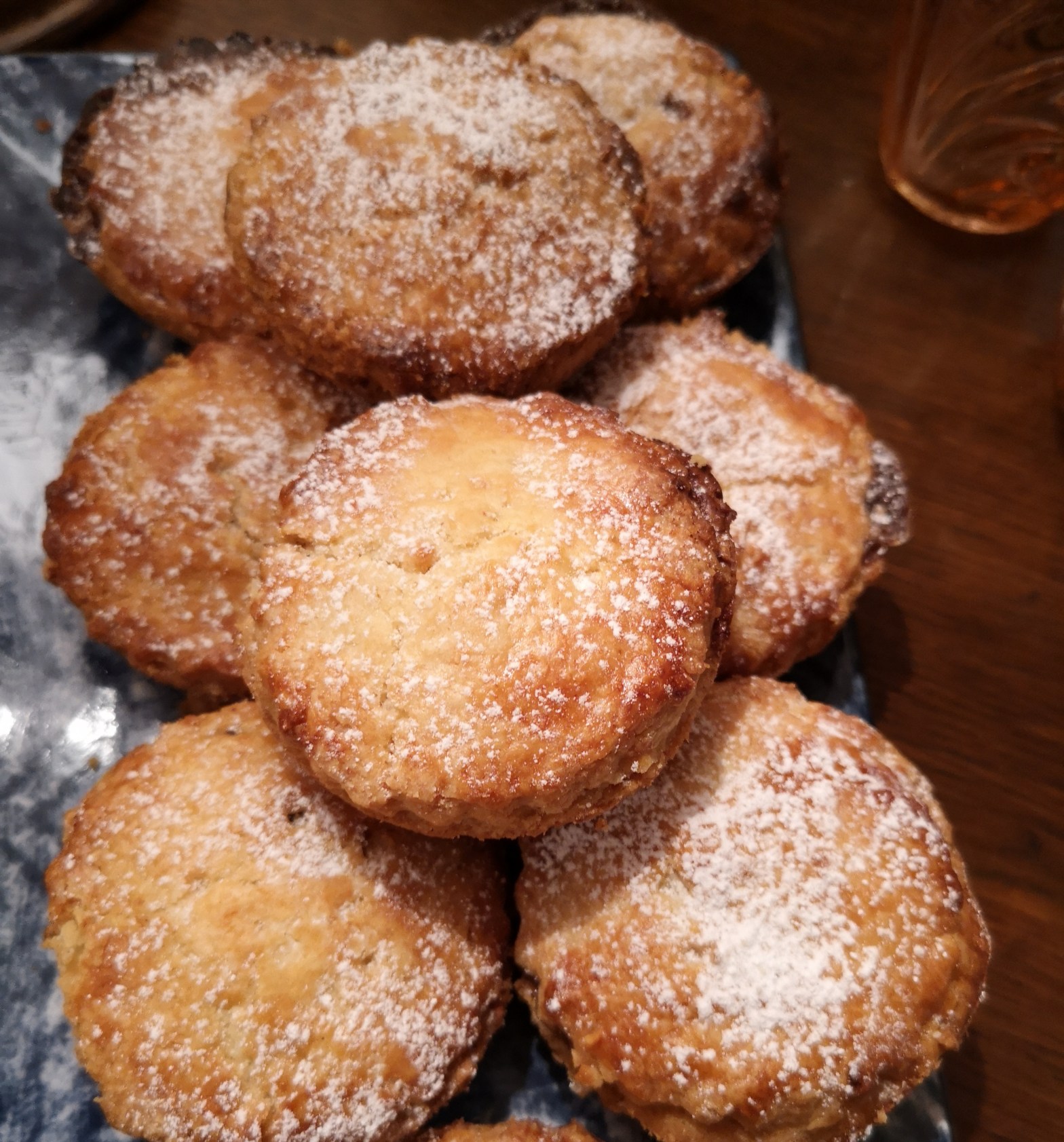
I spent my Sunday afternoon baking mince pies and that means we have the first true Christmas bake for Advent Calendar day 7. I know that mince pies are traditional in Britain at this time of year but I’m not sure about the rest of the world. If you haven’t heard of them they are small individual sweet pies that are filled with a mixture of dried fruits and spices. They can be traced back to the 13th century when crusaders returning from the Middle East to Europe bought recipes containing meats , fruits and spices.  In their early forms the pies did contain meat as well as fruits and spice, but over time they have become the purely sweet version that we have today. If you want to know more about the history of the pies there is a fascinating wiki/Mince_pie page

I’ve been baking these for a few years now but today was a first in that I had never made my own mincemeat before. Previously I’ve always used a shop bought one and simply made the pastry case myself. That’s all changed now though and after trying one of these pies I’m not going back. Home made mincemeat is gorgeous and you have real control over the flavours that you want to accentuate. The mince pie recipe that I used was Felicity Cloake’s mince pie masterclass  column in the Guardian. In this column Felicity takes one dish every week and splits it into 9 or 10 stages. She takes you though it in a fine detail and I have to say that in all cases where I’ve used it the results have been wonderful. When you look at this recipe the ingredients list for the mincemeat may feel daunting but note Felicity’s comment that things can be changed if there are some in there that you don’t like or don’t have. I didn’t bother with the stem ginger in mine and I also left out the optional orange blossom water that she has as a pastry ingredient.

The recipe is for 20 pies. If like me you think that sounds rather lot I suggest making the full amount of mincemeat but half the pastry. I now have 10 pies to enjoy, and share of course, and the mincemeat to make ten more nearer Christmas.

Baking Advent Calendar day 6

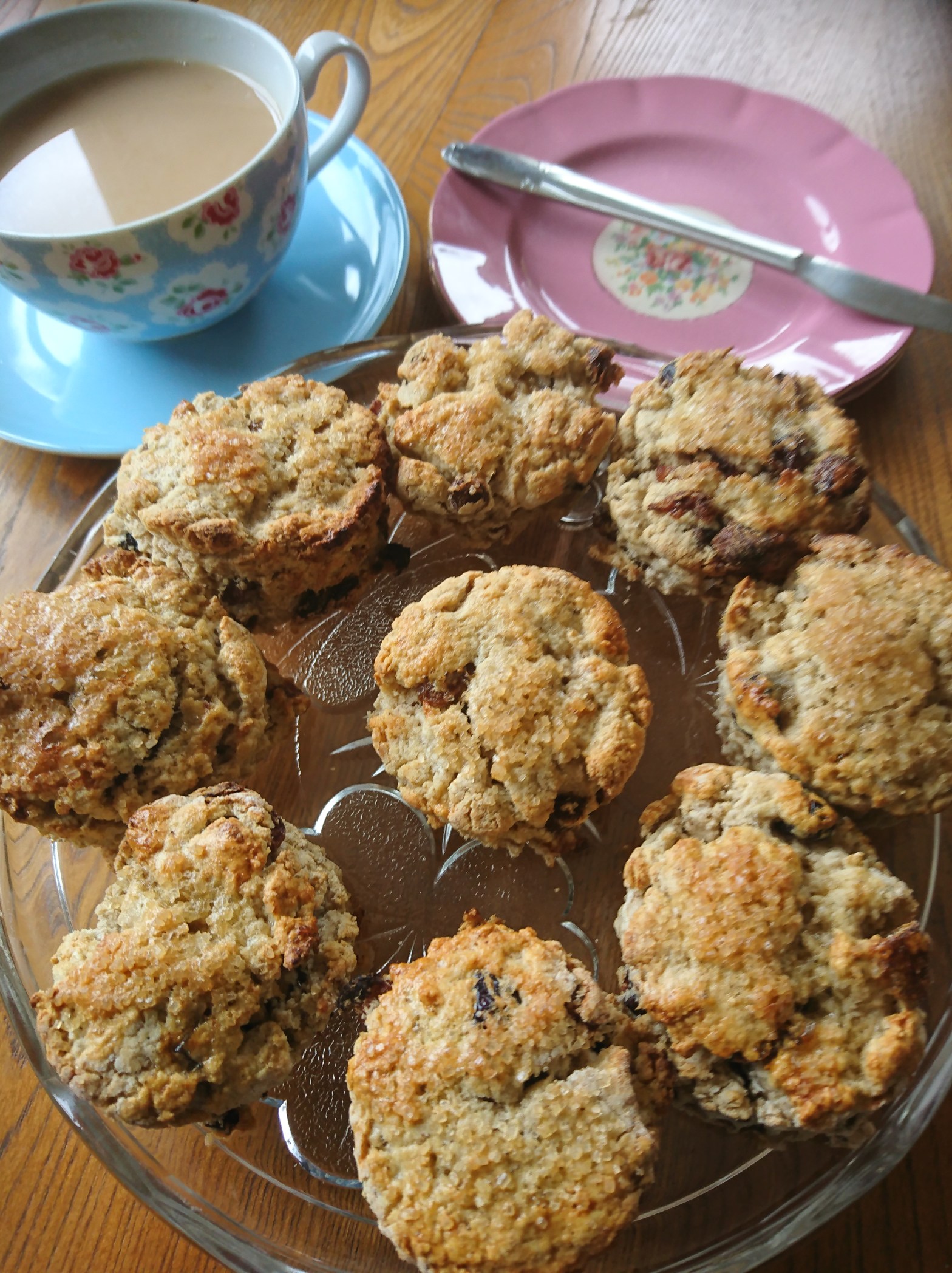
It’s day six on the Baking Advent Calendar and time for tea. More specifically time for tea with fig and apricot scones. Scones are a uniquely British baked item that’s at the centre of all proper afternoon tea’s, ideally with some cream or jam. Although they seem to be universally liked in Britain there is the never ending discussion around how the word scone should be pronounced. If you’re reading this outside of the UK and are not sure what I’m on about let me explain. Parts of the country pronounce scone to rhyme with tone, while. other parts pronounce it to rhyme with gone. If you’re still confused it’s probably best if you read that last sentence out loud. Dictionaries tend to go with the scone/gone option but I don’t think that it will ever be definitively resolved.

A scone is made of flour with baking powder as a leavening agent. They are often slightly sweetened, contain dried fruit and are glazed with egg wash. They differ from teacakes and other similar bakes as they use yeast as a key ingredient. Scones don’t have to be sweet and I certainly think that a well made cheese one is a match for any of the sweet options.

The beauty of scones as far as a baker is concerned is that once you have mastered a basic recipe you can play around with the ingredients to your hearts contents.

The recipe for the ones that I’ve made came from Norfolks Own Cookbook This rather wonderful book was produced a few years back by a number of chefs and cooks close to where I live. If you can track down a copy I thoroughly recommend it.

Ingredients – for 10 sconesIngredients

  • 600g self raising flour
  • 60g caster sugar
  • 90g dried figs  – chopped
  • 90g dried apricots – chopped
  • 60g soft butter
  • 2tsp ground cinnamon
  • 2tsp baking powder
  • 150ml milk
  • 2 eggs

To glaze

  • 1 egg beaten
  • 2tbsp Demerara sugar

Method

  • Pre heat the oven to gas mark 6 and line a baking tray with baking parchment
  • Place all ingredients in a large bowl and bring together with a knife
  • Tip the dough onto a lightly floured surface and roll to approximately 4cm thickness
  • Cut into rounds using a large cutter or mug and place on the baking tray
  • Brush the scones with the beaten egg and sprinkle with Demerara 
  • Bake for 12 minutes until golden brown and well risen.

Baking Advent Calendar day 5

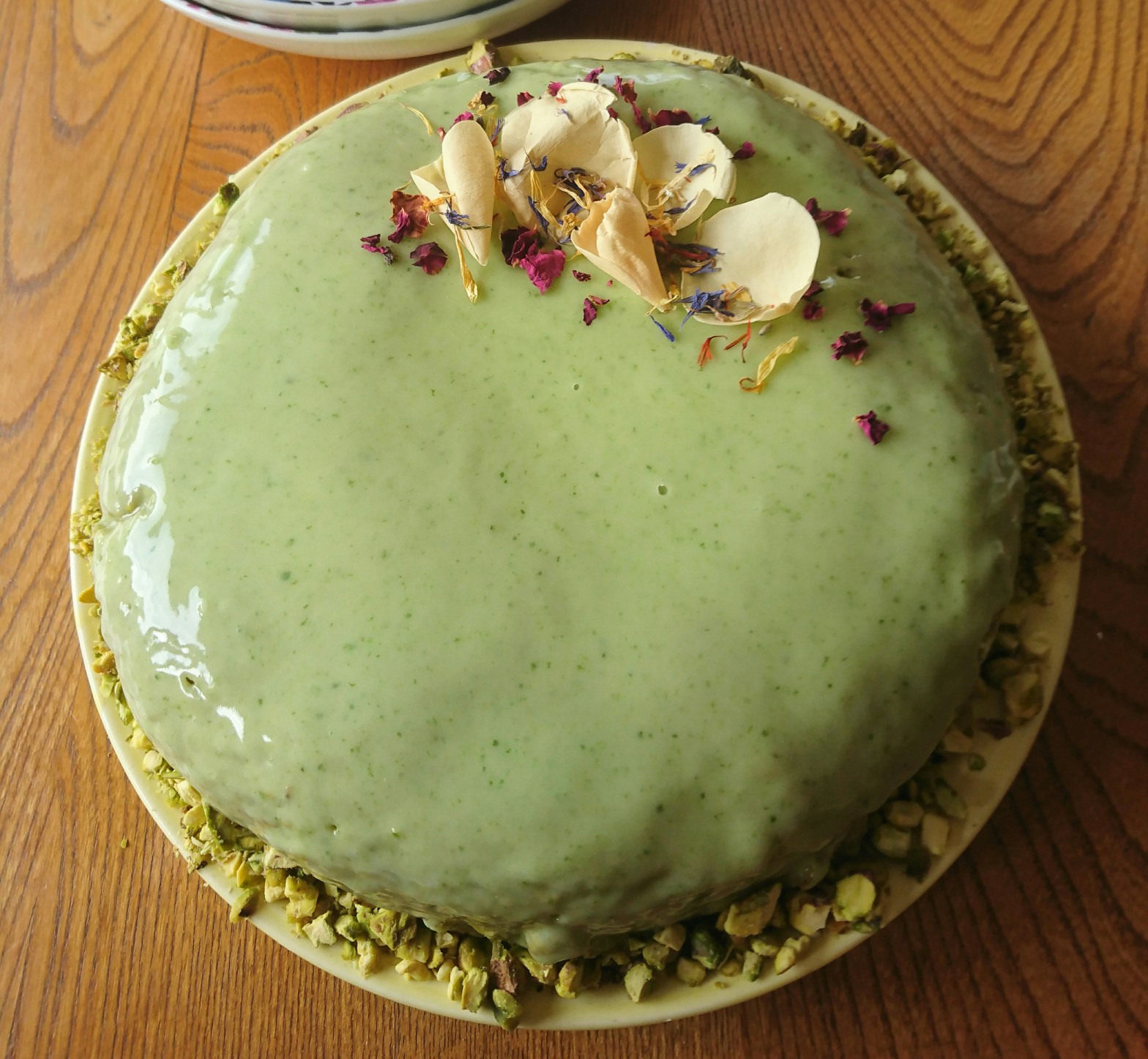
Someone recently asked me which was the most difficult bake I’d ever made. It didn’t take a lot of pondering to decide on a Gateau Vert and that’s the one I’m sharing for Baking Advent Calendar day five. I remember being undecided after first seeing this cake as a technical challenge in a Great British Bake Off series 9  show as to whether I was going to bake one, but after I’d gone out and bought over £10 worth of pistachios the point of no return was gone. Having said that I also remember thinking half way through making it ‘who’s silly idea was this’. The kitchen looked like a bomb site, the washing up was piling up and I still had five steps of the recipe to go.

There’s every chance that you’ve never heard of a Gateau Vert. I know I hadn’t until Bake Off featured it. The cake is apparently best known for being the favourite of the artist Cause Monet and he is reputed to have had one baked every year as his birthday cake. As an aside I’d not realised that Monet was such a foodie and it’s only today that I’ve discovered that his Cooking Journals are published. That one is definitely going on my Christmas list.

Back to the recipe and as you’ll see if you click on the recipe link this is one with a seriously long list of ingredients. The one that you’d probably least expect to see is 300g of spinach. Don’t worry though, this isn’t a vegetable cake. You boil the spinach but then only use the spinach water that’s created by wrapping the leaves in a muslin cloth and squeezing them. The liquid then forms a natural green dye in the cake.

One thing that I’ve noticed looking at Prue Leith’s recipe today is that she estimates an hours hands on time for the eleven step method. All I can say is that I must having been doing something very wrong because my memory is of taking at least twice that time on my bake.

It’s one of those bakes where I’m glad that I tried and I was pleased with the results, but if you asked me would I do it again…probably not.

Baking Advent Calendar day 4

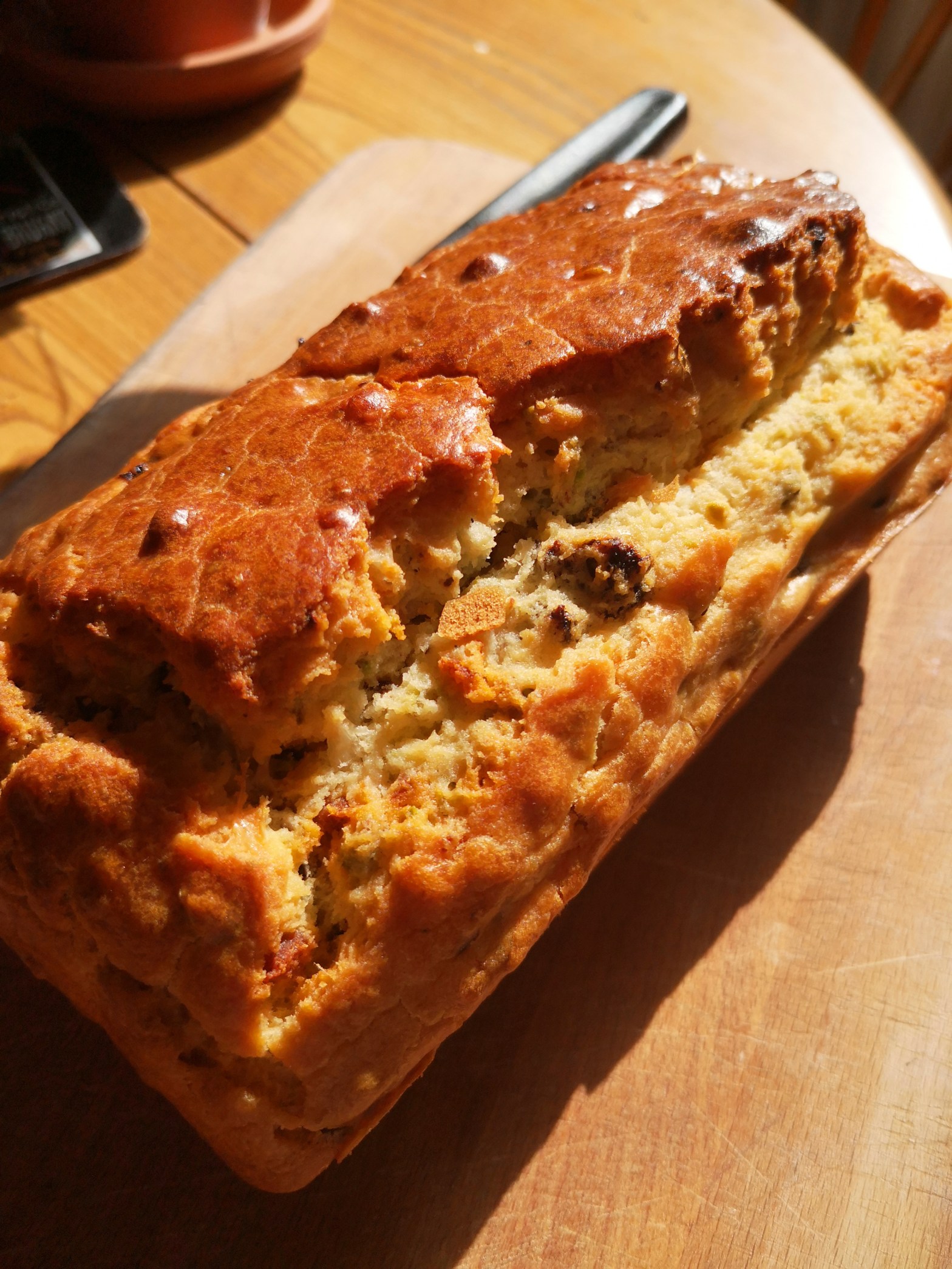
For day four of my Baking Advent Calendar I’m sharing cured sausage, pistachio and prune cake. I’m doing this as I thought it was perhaps time to prove that I don’t only bake sweet things. This recipe comes from Rachel Khoo’s Little Paris Kitchen ,for the bilingual amongst you, or any French readers, Rachel lists the bake’s French name as cake au saucisson sec avec pistaches et prunes.

Rachel’s book holds a special place for me as it was the first cookbook that I bought. How ever extensive my cookbook library might get I’ll always go back to The Little Paris Kitchen. Up until about seven years ago I’d never baked anything and to be honest I’d never really cooked either. Then along came Rachel with her book and TV show of the same name and things changed. It was watching her make croque madame muffins that made me want to have a go. They looked so good that I just had to try them. So the following morning I got the ingredients together and told my somewhat surprised partner that I wanted the kitchen for the next hour. It all felt a bit tentative at first but I baked, it worked and with that I was off. Now here we are seven years later and I’ve never stopped. 

It may have been the muffins that got me started but the recipe from the book that has been my ‘go to’ so many times is this cake. It’s another of those recipes where once you are used to it the ingredients can be chopped and changed to fit whatever you have to hand. One addition I often make is to add some diced feta. You can also add chopped olives and it adds a bit of spice if you switch the cured sausage for chorizo.

Ingredients

  • 250g plain flour
  • 15g baking powder
  • 150g cured sausage or salami- finely chopped
  • 80g pistachios – roughly chopped
  • 100g prunes – roughly chopped
  • 4 eggs
  • 100ml milk
  • 150ml olive oil
  • 50g plain yoghurt
  • 1tsp salt
  • black pepper

Method

  • Preheat the oven to gas mark 4 and line a 500g loaf tin with baking paper
  • In a bowl mix together the flour, baking powder, sausage, pistachios and prunes.
  • In a separate bowl whisk the eggs until thick and pale. Gradually whisk in the milk, oil and yogurt. Then add salt and pepper.
  • Fold the flour mixture into the egg mixture bit by bit. Try not to over beat.
  • Pour the batter into the tin and bake for 30 to 40 minutes. The cake is ready when a skewer inserted into the middle of the cake comes out clean.

Baking Advent Calendar day 3

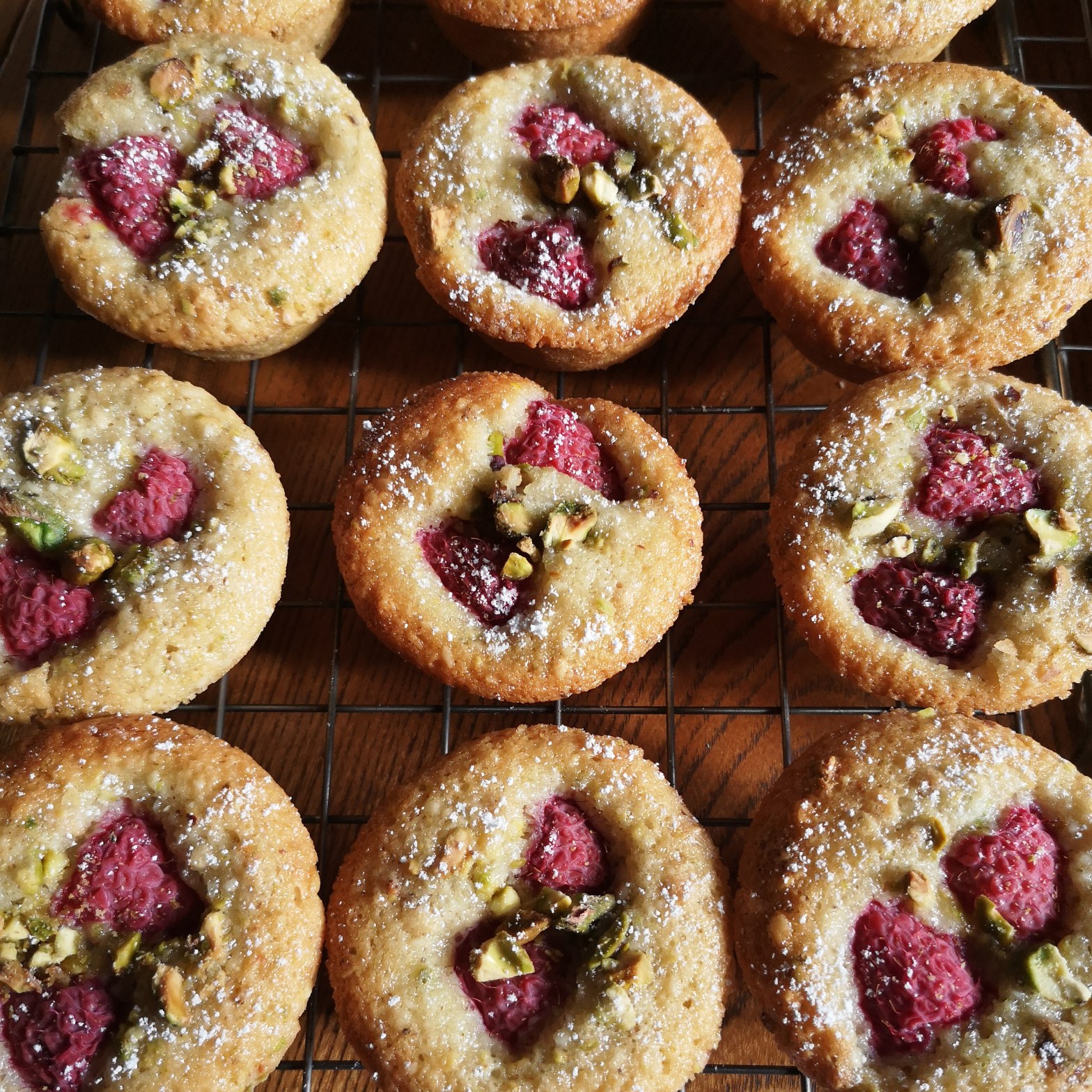
It’s always good to have a recipe to hand where you can go from nothing to cake on a plate within thirty minutes. That’s why for the third day of my Baking Advent Calendar I’m sharing pistachio, hazelnut and raspberry friands, one of my favourite quick and easy bakes. Don’t be put off by what might look like a lengthy list of ingredients, when it comes to the method these little cakes couldn’t be more straight forward to make. Friands are small individual cakes with ground almonds and fruit always amongst the key ingredients. The mixture is the same as that used in the French cakes known as financiers. The only real difference that I can see between the two is that financiers are baked in oblong moulds whereas friend are baked in circular moulds. Which means that if you have both types of tins this recipe gives you two bakes for your repertoire.

The recipe that I use comes from Clare Ptak’s Violet Bakery Cookbook . If you do make these I suggest that you use raspberries the first time, but after that you can experiment with virtually any other soft fruit. I’d also suggest that other than sticking with the almonds you can switch the other nuts in the recipe about to match whatever you have in your pantry when you come to bake.

Clare Ptak’s name may be familiar to you as she is the baker Prince Harry and Meghan asked to make their wedding cake. I first discovered Clare’s recipes when they appeared in a food magazine prior to her books publication. I shared pictures of some that I made on my Twitter feed and Clare responded with some very positive feedback. The result was one very happy amateur baker who probably bored all his friends in the following weeks showing them Clare’s tweets.

This recipe makes a dozen to sixteen cakes depending on the size of the moulds that you are using. I regular make batches of six to eight cakes using half the measurements.

Ingredients

  • 115g of butter. This needs to be melted in a saucepan.
  • 90g plain flour
  • 3/4 of a tsp baking powder
  • 50g ground almond
  • 40g ground hazelnuts
  • 40g ground pistachios
  • 190g icing sugar
  • 5 egg whites, slightly whisked.
  • 2tsp vanilla extract
  • 200g fresh raspberries
  • 50g slivered pistachios

Method

  • Heat the oven to gas mark 3. Butter the baking tin that you are going to use.
  • Place all of the ingredients other than the slivered pistachios and the raspberries in the bowl of a food processor. Blitz until foamy.
  • Spoon the mixture into the cake moulds, filling them to about three quarters. Place two to three raspberries on top of each and sprinkle with the slivered pistachios.
  • Bake for 15 to 20 minutes. The cakes should be springy to the touch.
  • Let them cool slightly then remove from the moulds. As a final touch you can sprinkle a little icing sugar on top.

Baking Advent Calendar day 2

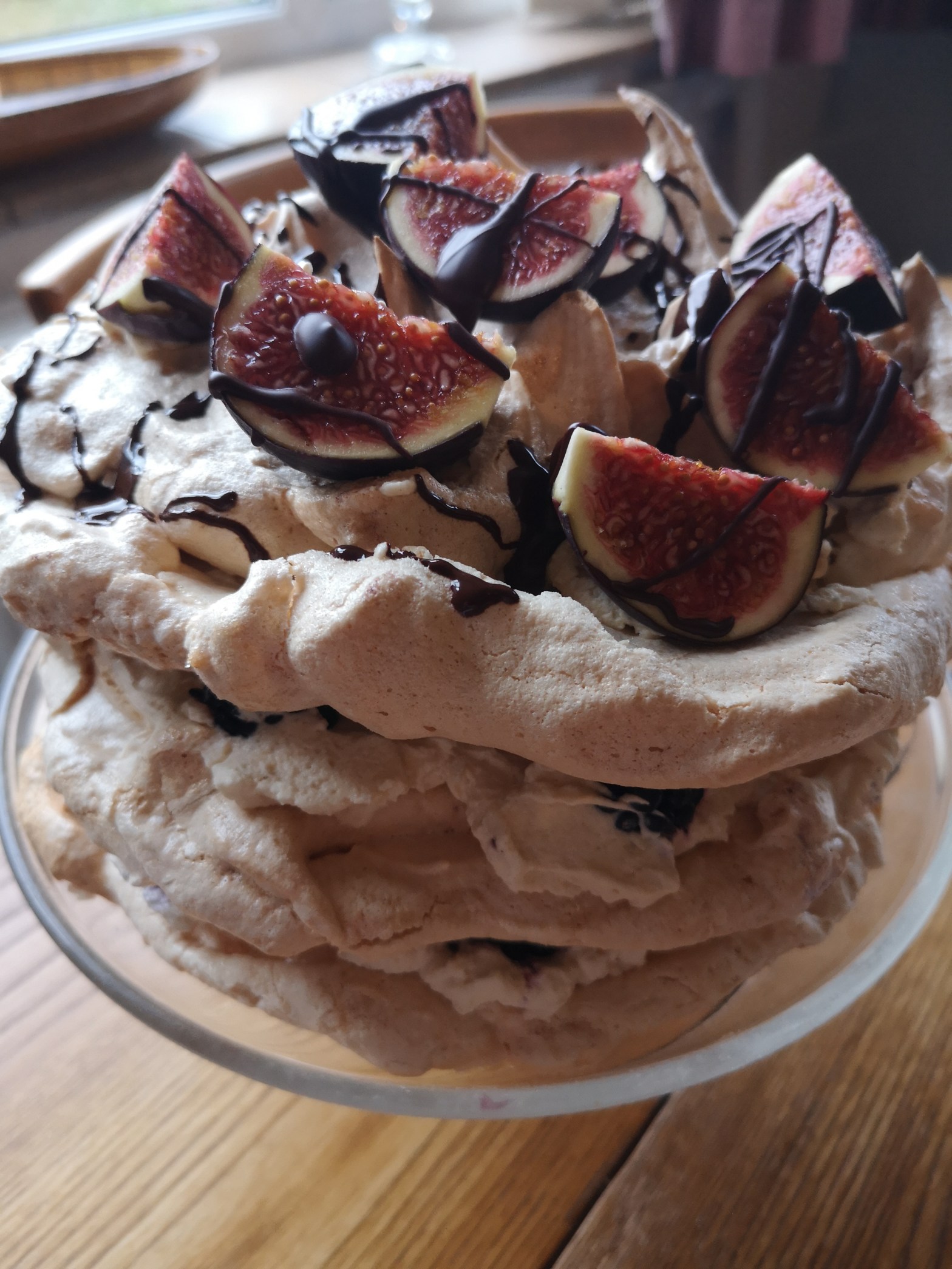
It’s Baking Advent Calendar day two and this one is for my Mum. I chose Jens Jorgen Thorsen Meringue as the default picture when I started this blog because it reminded me so much of Mum’s sweet tooth and how desserts were always the highlight of any meal for her. If she was in a restaurant the dessert would always be picked first, then she’d choose a first course that ensured enough room was left. If it was a special occasion there would also be a glass of dessert wine. I never got a chance to make her one of these but something tells me that it would have been a big hit.

The recipe comes from Scandinavian-Baking by Trine Hahnemann and in the book she explains that Jens Jorgen Thorsen was an abstract  Danish artist. The connections with the dessert is the random way that the dark chocolate is splashed across the white meringue.

I will warn you that this one is a seriously rich and sweet dessert. Gorgeous, but not for the feint hearted.

Ingredients

For the caramel cream

  • 100g demerara sugar
  • 500ml double cream

For the meringue

  • 6 egg whites
  • 300g caster sugar
  • pinch of salt

For the topping

  • 6 fresh figs cut into quarters. If you can’t get figs this also works well with dark cherries.
  • 50g dark chocolate

Method

  • To make the cream spread the sugar over the base of a saucepan. Cook over a medium heat until the sugar starts to melt. Add a quarter of the cream and bring to the boil, stirring constantly. Once the mixture is fully combined (this might take a while) turn off the heat and stir in the remainder of the cream. Leave to chill in a bowl. This step can be done the night before.
  • Heat the oven to gas mark 1
  • Use an electric whisk or food mixer to whisk the egg whites until stiff and thick. Then add half the sugar 1tbsp at a time while still whisking. Once done the mix should be very stiff. Then fold in the remaining sugar and pinch of salt.
  • Line two baking trays with baking parchment. Spread mixture on each so that you have circles of approximately 24cm diameter.
  • Place in the oven and bake for an hour. Than leave to cool still on the trays.
  • Whip the caramel cream until light and fluffy. Melt the chocolate in a bowl over simmering water.
  • Remove the meringues from the parchment and place one on a plate, spread with the cream and put the other meringue on top. Then add the fig quarters and drizzle the chocolate in whatever pattern you want.

Baking Advent Calendar

Lying in bed last night I suddenly decided that what the world is missing is a baking advent calendar. I’m sure that until a few years ago advent calendars were only ever filled with chocolates but now there seems to be multiple versions of them. Someone has bought me one with a different cheese behind each door. Another that I was sorely tempted to buy for myself contained 24 different bottle’s of beer, many of them one off Christmas brews. In hindsight perhaps I should have got it. Beer and cheese every evening in December would have been rather good. I’ve also seen them with beauty products, perfumes and toys, but never with baked good. So what I thought I’d do for the rest of December is try and share a bake a day on here. I can’t promise that they will all have been produced on the day but they will all be something that has come out of my kitchen. I’ll also try to share recipes and to give a bit of background to what I’ve been baking.

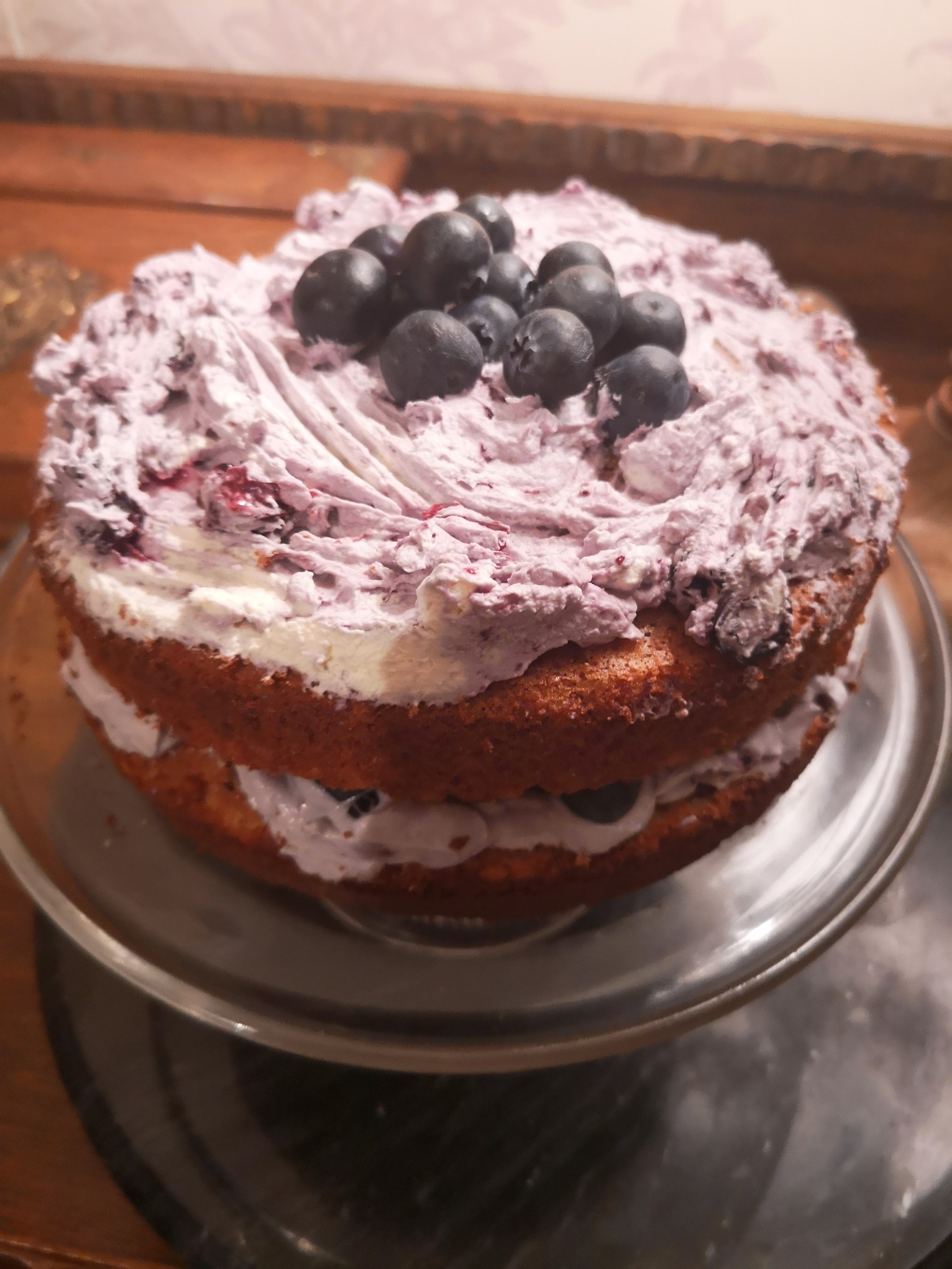
For day one I’m going to start with the cake that I made yesterday. I wrote a couple of weeks ago about my partners mother having suffered a minor stroke and how she is living with us until she’s well enough to go home. One of the results of this is that I’m under strict instructions to keep an eye on how much sugar and cream I use. Not a bad thing I know but it does mean that quite a few of my favourites are off limits at the moment. One cookbook definitely coming into it’s own is Natural-Baking-Healthier-Recipes-Guilt-Free This is a fascinating book that is full of reduced sugar recipes and well worth the greatly reduced price that Amazon currently have it at. Don’t let the references to Health and Guilt Free in the title put you off. These are serious bakes  with serious flavour. 

The recipe that I picked to make yesterday was Blueberry Cake. This recipe does require you to make jam & apple puree but if you already have some in the fridge you could skip these steps.

Ingredients

Jam

100g blueberries

20g muscovado sugar

Apple puree

1 apple

1tsp Vanilla extract

pinch of ground cinnamon

Cake

100g hazelnuts

4 eggs

70g muscovado sugar

100ml sunflower oil

100g apple puree

! tsp vanilla extract

160g wholemeal spelt flour

2tsp baking powder

pinch of salt

100ml almond milk

double cream*

100g blueberries

Method

For the jam put the blueberries and sugar in a saucepan. Bring to the boil and then lower the heat to a simmer. Stir occasionally until the liquid has the consistency of jam. Remove from the heat and cool.

For the apple puree put the ingredients along with 50ml of water in a saucepan. Bring to the boil and let simmer for 10 minutes. Remove from the heat and cool.

Heat the oven to gas mark 4.5.

Toast the hazelnuts in a dry pan. Leave to cool then finely grind them.

Beat the eggs and sugar with en electric whisk until a pale cream colour. Add the oil, puree and vanilla and stir.

In a separate bowl mix the flour, ground hazelnuts, salt and baking powder. Then add this to the egg mixture in batches, alternating with the almond milk.

Grease two 20cm cake tins and split the cake mixture between them. Place in the heated oven and bake for 25 minutes.

For the filling whip the cream and then fold the blueberry jam through it.

Put one of the cakes on a plate and spread cream on it followed by half the blueberries. Place the other cake on top and finish off with the rest of the cream and blueberries.

* If you’re looking to remove fresh cream completely the book contains a recipe for making the filling using coconut cream. I couldn’t do that as the coconut cream requires 24 hours in the fridge beforehand and I only decided on the day that i was making this cake.

#NationalCakeDay

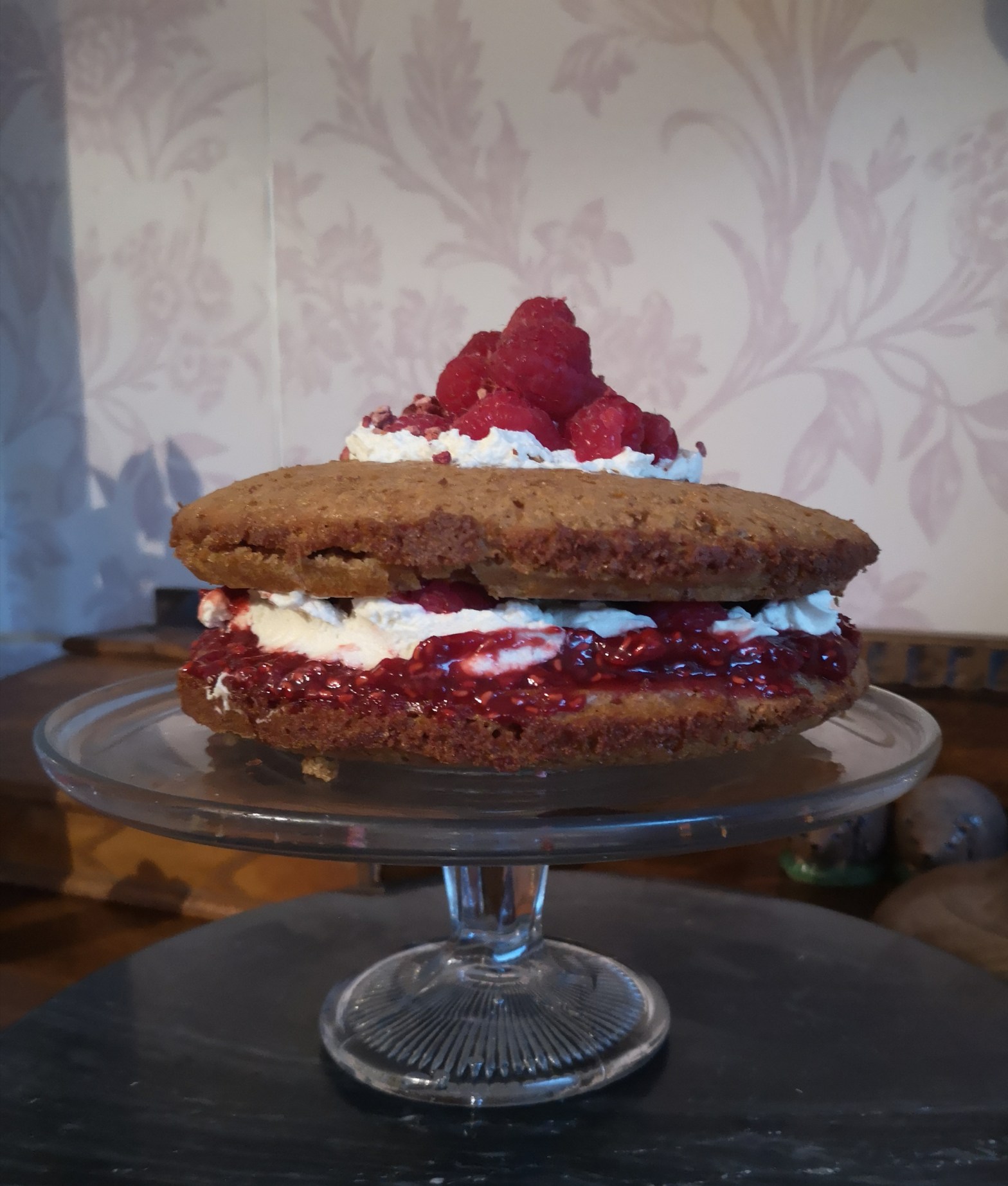
If you use social media at all you’re probably used to the never ending list of #National days that clutter up your timeline. I don’t know who sets them but in a lot of cases it’s probably the major producers of whatever product the day is promoting. Today is a little different though as the first thing I saw on Twitter this morning was that it’s #NationalCakeDay. Even with this one I’m happy to admit that there may be the heavy hand of flour producers or cake manufacturers involved, but I’ve ignored that, I’ve joined in and I’ve baked.

Cake to me always feels like luxury baking. The treat that is going to give the day something special. It’s also that one type of baking where the creative spirit can really come to the fore. You may have to follow a set path to produce the cake batter, but the filling, topping and general decoration are all down to you. If you’re a Bake Off watcher you’ll know that the bakers always seem to enjoy and excel most in the cake rounds.

Of course cake doesn’t have to be fancy and highly decorated. There’s a comfort in a slice of simple fruit loaf that can be every bit as rewarding as something smothered in cream or chocolate.

So my suggestion is that you cut yourself a slice, pour yourself a cup of tea, then sit down for a few moments and enjoy #NationalCakeDay.

Alternatively you might fancy some time in the kitchen. If you do the recipe for the cake that I’ve just made is below.

Ingredients for cake

  • 150g butter
  • 80g dark muscovado sugar (I find that muscovado adds great flavour to the cake)
  • 1 tsp vanilla extract
  • 3 eggs
  • Zest of an orange
  • 3.5 tbsp milk
  • 150g flour (I used wholemeal spelt, but whatever you use in cakes will work)
  • 2 tsp baking powder
  • Pinch of salt

Ingredients for filling

  • 175g raspberries
  • 1 tsp dark Muscovado sugar
  • Double cream

Method

  • Pre heat the oven to gas mark 4 and grease two 20cm cake tins.
  • Cream the butter, sugar and vanilla in a bowl until pale. Then stir in the eggs one at a time.
  • Add the orange zest and milk
  • In a second bowl combine the flour, baking powder and salt.
  • Add the dry mixture to the wet in batches. Gently stir until combined.
  • Split the mixture across the two greased tin and bake for 20 minutes.
  • For the filling put 75g of the raspberries and the sugar into a saucepan. Bring to the build and then lower the sea for a couple of minutes. Keep stirring until the liquid has a jam consistency. Remove from the sea and cool.
  • Whip the double cream to whatever consistency you prefer. You can sweeten it with a little icing sugar but I prefer to leave mine plain.
  • Once the cakes have cooled spread the jam across the bottom sponge. Then add cream and some of the raspberries. Then add the second sponge and top with more cream and raspberries.

Memories of Maltese football.

Watching the football highlights this weekend, getting more than a little excited about Norwich City’s win at Everton, set me thinking about where my interest in the game began.

Anyone who follows football will always have a unique place in their heart for the first match that they went to. That first time of being taken to what seems like such a grown up and adult experience. For me it was in Malta. I lived there between the ages of seven and eleven and it was the beginning of something that has never left me.

In those days Malta was a place that English teams went to play pre season friendlies. The sort of games where players are breaking themselves back in after the summer. The first game I saw was between Arsenal and the reigning Maltese champions of the day. My memory is of an exciting game that kept a ten year old boy enthralled, although with hindsight it was probably a very gentle affair with the English team taking it easy in the Mediterranean sunshine. After that we started to go to some local league matches and I still have programmes from games involving Sliema Wanderers, Floriana and Hamrun Spartans. Exotic sounding teams that I still occasionally google to see how they’re doing.

Malta was also where I first played football. The St Andrews Army School B team to be precise. My dad wasn’t in the army but somehow when we moved to the island he managed to get me enrolled at their school. There were three other British forces schools on the island at the time and we played in a Saturday morning league that included teams from all of them. I think that we played in green and white striped shirts but as the only photo that I have is black and white I can’t confirm it. What I can tell from the photo is that I was a tall and gangly ten year old who appears to have towered over most of his team mates. We must have had some success because the only sporting trophy that I’ve ever won dates from that time. Each of the team were presented with their trophy by Stanley_Matthews who happened to be living on the island at the time. Now I know that he was one of the best English footballers of all time, back then I don’t think I had a clue who he was.

During the time that we lived in Malta we never had a television in the house. There was a service on the island but I can only assume that my parents didn’t think that it was up to much. What it did mean was that to watch any football on television I had to go next door to Mr Bonnet’s house. He had access to Italian television stations and I would sit watching games with his family. I might not have understood a word of the commentary but I still felt part of what was going on. Not only was Mr Bonnet a keen football fan but he also ran the local toy shop. When you’re ten years old it doesn’t get much more exciting than that. When I mentioned Mr Bonnet to my dad recently his memory of him was the fact that he always had plastic lemons tied to the branches of the tree in his front garden. Somehow that’s a quirk that makes my memories of him even fonder.

Design a site like this with WordPress.com
Get started