Blueberry poppy seed cake

The recipe I want to write about today came to me via a friend who saw it online and sent me a link.

Most of what I cook tends to happen as a result of trawling through my cookbook library, perusing one of the many and various food magazines which find their way into this house, or as a result of looking through the kitchen cupboards and fridge to see what ingredients we have to use. What I very seldom do is look online for inspiration.

That’s not to say I don’t spend much of my online time rummaging about culinary-related sites. The enormous amount of foodie newsletters I struggle to keep up with in my inbox are a testament to that. 

It’s just somehow I equate the tactile handling of the cookbook pages, even better if they’re  slightly stained from previous use, to being an integral part of the cooking experience.

The recipe in question is for a blueberry poppy seed cake and I will give the full details as it’s on the New York Times food site and not that easy to get at. There is some free access to the site, but other parts sit behind a paywall for which you need a subscription.

Unlike most US recipes the NYT give measurements both in cups and metric. As cups are their primary measurement, some of the metric conversions look oddly precise. I’ve listed them verbatim here but feel free to round up or down accordingly if you make this.

In the NYT the tablespoon of sugar for sprinkling is listed as turbinado. This was completely new to me, but Google advices it’s what we call demerara in the UK. If you think I’ve got that wrong please feel free to say so.

The recipe lists the almond expect as optional. My advice is if you have some to hand definitely use it. I think it forms an integral part of the cakes flavour.

Ingredients

  • 150 gm caster sugar
  • 62 gm butter
  • 60 ml sunflower oil
  • 2 eggs
  • 165 gm sour cream
  • 1.25 tsp almond extract
  • 1 tsp vanilla extract
  • 1 tsp salt
  • 1.5 tsp baking powder
  • 0.25tsp baking soda
  • 3 tbsp poppy seeds
  • 186 gm blueberries
  • 1 tbsp demerara sugar

Method

  • Preheat the oven to gas mark 4, grease and line the base of either an 8-inch square or 9-inch round cake tin.
  • Using a food mixer beat the butter, sugar and oil until light and fluffy. Add the eggs and beat until combined. Next add the sour cream, almond and vanilla extracts and salt and beat again.
  • Add the flour, baking powder, soda and poppy seeds, mix at a low speed until combined.
  • Fold in approximately 140gm go the blueberries using a spatula.
  • Pour the batter into your prepared tin and scatter the remaining blueberries on top. Then sprinkle with the demerara sugar.
  • Bake for approximately 40 minutes. When the cake is done a knife inserted into the centre should come out clean.
  • Once out of the oven let the cake cool in the tin for 15 minutes before turning it onto a wire rack.

This may not sound the most exciting of cakes..but believe me, it’s gorgeous and I can see myself getting hooked on the NYT site. Somehow it manages to be light and sticky at the same time, the addition of poppy seeds adding a light crunch to the texture. It somehow gets even better over the next couple of days, if it lasts that long, as the juice from the blueberries seeps into the cake.

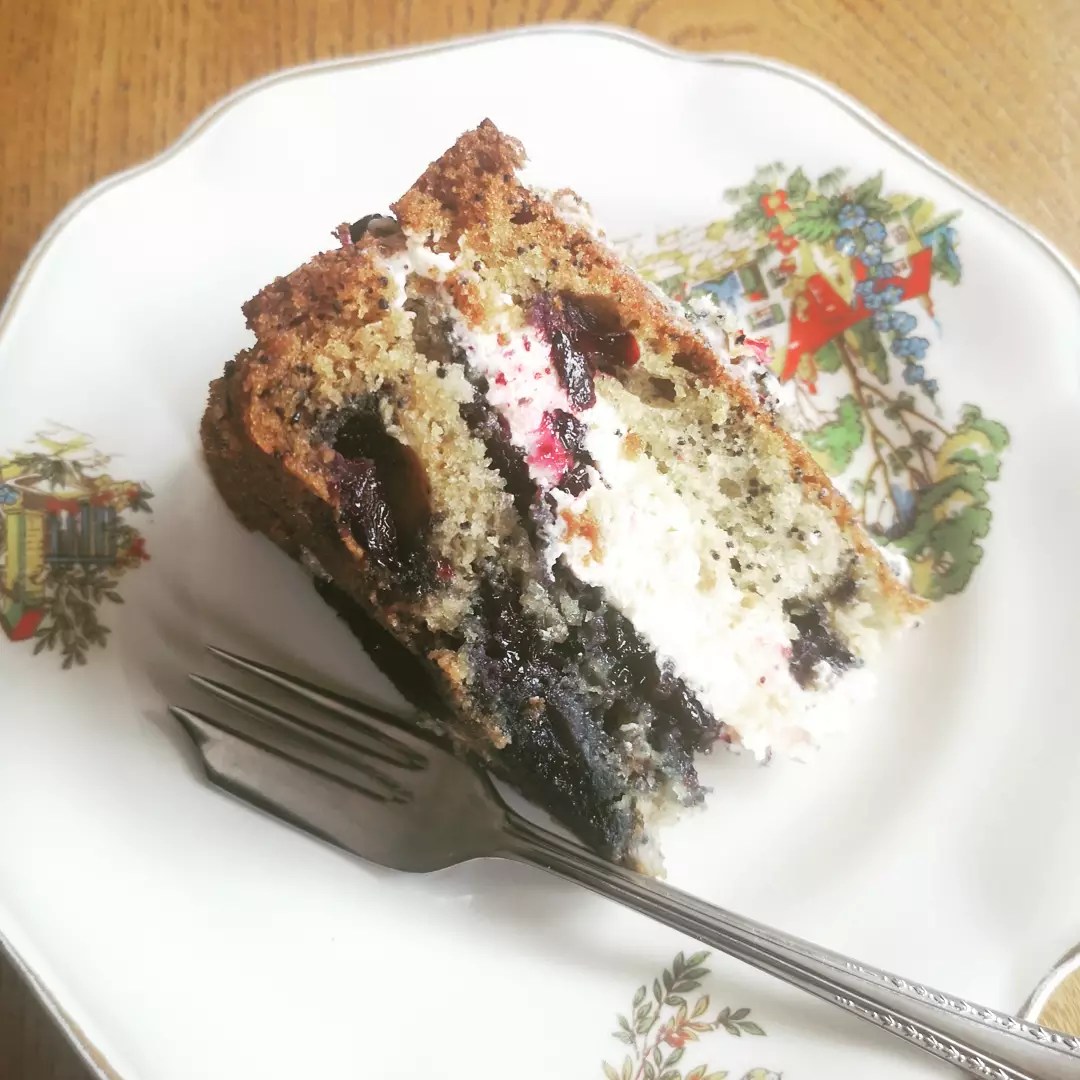
I’ve already made it twice. The first time I went with the square tin option. The second time I went with the round tin, cut the cake through the middle like a sponge, and filled it with blueberry jam and an elderflower and coriander buttercream. The picture with this post is a slice of this one.

Just one word of warning, if you find the picture of this cake on the NYT site it shows blueberries visible on top. I don’t know how they’re doing this. I’ve scattered fruit on top on both occasions, but the cake rises so well in the oven that by the time it comes out they’ve all dropped down into it.

There’s something about a pie

Of all the foods I enjoy, all the things I like to cook. There’s something about a pie that sets it above. If I’m running my eyes down a menu, they won’t seem to move on if I reach a pie. If I open a new cookbook or food magazine, it’s always the pie recipes that will grab my attention first. Making me stop and think, I wonder when I could try this.

It’s always been this way. I remember childhood trips to the fish and chip shop, when much to my mother’s bafflement, I would ask for pie rather than the cod everyone else was having. I have vague memories of being told a piece of fish would be better for me, although the batter the fish came coated in may well have put paid to that argument.

Another early pie memory is from when we lived in Malta. As a treat, I think after a dentists visit, Mum would take me to the wonderful Cafe Cordina, where I was introduced to Pastizzi. These are a small savoury pastry filled with either ricotta or curried peas, wrapped in crisp filo. I’m not sure the dentist would have approved, but the ricotta quickly became my favourite and if I ever make it back to Malta, the lure of these will have a lot to do with it.

My partner thinks pies are a ‘man thing’, professing herself quite unable to understand what the pastry crust adds to the ingredients which go into making the filling. Maybe she’s right. Perhaps we blokes are channelling our inner Desperate Dan whenever we order one.

When I first started to bake I saw it as a route to pie whenever I wanted it. What I hadn’t counted on was the perils and drama of making my own pastry. As basic as the ingredients are, often just flour, butter, salt and water, it proved far from easy to bake. Sometimes it was too crumbly, others too crisp, and then when it did work it would inevitably split and fall apart as I tried to transfer from the board I’d been rolling it on, to the pie dish ahead of baking.

But I persevered, learnt from my mistakes and finally, homemade pastry doesn’t feel so daunting anymore. I’m no expert but my tips would be

  • always use as little water as possible when making the pastry.
  • always thoroughly flour both the board you’re going to roll the pastry on and the rolling pin that you’ll be using.
  • don’t be afraid to make too much pastry. There’s nothing worse than trying to stretch it out to fill a pie dish. You can always use the offcuts to make something else if there’s enough
  • if the finished article doesn’t look quite as you were hoping, tell people it’s rustic.

I was prompted to write this piece after posting a picture of a pie I’d just baked, on Twitter at the weekend. I can’t remember the last time I go so much feedback on a baking post and it was a clear indication that I’m not alone in my obsession. It was a dauphinois potato and leek pie   recipe that I found in Delicious magazine and I can’t recommend it highly enough. It may sound a bit indulgent, with three kinds of cheese and double cream, but I promise you won’t regret it. Just for good measure, it’s a very easy pastry to make. So if you’re a bit of a pastry phobe, as I was, this might be the one for you.

Tomato, cheese and polenta cake.

In my last post, I was extolling the virtues of the wonderful types of tomatoes on offer at this time of year. Multiple sizes, multiple colours, it’s hard to know which ones to go for when you have such an array in front of you. What I didn’t mention is that raw tomato is one of the very few things  I don’t like to eat.

Ever since childhood, there’s been something about the texture and feel of raw tomato in the mouth I really can’t take to. If finely chopped I can just about manage them. But if you ever make me a salad please don’t be offended if I move them to one side.

Other childhood dislikes have long since become favourites. Broad beans used to be the devils own vegetable as far as I was concerned. They tasted horrible and the texture was pretty unpleasant as well. Now they’re the highlight of any plate I find them on. Even better if they’ve been freshly dug from my dad’s allotment. Coffee was another thing that for years I just couldn’t understand. A strange and bitter taste seemed to linger in the mouth after just a sip. It changed at some point in my teens and ever since I’ve been happily sliding into caffeine addiction. 

Thankfully it’s only raw tomatoes I have the problem with, once they’re cooked, skins softened and juices released, I love them. They’re a kitchen staple and if I’m cooking from scratch invariably one of the first things in the pan.

Last weekend a new way of using them opened up to me, as I discovered tomato cake. 

The Feast supplement in Saturday’s Guardian is always one of the highlights of my weekend. Most issues contain at least one recipe that shoots straight to the top of my ‘must bake’ list and this week was no different. The recipe in question being a heritage tomato, goat’s cheese and polenta cake by Ravinder Bhogal.

I made a slight tweak, changing the goat’s cheese for feta, as I had some in the fridge I wanted to use up. In general, I think this is a recipe you can play around with to your heart’s  content and I’m already planning a version with some sweet Romano peppers added to the tomatoes. This does make quite a moist cake, so probably best to keep it in the fridge if you’re going to be eating it over a few days.

Ingredients

  • 75g unsalted butter – softened
  • 450g tomatoes – you’ll get the best look and flavour to the cake if you use an array of different types.
  • Sea salt & black pepper
  • 125g plain flour
  • 75g polenta
  • 2tsp baking powder
  • 1 tbsp dried oregano
  • Zest of a lemon
  • 100g cheese – finely grated. Ravinder uses a hard goat’s cheese. I used feta
  • 100ml olive oil
  • 4 eggs
  • 2 heaped tsp of sesame seeds.

Method

  • Heat the oven to gas mark 4. Grease and line a 20cm cake tin.
  • Cut the tomatoes in half, sprinkle with sea salt and leave them in a colander to drain
  • In a bowl mix all of the dry ingredients together
  • In a mixer cream together the butter, tahini, cheese and oil until pale. Add the eggs one at a time and beat until smooth. Then fold in the dry ingredients.
  • Spoon half the batter into the tin then add half of the tomatoes. Add the rest of the batter then the remaining tomatoes, pressing them down slightly. Sprinkle over the sesame seeds.
  • Bake for 45 minutes. A skewer inserted into the cake should come out clean.
  • Let the cake cool before removing it from the tin.

Time for some summer baking.

We’ve reached that rather wonderful time of year when there’s more fresh produce on the shelves than you know what to do with. Summer fruits are in abundance and you’re spoilt for choice when it comes to tomatoes. Good news if you’re looking for inspiration on what to make at home.

Over the last few weeks we’ve been indulging in blueberries, raspberries and cherries, even the strawberries have been good. I say this because so often I think they’re the one summer fruit that can let you down. They look so good, a vibrant red in the punnet, but the taste often disappoints. My feeling is the improvement in strawberries, something I first noticed last summer, might be one of the few coronavirus benefits. I’m sure the best of the crops normally find their way into restaurants and catering, and with that sector operating at such a reduced scale at the moment, we’re reaping the benefit in our kitchens and fruit bowls at home.

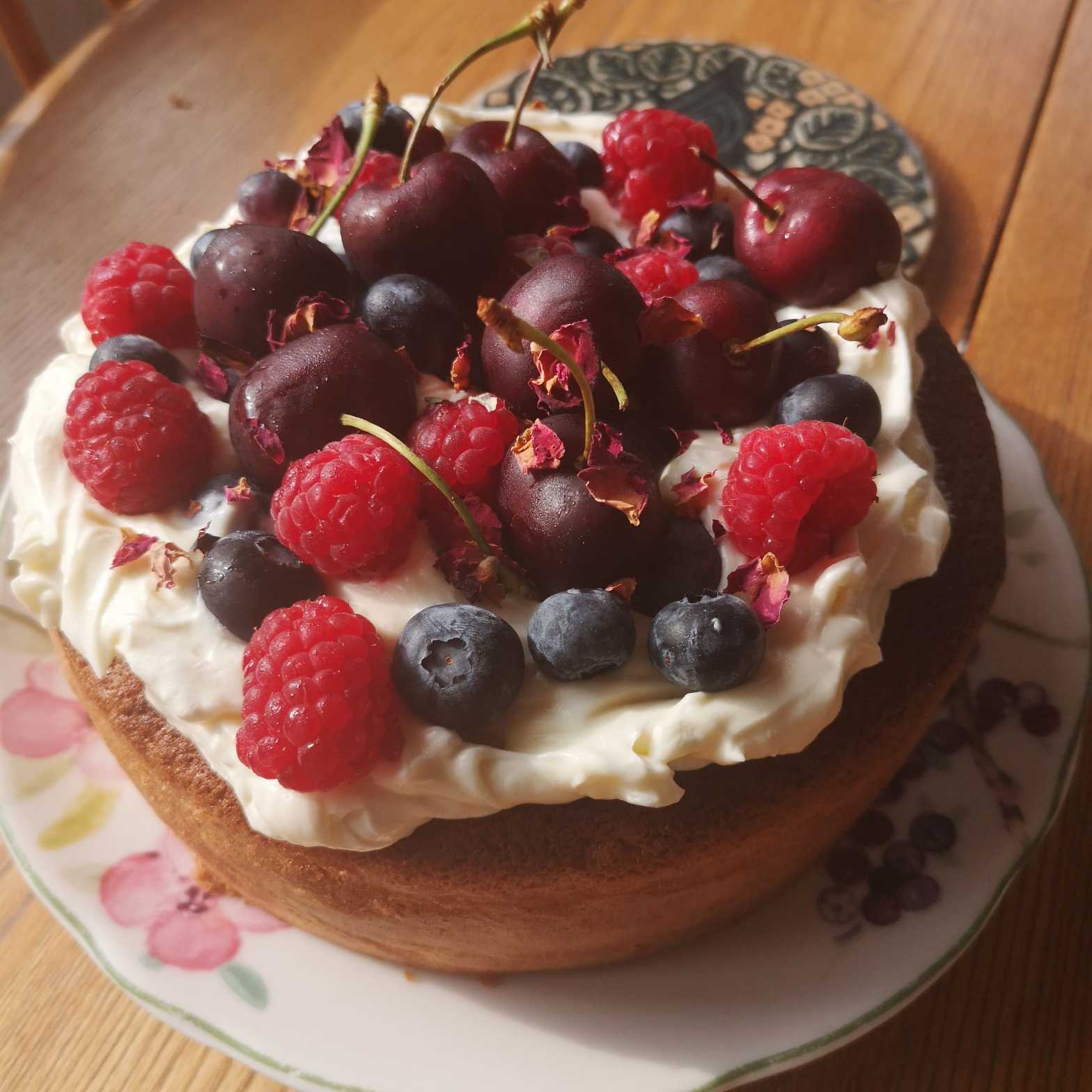
With such a bumper crop to hand, this weekend was the perfect opportunity for some summer baking. I had the house to myself for a few hours and retreated to my happy place. The kitchen windows were open to let the cool breeze in, my choice of music was playing and after a couple of hours, we had a tomato, feta & polenta cake, followed by a summer fruit cake. I’ll share the tomato cake recipe next time, but for now, let’s talk about fruit.

When the star of the show is going to be the natural produce on top, you can afford to go fairly plain and simple with what’s underneath. I opted for a light genoise sponge, which I topped with a mascarpone and cream mix before adding the fruit. Cherries, blueberries and raspberries are listed in the recipe because they’re what I had to hand at the time. If you decide to have a go at making this yourself, use whatever happens to be in your kitchen on the day.

Ingredients

  • 4 eggs – take the eggs out of the fridge an hour before you want to use them so they are at room temperature.
  • 130g caster sugar
  • 125g plain flour
  • 30g butter – melted
  • 110g mascarpone
  • 30g icing sugar
  • 1tsp vanilla extract
  • 60ml double cream
  • Zest of a lemon
  • Approximately 75g each of cherries, blueberries & raspberries

Method

  • Heat the oven to gas mark 4. Grease and line a 20cm cake tin.
  • Add the eggs and sugar to a bowl and whisk them until very thick. This will need an electric whisk and you are looking for a consistency whereby if you lift the whisk out, don’t forget to turn it off when you do this, the batter that trickles back sits on the surface for a few seconds before sinking in. You will need to whisk for at least five minutes to reach this stage.
  • Sift one-third of the flour into the batter and very gently fold it in. You are looking to maintain as much of the air in the mix as you can. Then sift in the remaining flour and fold again. Finally, fold in the melted butter.
  • Pour the batter into the prepared tin and bake for 35 minutes. 
  • Leave the baked sponge in the tin for five minutes then turn it onto a rack to finish cooling. Handle it carefully as the sponge will be very soft.
  • To make the topping combine the mascarpone, sugar and vanilla in a  bowl and beat them together. In another bowl whip the cream until thick and then fold it into the mascarpone and sugar mixture. Once done add the lemon zest and stir it in.
  • When the cake is completely cooled, spread the cream and add your choice of fruit on top.

Miso and spinach pastries

Every so often I come across a flavour that seems to strike an instant note with my palate. Something I’ve never tried before but suddenly want to be using at every opportunity.

Over the last year Nduja, the spicy, spreadable pork sausage from Southern Italy and Gochujang, the deep red Korean chilli paste have both become regulars in my kitchen. Now it’s the turn of miso

Subtler in taste to the two items mentioned above, this Japanese paste, made from fermented soybeans, has so many different layers of taste to it. I’ve seen salty, sweet, earthy, fruity and savoury mentioned and I do think they are all there. Saltiness is the primary flavour but the aftertaste carries elements of them all.

Miso has always been a staple item in Japanese cuisine and once you start delving into it you quickly discover a fascinating history going back to Neolithic times. While fermented soybeans are always the key ingredient, some versions include rice, barley or seaweed. The colour of miso paste can vary from the pale, classed as white, all the way through to a deep dark red. This will depend on how long the soybeans have been left to ferment during the production of the paste. So far I’ve only tried the white version but I’m keen to try what I’m expecting to be the even more intense flavours of the red.

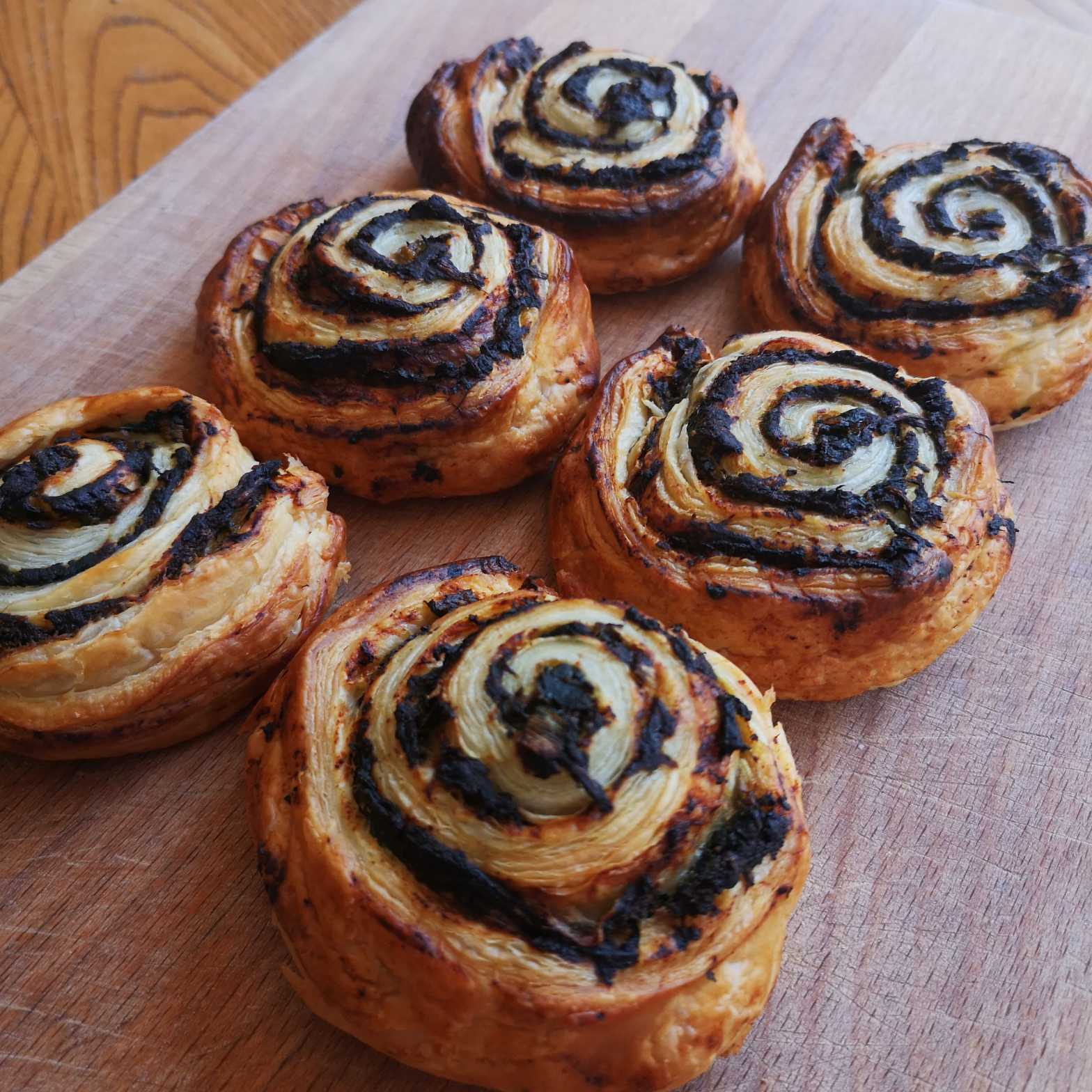
The first time I used it I made miso & spinach pastries, a bit like a savoury Danish, they tasted wonderful eaten warm just after coming out of the oven and the order is already in from the rest of the house for some more. If you fancy trying them I’ve put the recipe at the bottom of this post. They left me with about half a jar, just enough to make Ottolenghi’s miso, tomato & oregano pasta 

Miso is clearly my new frequency illusion, I’m seeing recipes using it everywhere. I’ve even discovered you can use it in desserts and that miso ice cream is a thing. Obviously I need to get a bigger jar next time.

This recipe makes twelve pastries. If that’s more than you need, just half everything and make a smaller batch.

Ingredients

  • 250g Spinach
  • 6 Spring onions
  • 4tbsp white miso paste
  • 300g puff pastry 
  • 1 egg – beaten for brushing

Method

  • Wash the spinach but don’t shake it dry. Put the leaves in a pan over a high heat, cover with a lid and let them cook in their own steam for a couple of minutes. Remove the lid and turn the spinach over. Replace the lid and leave for another two minutes. Drain the wilted leaves in a colander, chop and put them in a mixing bowl.
  • Finely slice the spring onions and add them to the chopped spinach. Then add the miso, a little salt & pepper and stir everything together.
  • Heat the oven to gas make 6
  • Roll the pastry out on a floured board, it should be approximately 32 by 22 cm.
  • Spread the spinach mixture over the pastry leaving a small border around the edges.
  • Brush the borders with  beaten egg and then starting at one of the shorter edges of the pastry roll it up so that the filling is in the centre. Similar to making a Swiss roll.
  • Once you done this brush the outside of the roll with more of the beaten egg and then slice it into 12.
  • Place the slices on a lined baking tray and bake for 25 minutes.

Cookbook bookcase

I finally have all of my cookbooks on shelves. 

Cookbooks have become a bit of an obsession in recent years and as the collection has grown it’s been a case of squeezing them in wherever I could find space. More often than not this  meant piling them up, with the inevitable result of those at the top and easy to get at having frequent usage, while anything more than six books down in the pile was left to get dusty and quietly forgotten.

Now those piles, which were scattered throughout the house, have been collected together, there’s even a semblance of order and sequence. The Ottolenghi’s are all in a row, the Rachel Khoo collection is there, next to her the combined works of Honey & Co. Nigel Slater and Ruby Tandoh both have a couple of titles on the shelf and there are the inevitable Great British Bake Off books.

While it’s good to have these trusty favourites together, what I’m particularly enjoying is the chance to reacquaint myself with books that haven’t been opened for quite some time. The Ukrainian recipes in Olia Hercules Mamushka, West African recipes in Hibiscus or books covering the delights of Lima, Nashville and Syria.

In a summer where any sort of international travelling is out of the question, I have the opportunity for some exciting culinary adventures.

Many of the books getting their first airing for a long time are going to require ingredients not readily in my kitchen and that’s where souschef is going to come to my rescue. I recently tripped over this site when searching for something else and was instantly hooked. Full of all those rare and unusual things you need and a whole lot more you probably don’t, but will still be drawn into buying. It puts me in mind of the best bit of any supermarket shopping trip when you find yourself in the aisle full of oils, sauces and spices desperately thinking of a reason to add them to the trolley. I have a friend who likes to do late-night online yarn shopping. As I told her last week, this is my edible yarn shop.

My first order is in and I have a feeling it won’t be the last.

p.s I read yesterday that Honey & Co have a new title out and I’m glad to say there’s space on the shelf to squeeze it in. After that, it will have to be cookbook bookcase number two.

Is there room for two?

A few posts back I shared Unlisted Memory, a short piece of fiction I’d written for a challenge AlisonTrollop ran on her blog. She’d asked for no more than 100 words and the prompt for the story was lists. 

Although the writing on my blog will always be predominantly food-related in some way shape or form, I do enjoy the opportunity to veer off occasionally and try something a little different. I don’t find it that easy to get inspiration for fiction pieces, so writing challenges or prompts are a great way to get started.

Alison’s next challenge was for a 250-word story based on the prompt of phones. As my previous story had finished with a phone number being left in a bar, I couldn’t resist the chance to move things on.

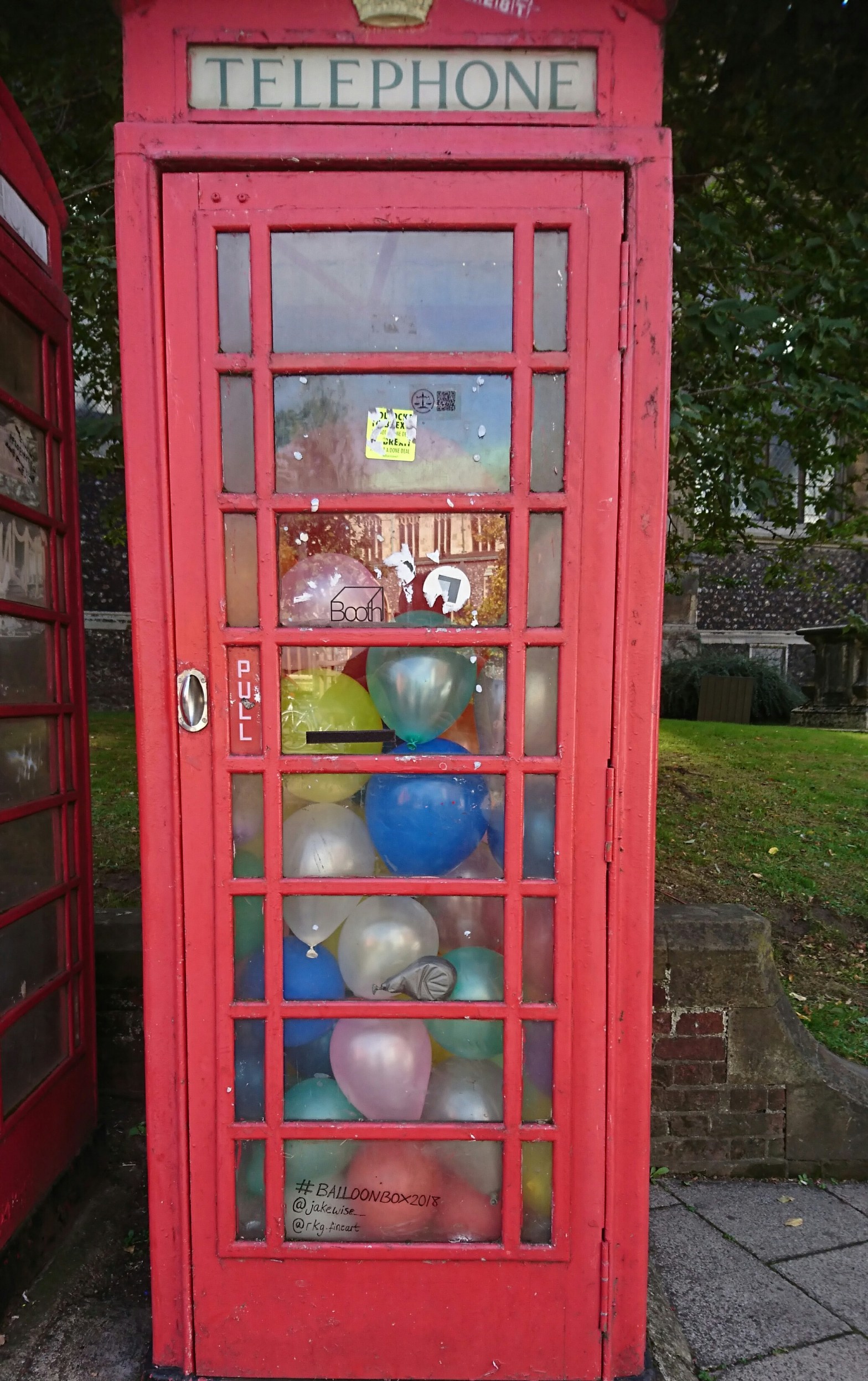
The photo with this post is a phone booth I saw one day in Norwich. I never found out who’d put the balloons in there, but I wish they’d do it again.

Is there room for two?

…and you did ring. 

At least I assume it was you. For all I know, the barman might have passed that napkin to anyone, might have screwed it up, thrown it away before I was out the door.

But you found it, you called

‘Is that you?’

‘Depends on who you want me to be’

‘The guy who makes the effort to call me back from a phone booth’

‘Why?’

‘Because I found one and now it’s your turn’

You gave me a number, the line went dead.

No hesitation, lost you once, won’t let it happen again.

I’ve often thought nothing ages you like phone booth nostalgia. Reminiscing about a time when making a call had to be planned, location sought out, required amount of change to hand and ready to be inserted.

For part of my childhood, they were all I knew, we didn’t have a phone in the house. Try explaining that to the generation who’ve never had one out of their hands.

Now it’s 5 a.m and I’m a teenager again. Rushing through empty streets, desperate to call before you change your mind. Think there’s one a few blocks away, there certainly used to be. Not so sure what I’ll do if it’s gone. Many have, swept away by easy communication.

But I’m safe, there it is at the end of the street. Closer still, realising it’s not empty. Through the gloom, recognising who’s using it. 

‘Is there room for two?’ 

‘I do hope so’

Asparagus, goat’s cheese & bacon tart

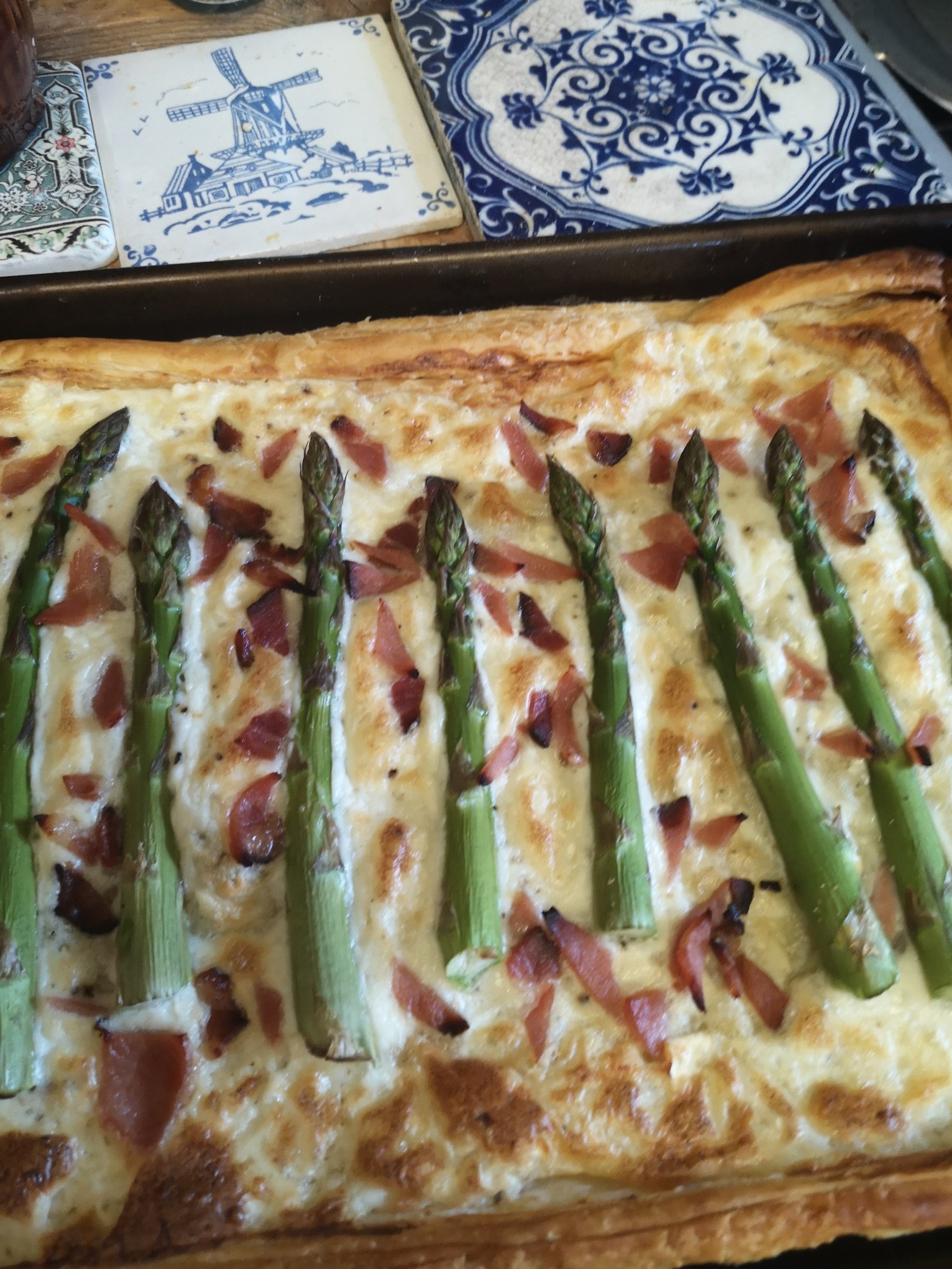
Some bakes happen as the result of lengthy cookbook trawling and a great deal of planning. Others are down to the fact there are things in the fridge to use up and you want to turn them into something quick and tasty for dinner. This recipe sits in the latter category.

We’d been to the supermarket earlier in the week where we made the fatal mistake of getting two trolleys and shopping separately. As always happens when we do this, the result was an overstocked fridge full of random ingredients. This tart helped to use some of them up.

The recipe cuts to approximately six slices, we found it just as enjoyable to eat cold the following day as it was warm when I baked it.  An additional bonus is that baked asparagus has so much more flavour than if you cook it on the top of the oven

Ingredients

  • 320g pack of puff pastry
  • 150g soft goat’s cheese
  • 100g creme fraiche
  • 10 to 12 sticks of asparagus
  • 2 rashers of bacon
  • Black pepper

Method

  • Preheat your oven to gas mark 5 and lightly flour a large baking tin.
  • Unroll the puff pastry onto the tin. Using a sharp knife score a border all the way around the pastry, about 2cm in from the edge. Try to avoid cutting through the pastry as you do this.
  • Prick the centre of the pastry all over with a fork. Then cover the centre of the pastry with a piece of baking parchment so that only the 2cm border is showing. Weigh the parchment down with baking beans and bake for 15 minutes. Then remove the beans and parchment and bake for another 5 minutes.
  • Mix the goats cheese and creme fraiche until smooth and then add some black pepper.
  • Snap the woody end pieces from your asparagus.
  • Pan-fry the bacon rashers and then chop them into small pieces.
  • Spread the cheese mixture over the pastry base, making sure you leave the borders clear
  • Arrange the asparagus on the cheese mixture and then scatter the chopped bacon across the top.
  • Bake for 15 minutes.

Suddenly I’m a coffeecake fan

Anyone who’s ever looked at my Twitter feed will know I’m a coffee addict. Always ready to share a photo of my cup, preferably with an enticing slice of something sweet beside it.

At home, it’s the taste, aroma and inevitable caffeine buzz which draws me to it. When I’m out there are the additional pleasures associated with a good coffeeshop. Familiar faces, favourite places, spending time doing very little and not for a moment worrying about it. Nothing revives the spirits quite like an hour in a good coffeeshop.

Given all that I should be a fan of coffee cake, but until recently I’ve always been left distinctly underwhelmed. Something I put down to the fact I drink my coffee black and ideally quite strong, whereas the flavour of coffeecake puts me in mind of a cup that’s had far too much milk added to it.

It’s all changed now though. A couple of weeks ago I saw a recipe by Ravneet Gill in the Guardian which has completely changed my mind. Suddenly I’m a coffeecake fan.

This one has more spice in it than the average version, and a combination of the coffee, oil and buttermilk makes for a much softer cake than any I’ve had before. 

In her recipe, Ravneet puts frosting in-between the sponges and on top. I felt in-between was enough so have halved the frosting ingredients. Just double them up if you want to do the top as well.

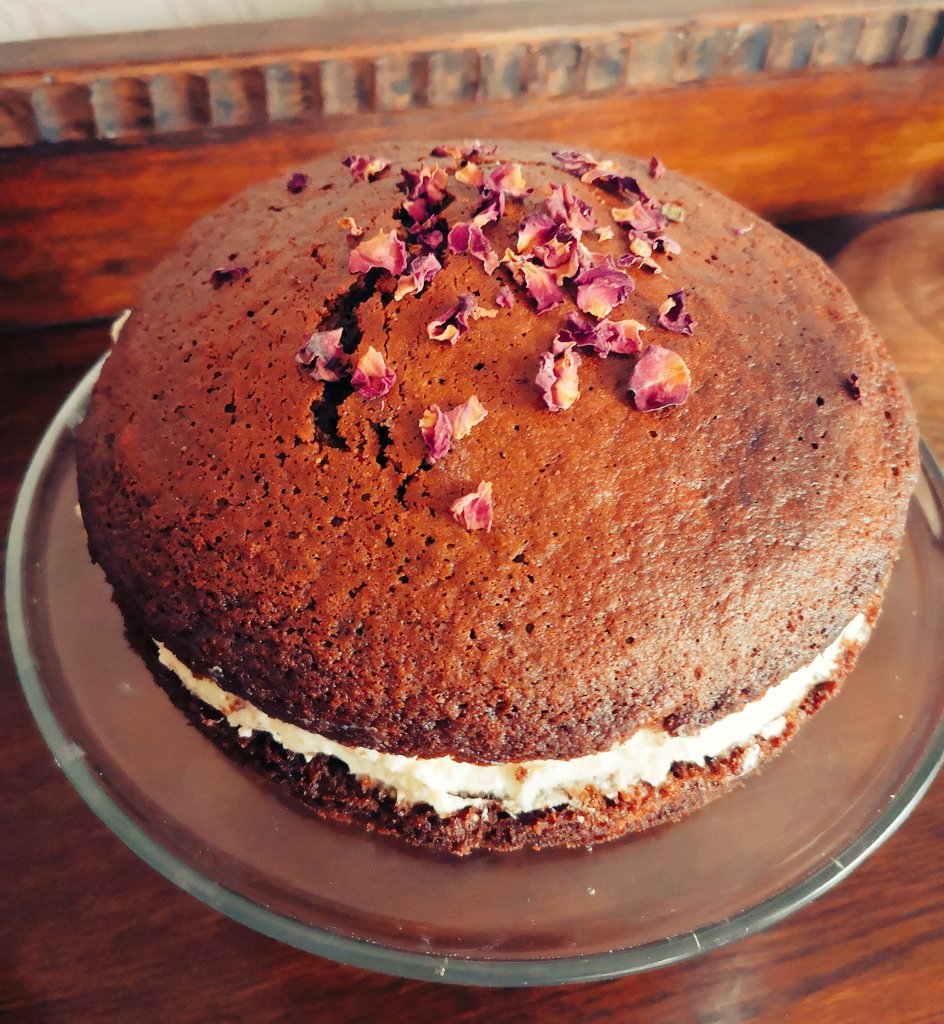
I should warn, the recipe makes two quite substantial sponges. A combination of the soda and baking powder means they rise very well. If you don’t have many mouths to feed you could probably half the cake ingredients as well. 

Ingredients for the cake

  • 2 medium eggs
  • 150ml buttermilk
  • 150ml vegetable or sunflower oil
  • 20g of instant coffee in 130ml of boiling water
  • 0.25 tsp ground cardamom seeds
  • 100g caster sugar
  • 125g light brown sugar
  • 3g salt
  • 7g baking soda
  • 5g baking powder
  • 250g plain flour
  • 50g grounds almonds
  • 80g roasted chopped almonds

Ingredients for the frosting

  • 75g white chocolate
  • 1 tbsp instant coffee granules
  • 50g unsalted butter – softened
  • 125g mascarpone
  • 75ml double cream
  • pinch of salt

Method

  • Heat the oven to gas mark 4 and line two 20cm cake tins.
  • Whisk the oil, buttermilk and eggs together in a bowl and set aside.
  • Brew the coffee in a jug, add the cardamom seeds then set it aside.
  • In another bowl stir together the caster sugar, light brown sugar, salt, soda, baking powder, plain  flour, ground and chopped almonds.
  • Pour the coffee into the wet ingredients and mix them together. Then tip the combined wet ingredients into the dry ones and stir well to bring them together.
  • Divide the batter between the two tins and bake for 35 minutes.
  • To make the frosting melt the white chocolate either in a bain-marie or use a microwave in short bursts.
  • Whisk the coffee and butter together until soft. Add the mascarpone, cooled chocolate, cream and salt, then beat until well combined.
  • Once the baked cakes have cooled add the frosting and enjoy the best coffee cake you’ll have tasted.

Spontaneity is back

It’s not until you start going out again that you realise just what it is you’ve been missing. Spontaneity is back.

So much of my life these last twelve months has centred around food. First, there’s been the planning, trawling through cookbooks or magazines for inspiration, trying to find new ideas rather than always falling back on the tried and trusted. Then the cupboard checks to see which ingredients are to hand and which will require a shopping expedition. Pre pandemic this was often my favourite stage, but social distancing has put any thoughts of food browsing on hold. Then home to prepare, cook and serve, before finishing off with the inevitable mountain of washing up.

Don’t get me wrong, I’ve enjoyed how important food has been in my life, I’m not sure I’d have coped with the various lockdowns so well if I couldn’t have spent so much time in the kitchen. It’s been the routine I needed.

But routine is the word, no days have varied from others, even the ‘it’s the weekend’ thrill has faded. That’s where the return of spontaneity, heralded by the slow but steady removal of lockdown restrictions is so welcome.

Last weekend we ate out for the first time in many months. On the spur of the moment, we decided to go and find somewhere that had the outside space to be able to serve food, it was still a few days to go before indoor food service was allowed. We finished up in the garden of a local pub and the whole experience was wonderful. Tables around us, all be it distanced, of like-minded hungry people, desperate for something other than the norm. Something we’d always taken for granted now feeling like an adventure.

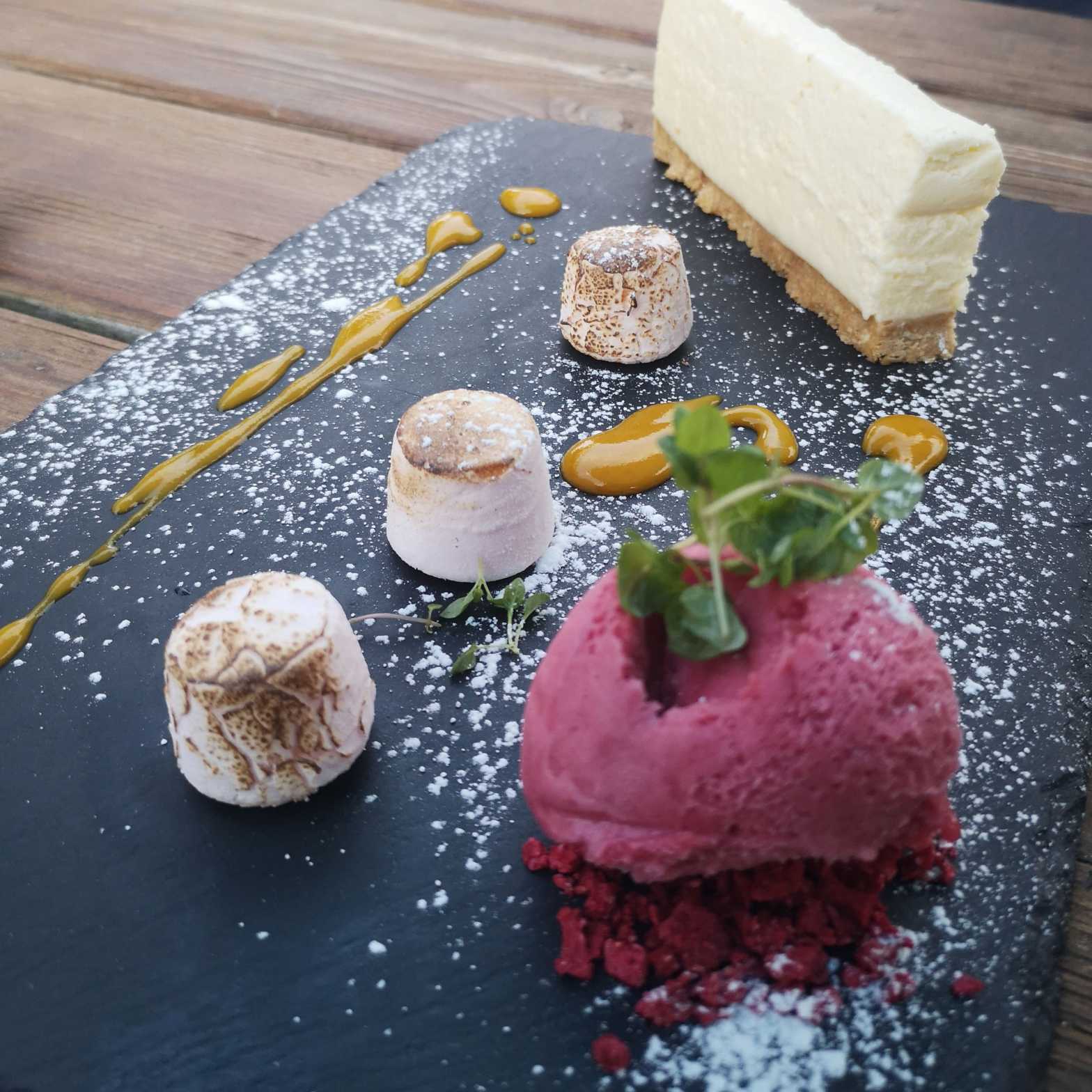
Being handed a menu, pointed to a specials board and having everything done for you felt strangely exotic. No one cared that it was ridiculously cold for a May evening or that the wooden bench seats were hardly the most comfortable things to be sitting on. We were out, we were being fed and it felt good. The plan had been for a drink, a main course and home. But a glimpse of desserts being delivered to another table changed our minds. We finished by sharing a fabulous white chocolate cheesecake. A soft delicate texture was matched with a deep almost caramelised flavour. Served with a scoop of raspberry sorbet, some mango puree and a scattering of toasted marshmallows. There was a skilled pastry chef at work and the world felt a much better place for it.

We went home with beaming smiles.

Spontaneity is back.

Design a site like this with WordPress.com
Get started