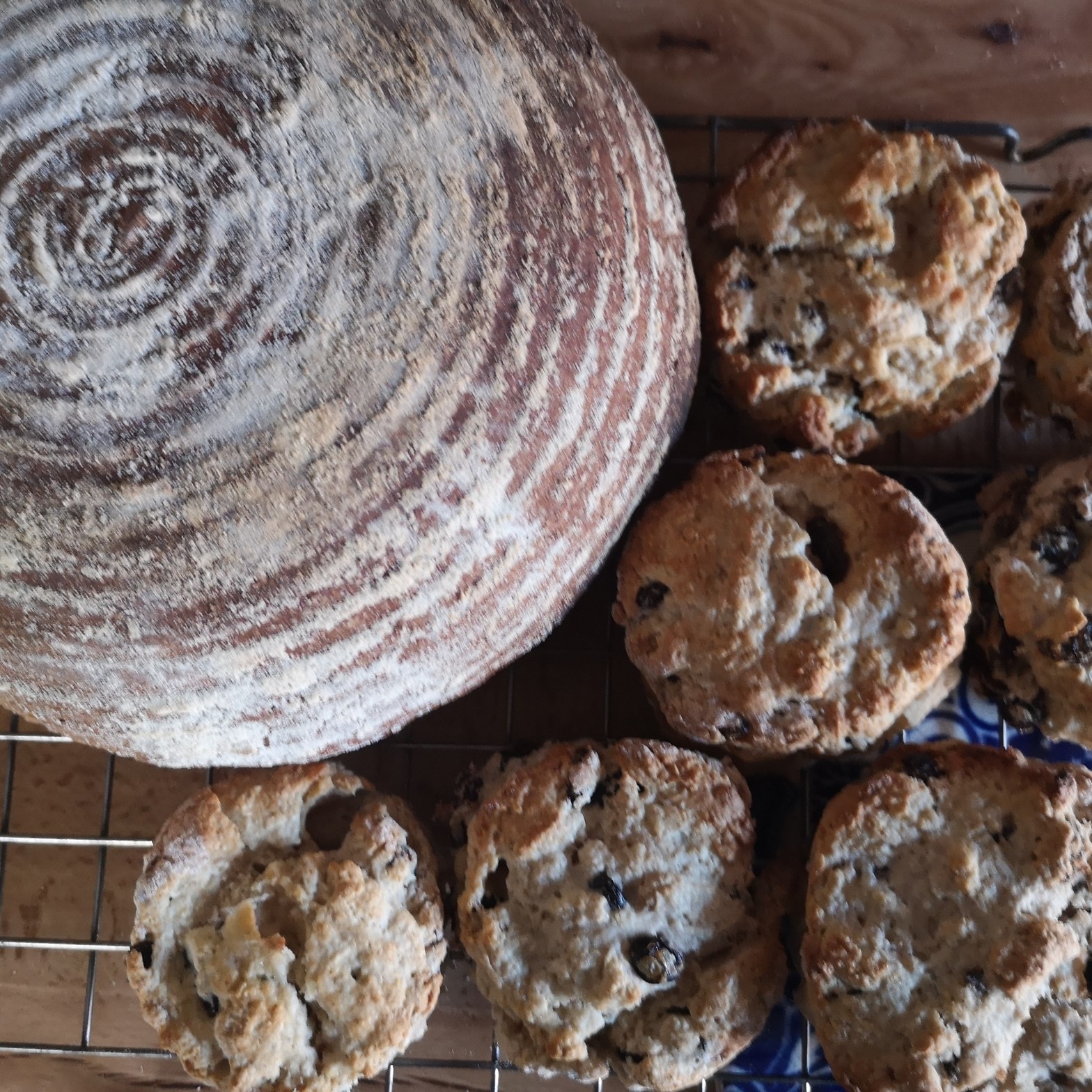
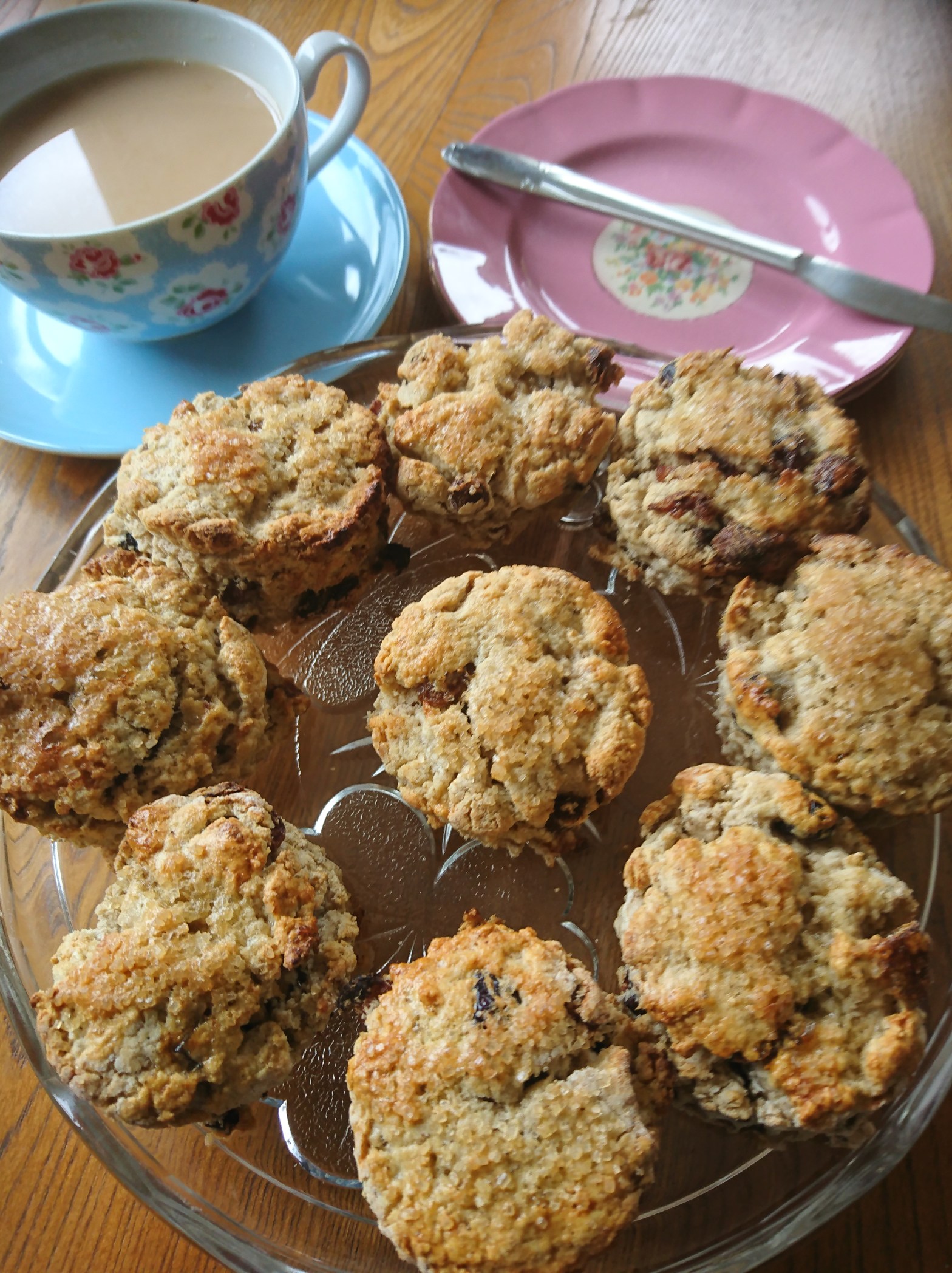
Last time around I shared my thoughts on the humble scone and how it has become a staple bake in my house over the last twelve months, this time as promised I’m sharing the recipe I use most often.
The beauty of a recipe like this is that it can form the base of virtually any scone you wish to make. I’ve got raisins and cinnamon in mine but they can be swapped for any other fruits or spices you have to hand. Equally, you can take them out and still have a very good plain scone. Take the sugar out, add ham or cheese and you’re into the world of savoury scones. The options are endless.
It’s not just the adaptability that makes this recipe a favourite, it’s also the remarkably short time involved. Within half an hour of going into the kitchen, there are piping hot, wonderful smelling scones sitting on the cooling rack. The biggest challenge is leaving them to cool sufficiently before you tuck in.
Ingredients
- 250g self-raising flour – you can use plain flour but I find that self-raising gives the best results
- Pinch of salt
- 50g caster sugar
- 1tsp cinnamon
- 50g unsalted butter – this needs to be chilled and diced into small cubes.
- 1 egg
- 100ml buttermilk – if I don’t have buttermilk I combine the egg with 100ml of ordinary milk and beat them together.
- 40g raisins – sultanas or other dried fruit work just as well
Method
- Preheat the oven to gas mark 7 and line a baking tray
- Mix the flour, salt, sugar and cinnamon in a large bowl. Add the diced butter and use your fingertips to work it into the dry mix. The mix should look like bread crumbs once this has been done.
- At this point add the raisins and stir the mix to distribute them.
- Beat the egg into the buttermilk (or ordinary milk) and add to the dry mix. Using a round-bladed knife, work the mix together until it forms a wet and sticky dough.
- Turn the dough onto a floured surface and knead it just a little. It helps if you have some flour on your hands before doing this.
- Press the dough down until it is approximately 3cm thick and then use a cutter to make rounds, transferring each to the prepared baking tray. The cutter I use is 6cm and I normally manage seven scones. If your dough is quite sticky put some flour on your cutter before you do this.
- Don’t forget to combine the offcuts to ensure you get the maximum number of scones.
- Once all the scones are on the tray, sprinkle them with some flour (this helps to brown the tops in the oven) and bake for 12 minutes.
- Transfer them to a rack and let them cool.






 David in the kitchen.