When life gets in the way of baking.

Things have suddenly got a bit hectic in this house over the last few days. I’ve mentioned before how my partner’s 89-year-old mother has been living with us since she suffered a stroke almost exactly twelve months ago. We had settled into a regular routine, but then on Friday she fell over in her bedroom, caught her head on the way down, and suddenly we’re right back to the beginning again. She’s badly bruised, quite weak and all of her confidence has gone. We spent the weekend rearranging the house so that she can have a bedroom downstairs and at the moment most of our time is taken up with caring for her.

At times like this any plans you’ve made soon go by the wayside and that’s certainly been the case as far as baking is concerned. I was quite pleased with myself when I sat down last week to write my Christmas baking list, but as of now, nothing has been ticked off.

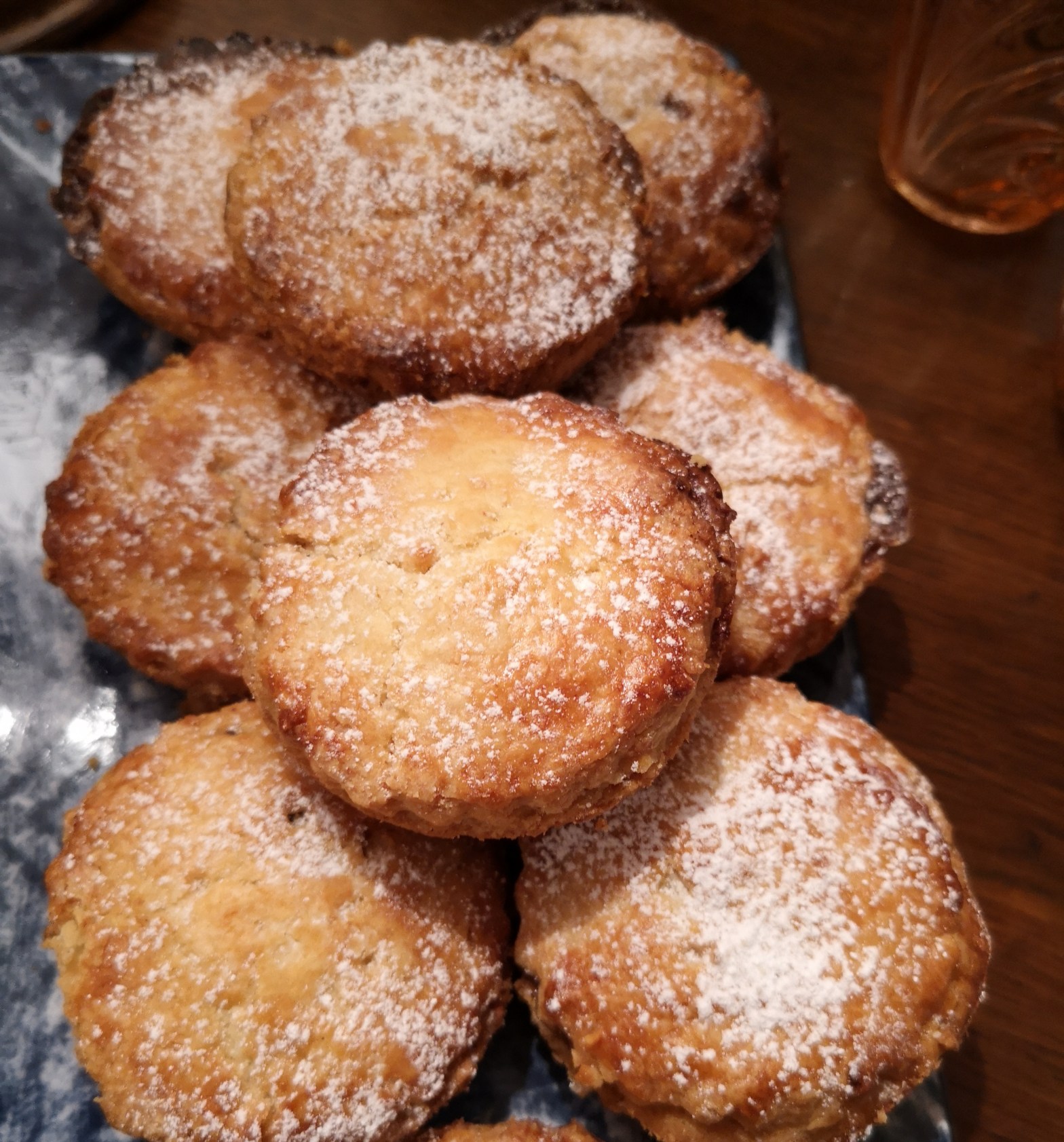
When I can get back into the kitchen I’ll be starting with mince pies. I know these are traditional in Britain at this time of year but I’m not sure about the rest of the world. If you haven’t heard of them they are small individual sweet pastry pies, filled with a mixture of dried fruits and spices. They can be traced back to the 13th century when Crusaders returning from the Middle East to Europe bought recipes containing meats, fruits and spices.  In their early forms, the pies did contain meat as well as fruits and spice, but over time they have become the purely sweet version we know today. Just to confuse the issue further, what much of the world knows as ground beef is also called mince is Britain.

I’ve been baking mince pies for a few years now but last year was the first time I made my own mincemeat. Previously I’d always used shop-bought and simply made the pastry case. That’s all changed now though and after last years success, I’m not going back. Homemade mincemeat is gorgeous, you have real control over the flavours you want to accentuate and the sugar content. The recipe I used to make the mincemeat was from Felicity Cloakes mince pie masterclass column in the Guardian. Felicity takes you through the baking stage by stage and if you’ve never tried a homemade mice pie this is a great place to start. When you look at the ingredients list for the mincemeat you may think it a bit daunting but take note of Felicity’s comment, things can be changed if there are items in there you don’t like or don’t have. I didn’t bother with the stem ginger in mine and I also left out the optional orange blossom water which she has as a pastry ingredient.

The recipe is for 20 pies. If like me you think that sounds rather a lot I’d suggest making the full amount of mincemeat but half the pastry. You can enjoy a batch now and keep the remaining mincemeat in the fridge for some more nearer Christmas.
The joy of group baking

Bake Off is done for another year. First, there was the expectation that like so many of our annual highlights, it just wouldn’t happen this year. Then a few brief weeks of anticipation once we’d heard it was going ahead. Followed by ten weeks of baking challenges that feel as if they’ve gone by in a flash. What are we going to do with ourselves on a Tuesday evening now that the tent has been packed away, the washing up done and everybody has gone home.

Bake Off always has a feel-good vibe to it and that felt even more so this year. The contestants, judges and production team all isolated together for weeks to get the show made and this came across in just how close the bond was between all involved. How ever competitive things got there were always offers of help if someone was struggling, even during the final.

It must be something about group baking that does this. I remember going to the Cake&Bake show in London a couple of years ago and it was packed with some of the happiest, friendliest people I’ve ever met. Maybe it’s something to do with all the baking powder, flour and sugar wafting about in the air.

The final set of challenges the bakers had to face this year were to create eight custard slices to their recipe for the signature bake. I always remember custard slices as a childhood favourite on the rare occasions my mother would let me indulge in a shop-bought cake. Ironically I think these treats normally happened just after a visit to the dentist.

For the technical challenge, they had to make coffee walnut whirls.I’ve always been partial to a Walnut Whip, which sounds a bit like having an antiquarian kink, but never tried making them at home. Somehow the mixture of marshmallow & chocolate feels as if it should be a shop-bought confection.

For the final showstopper, they were tasked with making a baking tower. This creation had to show off multiple baking skills which the contestants had picked up during their Bake Off journey. The show was won by Peter, far and away the youngest ever winner at just 20 years old, and this was the baking tower that clinched victory for him. A fabulous, if somewhat daunting, bake. Any recipe where the list of required equipment, never mind the ingredients, comes to ten items, is not for the faint-hearted.

I intended to finish off with one last bake connected to the show and have my first attempt at making a custard slice. Unfortunately, other things got in the way this weekend and there just wasn’t time to attempt a 26 stage recipe. I’m still keen to make them and you will hear all about when I do.

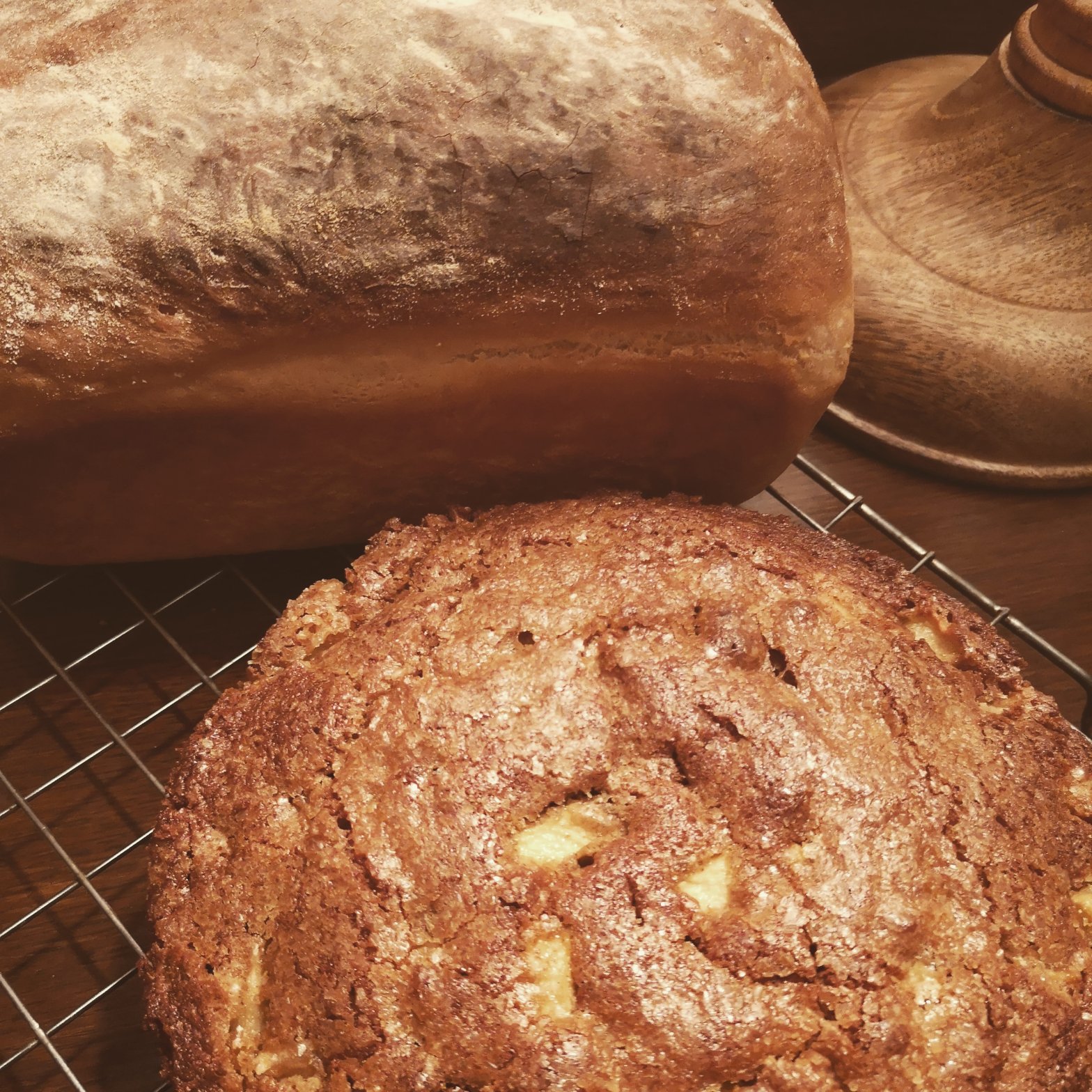
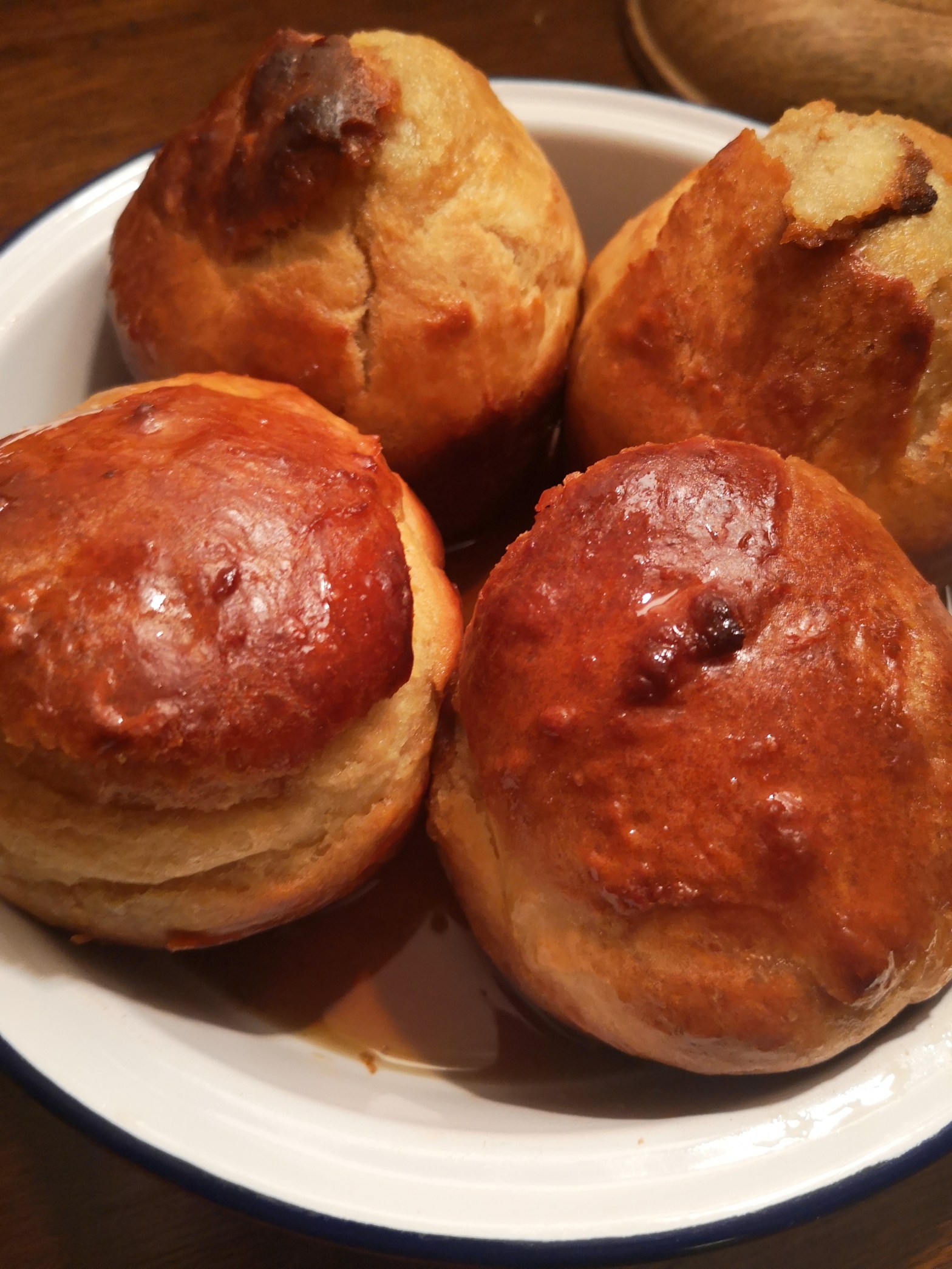
I did have time to make a loaf of bread and an apple cake and they are in the photo that goes with this post.

So that’s it, as with every year there’s the should I or shouldn’t I have a go at applying for next time conundrum, but before that its eyes down for Christmas and some festive baking. It’s just a shame that we can’t all get together as a baking group, but I will share what I’m doing on here.

Great British Bake Off 2020 week 9

It doesn’t feel long since I was anticipating the unexpected pleasure of a new Bake Off series, yet here we are at the semi-final stage already. Somehow this sums up 2020 for me. Long spells where time drags and nothing much happens, followed by fleeting pleasures that are gone far too quickly. Only a week to go and I’ll have to start setting my own baking challenges again.

The semi-final was billed as patisserie week, a baking style which to me conjures up the delicacies that glitter and entice in the windows of the best French bakers. A style of cake I love to indulge in and eat, but one which somehow feels beyond the capabilities of most home bakers to produce. When I saw this theme coming I had serious concerns it might be the week where my skills let me down and I couldn’t join in.

Thankfully the signature challenge was a Savarin cake, not something I’ve made before, but not as high end as I feared it might be. If you haven’t heard of a Savarin bake you probably have of  rum baba. Savarin is the yeast infused batter used to make the baba before it is then soaked in rum.

The other two challenges were not ones I was going to be trying at home. The technical was a  Danish cornucopia, an oddly phallic-looking cake which none of the contestants had ever heard of and most failed miserably in making. This was followed by a show stopper of a cube cake. Think of it as a baked Rubik’s Cube, twenty-seven individual cube cakes that can be stacked together. All impressive baking, but not for the domestic kitchen.

So off to the cookbooks it was to found out how to make a Savarin. It turned out to be relatively straight forward and these sweet and sticky treats were a great hit in this house when I served them yesterday evening.

I followed a recipe which said it served four. To be honest the babas produced were a bit on the large side and I’d advise splitting this five or even possibly six ways if you’re tempted to have a go. A muffin tin is probably the best thing to use.

Ingredients

For the baba

  • 4gm dried yeast
  • 3tsp demerara sugar
  • 75g butter
  • 200g strong white bread flour
  • 1 tsp fine salt
  • 2 eggs…beaten

For the syrup

  • 400gm demerara sugar
  • 200ml dark rum…this is the amount stated in the recipe. I used less and the syrup still tasted good.
  • 1tsp vanilla essence

Method

  • Preheat the oven to gas mark 4 and grease the muffin tin that you are using
  • Put the yeast in a bowl with 75ml warm water and a pinch of the sugar, stir to combine. then leave until bubbly on top. Meanwhile, melt the butter and set aside, then whisk the flour, salt and remaining sugar in a large bowl or food mixer
  • Mix in the yeast and then half of the egg, once combined add the rest of the egg and then the butter. Beat until the mixture is smooth*
  • Half fill the muffin mould with batter. Then cover with a tea towel and leave to rise for about 45 minutes. the batter should approximately double in size
  • Place the tin in the oven and bake for 25 minutes. 
  • To make the syrup combine the vanilla and sugar with 500ml of water and bring to a simmer. Once the sugar is melted take off the heat. Once cooled add the rum.
  • When the babas are out of tin, leave them to soak in the syrup until you are ready to serve.

*Although you are using yeast it’s worth remembering that the mixture is much closer to a thick cake batter rather than a dough.

Great British Bake Off 2020 week 8

We’re down to the last five contestants in the Bake Off, this was quarter-finals week and the challenges were all desserts.

For me, dessert is a catch-all title which can include gateaus or even pies, as long as they’re of the sweet variety. For Bake Off, it gets a bit more specific, as the ones I would include have already found they’re way into cake and pastry week respectively.

This time around the challenges set were to produce six individual baked cheesecakes of they’re choice as the signature, to make a Sussex pond pudding for the technical and finally to create a jelly art cake as the showstopper.

This weeks signature challenge pretty much speaks for itself but the other two probably need some explanation. I was as baffled as to the next person when a Sussex pond pudding was announced. The pond reference makes it sound quite unappetising, but I now know it to be a very old traditional English recipe. I’ve done a little research since the show and apparently, there are mentions of it going back as far as the 1600s. It consists of a suet pudding case around a centre of butter, sugar and lemon. The lemon is cooked whole and the centre is supposed to ooze, a bit like a baked fondant when you cut into it. My partners 89 years old mother watched the show with us and she remembers it as a childhood treat, but it’s certainly not something I’ve come across before. Neither I’m going to guess had any of the contestants, as I don’t think I’ve ever seen a challenge where they’ve all failed to quite the degree they did on this one. Without exception, the puddings collapsed long before anyone had a chance to cut into them

I’m not sure that a jelly art cake is a thing, it feels to me as if it might have been created in the minds of the judges. However, if you click the link you’ll see the fantastic creation one of the contestants came up with, a real work of art. My last experience of jelly was probably at a childhood birthday party and I’m not sure I enjoyed it then.

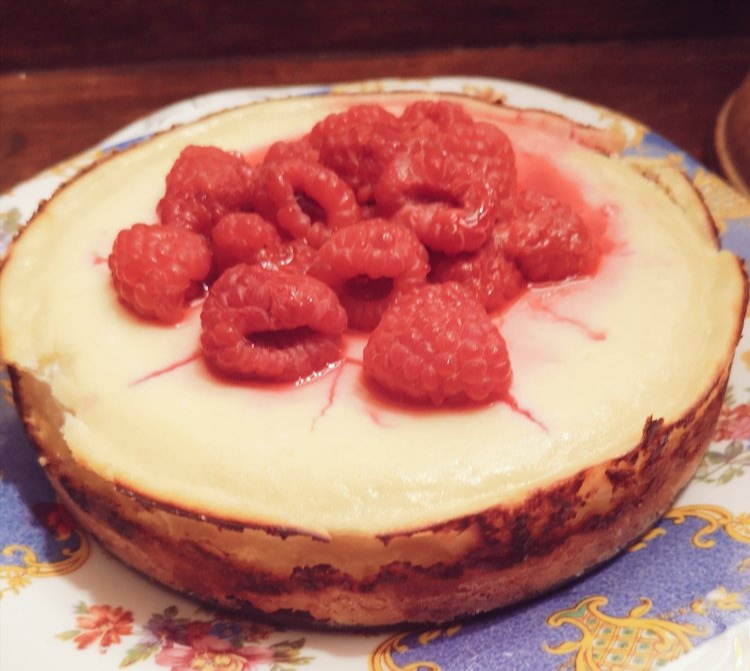
Cheesecake isn’t one of my favourite desserts, I often find them quite rich and heavy. The Italian version is different though. The base and filling are lighter and it’s nowhere near as sweet as the traditional variety. 

This is the recipe I use. If you’re just cooking for two this works fine if you half all of the ingredients amounts.

Ingredient

For the base

  • 125g plain flour
  • 50g ricotta cheese..if you can’t get ricotta you can use cottage cheese
  • 50g unsalted butter..melted
  • 100g icing sugar

Filling

  • 450g ricotta cheese
  • 100g caster sugar
  • 25g plain flour
  • 2 eggs
  • Pinch of salt
  • 60ml lemon juice
  • 0.5tsp vanilla extract

Method

  • Preheat the oven to gas mark 8
  • Butter and flour an 18 or 20 cm springform cake tin.
  • Mix the ingredients for the base together and press them into the base of the tin.
  • Whisk together the filling ingredients and pour them over the base.
  • Bake for 15 to 20 minutes. When it comes out the filling should still be slightly wobbly in the centre.
  • Leave to cool completely in the tin before you release it

I often decorate the top with sliced strawberries. I couldn’t get any this weekend so I used some raspberries I had in the freezer.

My phone is having more fun than I am.

Our phones met across a crowded room. They reached out, shared memories and in a matter of moments were having the relationship which should have been ours.

Somehow that’s the way of things these days, a world we’ve become willing but unknowing participants in. Each shrinking into of our own spaces, counting friends, loving likes, having lots to look at but no one to talk to.

I think it’s probably what caused my phone to wander. Bored of my limited requirement it knew there were so much more it could be doing, so many boundaries it could be pushing.

I’d noticed a few strange things about it recently but had just put them down to age and a declining battery. Ironically the phone probably held similar opinions about me.

It was always worse if I sat somewhere for a while. Sipping my coffee, staring out of the window, surreptitiously listening to conversations and clearly losing the phone’s attention. If I suddenly decided to Google or tweet, there was always a delay before it reacted. Almost as if it had been caught out and was struggling to remember it’s primary function.

Now I know why. Somewhere in the ether, our algorithms met and two sims entwined. If I look at my phone now the history isn’t all mine, it’s similar but not quite as it should be. There are photos of things I wish I’d done, places I’ve always wanted to visit.

The phones knew what they were doing. You and I have similar dreams, shared aspirations and fantasies we once thought unique to ourselves.

The problem we have to face now is do we walk away, leave our phones to their relationship, or do we say hello.

It’s the little things that keep you going.

It’s the little things that keep you going at a time like this.

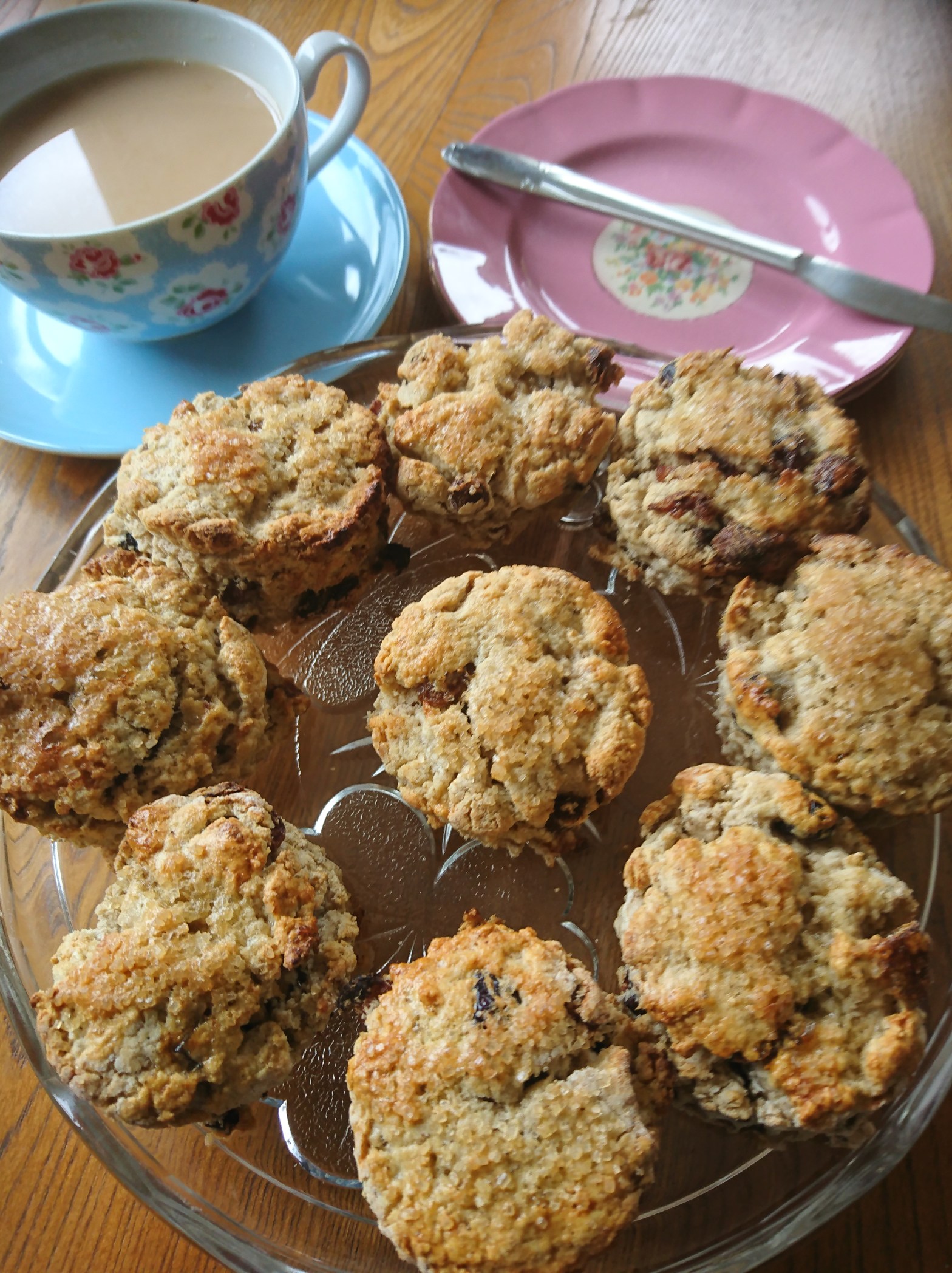
My last post was al about the sort of baking which takes a few hours to complete and feels like quite a project. This time around it’s the quick and easy option, the sort of baking where you barely have time to do the washing up before the timer is going off and the kitchen smells wonderful.

There was a time when I would feel a bit guilty if there was always a baked sweet treat in the house. It felt as if when the weekend cake was finished, there should be a few abstemious mid weekdays before butter and sugar found their way back into my baking bowl. Coronavirus and the lockdown conditions it’s created have changed all that.

If I must stay at home and if I’m going to be denied coffeeshop visits the least I can ask for is a little something to nibble at with my coffee. I know it probably isn’t doing my waistline a great deal of good, I’ll worry about that when I can finally get out again. In the meantime, I’ll continue baking scones.

Scones are so adaptable, you can make them sweet or savoury, and once you’ve mastered the basics there’s an endless variety of things you can add.

My go-to recipe is about as straight forward as it gets and if you were to start now the scones would be ready in 30 minutes. Why not give it a go and brighten up your Wednesday afternoon. I use a 6cm cutter to make my scones and normally get half a dozen out of this recipe.

Ingredients

  • 250g self-raising flour…you can make these with plain flour but self-raising gives much better results.
  • a pinch of salt
  • 50g caster sugar
  • 50g unsalted butter – filled and diced
  • 40g sultanas or raisins…any other dried fruit you have to hand will work if chopped up.
  • 1 egg
  • 100ml milk

Method

  • Preheat the oven to gas mark 7 and line a baking sheet with parchment.
  • Sift the flour, sugar and salt into a bowl. Add the butter and use your fingertip to work it into the dry mixture until it resembles bread crumbs. Then add the fruit and stir it in.
  • Beat the egg into the milk and then pour into the dry mixture. Use a round-bladed knife to bring everything together to form a dough. Don’t worry if the dough is sticky, it’s meant to be. It helps if you rub some flour on your hand before you handle it.
  • Turn the dough onto a lightly floured surface and use your hands to press the dough flat to about 3cm thick.
  • Dip your cutter in some flour and then use it to cut rounds out of the dough. Transfer the rounds to the lined baking sheet.
  • Sprinkle a little flour over the scones and then bake them for 12 minutes. They should be golden brown when ready.
  • Transfer to a wire rack and leave to cool slightly.

They’re delicious on there own, even better if spread with butter and jam.

Great British Bake Off 2020 week 7

This season’s Bake Off has reached the point where the weekly themes start to go a bit off-piste. In previous years we’ve been served vegan and Danish baking, this time around we’ve had Japanese followed by the Eighties.

When I saw this theme listed I was desperately hoping the show might include a Black Forest Gateau. It’s one of my abiding memories from eating out in those times and I was relishing the chance to get creative in the kitchen with kirsch and cherries. Unfortunately, it didn’t happen, but it’s no reason why I can’t indulge in one soon.

The challenges presented to the bakers were to produce a batch of finger doughnuts for the signature bake. To make a quiche with a filling of their choice as the technical and to create an ice-cake for the show stopper.

Picking an entire decade is a pretty broad theme and to be honest I was a bit disappointed with what they came up with. Doughnuts, be they finger or ring-shaped, have been around for far longer than the last forty years, equally I’ve no reason to think quiche is any less popular today than it was four decades back.

Ice-cream cakes I will admit, do feel more of that time. Back then shop bought Arctic Rolls or Viennetta’s always felt like the height of indulgence. I also have fond memories of my mother making Baked Alaska as a special occasion treat. The wonder of hot meringue encasing cold ice-cream feels as exciting now as when she was making them for my birthday cake.

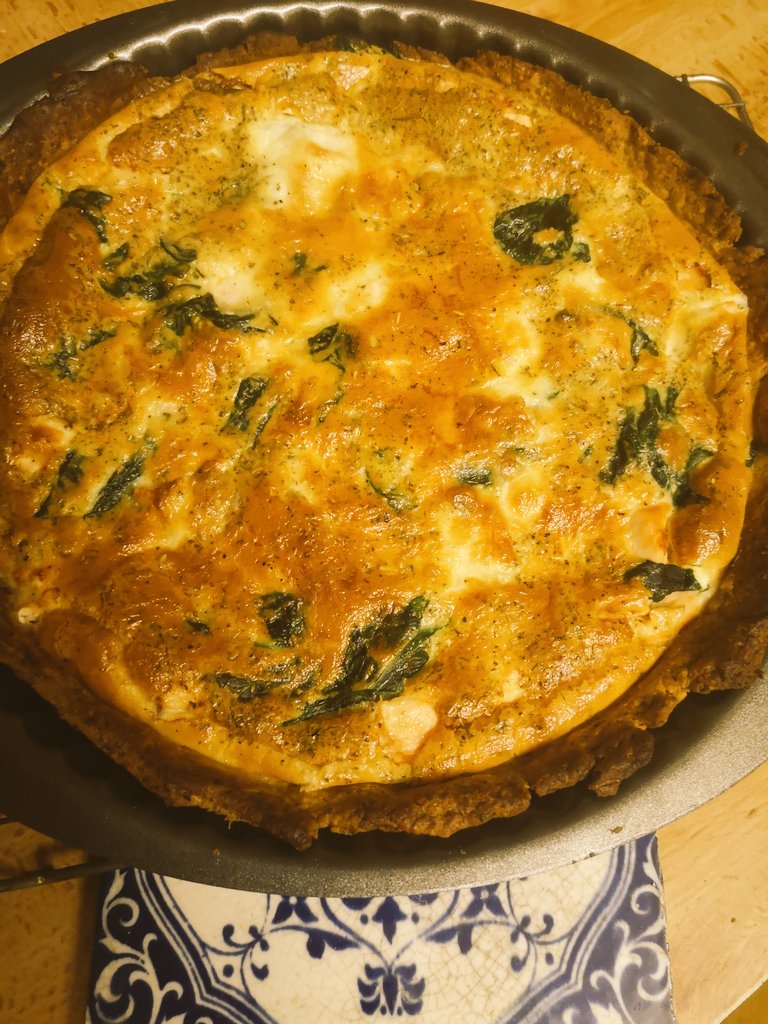
For my bake this week I opted to go with a herbed salmon and cheese quiche. I don’t own the deep fat fryer which the doughnuts required and as much as I’d love to have a go, this didn’t feel like the time for ice-cream cake. 

Whenever I make quiche I’m always caught out on just how long it takes. This recipe is relatively straight forward but once you’ve factored in two thirty-minute fridge rests for the pastry you’re looking at over two hours from beginning to end. Having said that, with so many of us in a lockdown of some sort or other at the moment it might just be the perfect baking project to undertake . 

Ingredients

For the pastry

  • 100g plain flour
  • 75g wholemeal flour
  • 2 tsp dried herbs – I used mixed Italian herbs
  • 100g butter
  • 2tbsp cold water

For the filling

  • 2 Salmon fillets
  • 50g spinach
  • 250g ricotta or burrata cheese
  • 150ml double cream
  • 3 eggs
  • Zest of a lemon
  • 2 handfuls of fresh herbs

Method

  • To make the pastry combine the flours and dried herbs in a bowl. Cube the butter and add it to the mix. Use your fingertips to rub the butter until the mix resembles bread crumbs. Add the water and use a knife to bring everything together into one lump. If it is still crumbly add just a drop more water. Then wrap the dough in cling film and chill for 30 minutes.
  • Once chilled roll the pastry out on a lightly floured surface. You are looking to roll it out to fit a 20 to 23 cm flan tin. Press the pastry into the sides and base of the tin and use any off-cuts to patch up and cracks. or holes. Prick the base of the pastry with a fork and then put the filled tin into the fridge for a further 30 minutes. Towards the end of this time heat the oven to gas mark 6.
  • Once chilled line the pastry case with baking paper and then add dried beans to hold it in place. Bake the case like this for 20 minutes, then remove the beans and paper and bake for another 5 minutes.
  • At the same time, you can wrap the two salmon fillets in tin foil and bake home at the same temperature for 12 minutes. They will start to flake but you don’t want them cooked through.
  • After baking the pastry case and the salmon, reduce the oven heat to gas mark 4.
  • Wilt the spinach in a sieve over boiling water. Whisk together half the cheese, the cream, eggs, lemon zest and herbs.  Season with salt & black pepper.
  • To assemble the quiche, flake the salmon and spread it across the pastry case, place the spinach and the remaining half of the cheese on top and then pour over the cream & cheese mix.
  • Bake for 35 minutes and then leave to cool slightly before you serve.

This might sound like a long-winded process but I assure you it’s worth it. A bonus is that it tastes nearly as good served cold the following day.

Back through the looking glass

So here we go again, UK lockdown 2, the sequel no one wanted to see.

It’s been pretty obvious for a few weeks it was coming, but it still doesn’t make the thought of shutting the doors and hibernating for the next four weeks anymore appealing. If that wasn’t enough, there’s a certain election to worry about and Lottie, my favourite contestant, left the Bake Off tent this week.

We’ll all have our own way of dealing with this. My 87-year-old dad’s adaptability amazed me in the first lockdown, he mastered zoom to stay in touch with friends and by the end was regularly playing online bridge. I called him earlier today to make sure he was ok for this one and he told me his project this time around is to master the art of tie-dye and then make scarves and napkins as Christmas presents. I genuinely have no idea where that’s come from, but I’m looking forward to seeing some of the results come December 25th.

For myself, I’m doing my best to remember this won’t be as big a shock as last time. Back in March we really did step through the looking glass, going from the old normal into the new weird in one leap. The point I’m doing my best to remember is although lockdown 1 did finish, we’ve never been back to anything remotely like the old normal. Yes, I’ve made one or two tentative coffeeshop visits, ventured into a bookshop and browsed for all of five minutes before the oddness of the experience drove me out again. Other than that there have still been so many coronavirus restrictions on life in place. So if we have gone back through the looking glass today, at least it’s not been such a big step.

No doubt my chief coping mechanism will again be baking. I’ll be escaping into the kitchen at every available opportunity and I’ll be on here to share what I make with you. There have been some interesting challenges in the current series of Bake Off I haven’t had a chance to try yet, so this just might be the time.   

Talking of Bake Off, I see they’ve already opened applications for next year. I have tried a couple of times in the past, so maybe third time lucky if I have another go. Watch this space.

In the meantime, stay safe, stay sane and keep baking.

Great British Bake Off 2020 week 6

Bake Off entered a whole new world this week. The world of Japanese baking.

If my knowledge of Japanese food is at best limited, my knowledge of their baking is even less. This was the sort of week where contestants who’ve managed all that’s been asked of them so far suddenly started to falter. A week when everyday baking skills didn’t really count, it was all about throwing caution to the wind and trying completely new things. 

For me, it was a week when the coronavirus restrictions we’re all currently living under hit home. As the bakes were all unusual it meant I was missing many of the required things. Previously I’d have been straight out to the shops, but that just isn’t so easy now. It was a week for making do with what I had.

The baker’s challenges were to make a batch of steamed buns with a filling of their own choice as the signature bake. To bake a matcha mille crepe cake as the technical challenge and to produce a Kawaii themed cake as a show stopper.

If we were being pedantic there’s probably an argument to be had as to whether a steamed bun qualifies as baking. Those the bakers produced were what I know as bao buns and to be honest I’d always thought of them as something from Chinese or Vietnamese cooking before this show. I would like to have a go at making some but the lack of a steamer in my kitchen ruled them out for now. 

Also out of the question was the crepe cake. If you’ve clicked on the link you’ll already know it requires matcha powder. Matcha isn’t something I have in my cupboards and given my limited shopping options as the UK goes back into a full lockdown there was no chance of getting any.

That left the showstopper for me to have a go at and even here my options were limited. Kawaii refers to the Japanese popular culture obsession with all things cute and is not a baking specific thing. This toadstool cake was one of the baker’s efforts and gives you an idea of the sort of thing the judges were looking for. I didn’t have the fondants and colours required for ornate and fancy decorations but at least I could bake a cake.

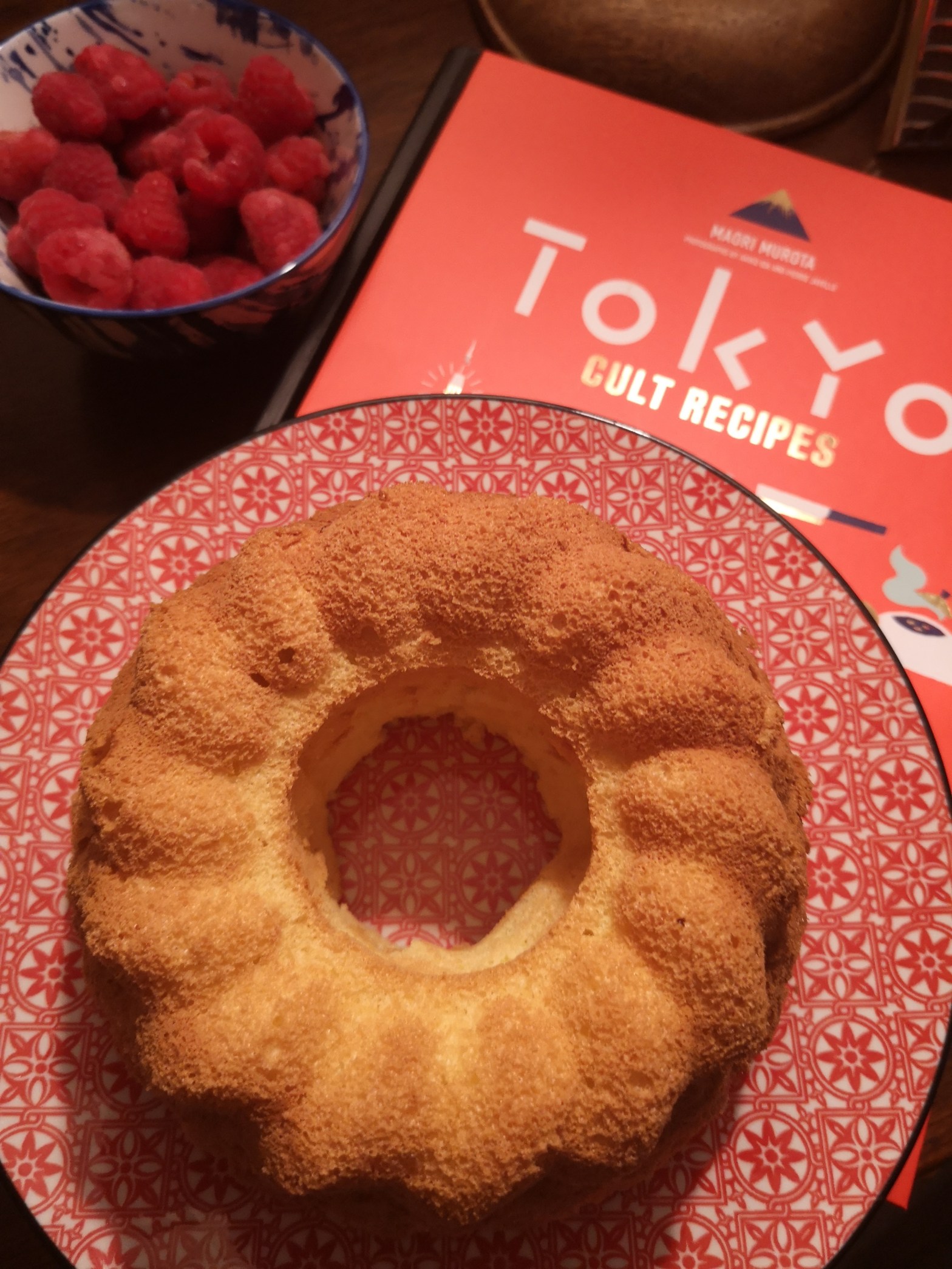
Thankfully there is one Japanese cookbook on my shelf, all be it very underused, and this came to my rescue with a recipe for chiffon cake. 

This cake uses sunflower oil rather than butter for the fat element in the mixture and the result is one of the lightest, airy sponges I’ve ever made. As there isn’t a great deal of flavour in the cake I served it with some fresh raspberries.

Ingredients

  • 4 eggs separated
  • 90g caster sugar
  • 60ml milk
  • 55ml sunflower oil
  • 70g plain flour

Method

  • Preheat the oven to gas mark 4
  • Whisk the eggs yolks with 30g of the sugar until pale and frothy.
  • Gradually add the milk and then the oil. Keep whisking as you add. Then sift in the flour and combine with a spatula
  • Put the egg whites In a separate bowl and use an electric whisk until they are foamy. Then add 30g of the sugar and continue  whisking until the mix is firm. Add the final 30g of sugar and whisk until the meringue has stiff peaks.
  • Add a third of the meringue to the to egg yolk mixture. Mix it in with a hand whisk and then add the second third. Once combined add the final third of the meringue and fill it in with a spatula. Try to be gentle through this process as you want to keep as much air in the mixture as possible.
  • Pour the mixture into a small bundt tin*, mine is 16cm, and bake for 30 minutes.
  • The cake is ready when a skewer comes out clean.

*The recipe says not to butter or flour the tin before you add the mixture. I’m not 100% sure why but I did follow the instruction. All I will say is be very careful as you get the cake out of the tin after baking. Being such a soft sponge it is quite fragile.

Great British Bake Off 2020 week 5

Of all the baking basics, the one I struggle with most is pastry. On the face of it things should be easy, most pastry ingredient lists are even shorter than bread making, but somehow it never quite seems to work that way. It never has quite the shortness or crumbly texture I’m looking for. I’ve tried and I’ll persist, but can’t deny a temptation to cheat every time I walk by the ready-made pastry shelf in the supermarket

This is why Bake Off pastry week always make me a little more nervous than the others do. Makes me feel my commitment to baking something from every show in the series might just have been a mistake.

The challenges the bakers were presented with this week were to make a batch of pasties to their own recipe for the signature bake. To produce six eclairs, three raspberry and three caramel, for the technical bake and a quiche of their choosing, presented inside a pastry dome for the showstopper finale. 

For those who don’t know them, pasties can probably be described best as small individual pies. Half mooned in shape, you may be more familiar with them as South American empanadas. They have a fascinating history and were originally a food eaten by Cornish coal miners in England. Baking the fillings, normally meat, potatoes and other vegetables, inside a pastry case meant a hearty lunch could be wrapped up and taken below ground with them for sustenance during the long shifts. In the very early days, it’s believed pasties were split in two with savoury filling at one end and sweet the other. 

Many food historians claim empanadas resulted from Cornish coalminers travelling to other countries for work and taking the pasty with them.

Now comes my weekly complaint, the showstopper challenge was once again all about the look rather than the taste. I know the bakers had to make quiches for the judges to taste, but the intricate pastry domes they were presented in were almost immediately lifted off and set aside without a glance. I thought the most impressive of these looked very similar to the glass pyramid which sits just outside the Louvre museum in Paris.

If there’s one type of pastry I’ve had any success with its choux. That’s why when eclairs were announced as the technical I knew straight away what I’d be baking this week. Eclairs are a life long favourite, enjoyed now just as much as they were in childhood. I’d always thought of them as a shop-bought thing, so discovering that I could make them at home was a baking high point.

If you fancy having a go this is the recipe I use. It comes from Trinne Hannemann’s Scandinavian Baking, one of the most used cookbooks on my shelf

Ingredients

  • 100g butter
  • 100g plain flour
  • 0.5 tsp caster sugar
  • pinch of salt
  • 3 eggs lightly beaten

Method

  • Put the butter in a saucepan with 200ml of water and let it melt over a gentle heat. Now increase the heat and bring to the boil. Meanwhile, sift the flour, sugar and salt into a bowl. Take the saucepan off the heat, add the flour and stir with a wooden spoon until a firm, smooth paste is formed. Beat until it comes away from the edges of the pan and forms a ball, then remove from the heat and leave to cool for 10 minutes. Add the eggs to the dough a little at a time, beating well after each addition, until the mixture is smooth and glossy. You may not need all the egg.

To then make the eclairs

  • Put the dough in a piping bag fitted with a 1cm plain nozzle. Pipe a 10cm line of choux pastry on a baking tray lined with buttered baking parchment. Follow with a second line parallel to the first, so that they cling together. Pipe a third line on top of the other two. Move away from this first bun, giving it plenty of space on the tray, then repeat. You need to pipe eight to 10 of these.
  • Bake for 20–30 minutes; do not open the oven door for the first 10 minutes or the pastry may not rise. The pastries are done when they are golden brown and firm. Transfer to a wire rack and, with a sharp knife, pierce holes in the side of each bun, to let the steam out. Leave to cool.

Once cooled I fill the eclairs with whipped double cream that has had some raspberries crushed in it. I then drizzle the tops with melted chocolate, put them in the fridge to set and wait to indulge.

Next time is a complete mystery as Bake Off are having their first Japanese week.

Design a site like this with WordPress.com
Get started